Industry News
Decoding AI's Struggle with Hands: Challenges and Solutions
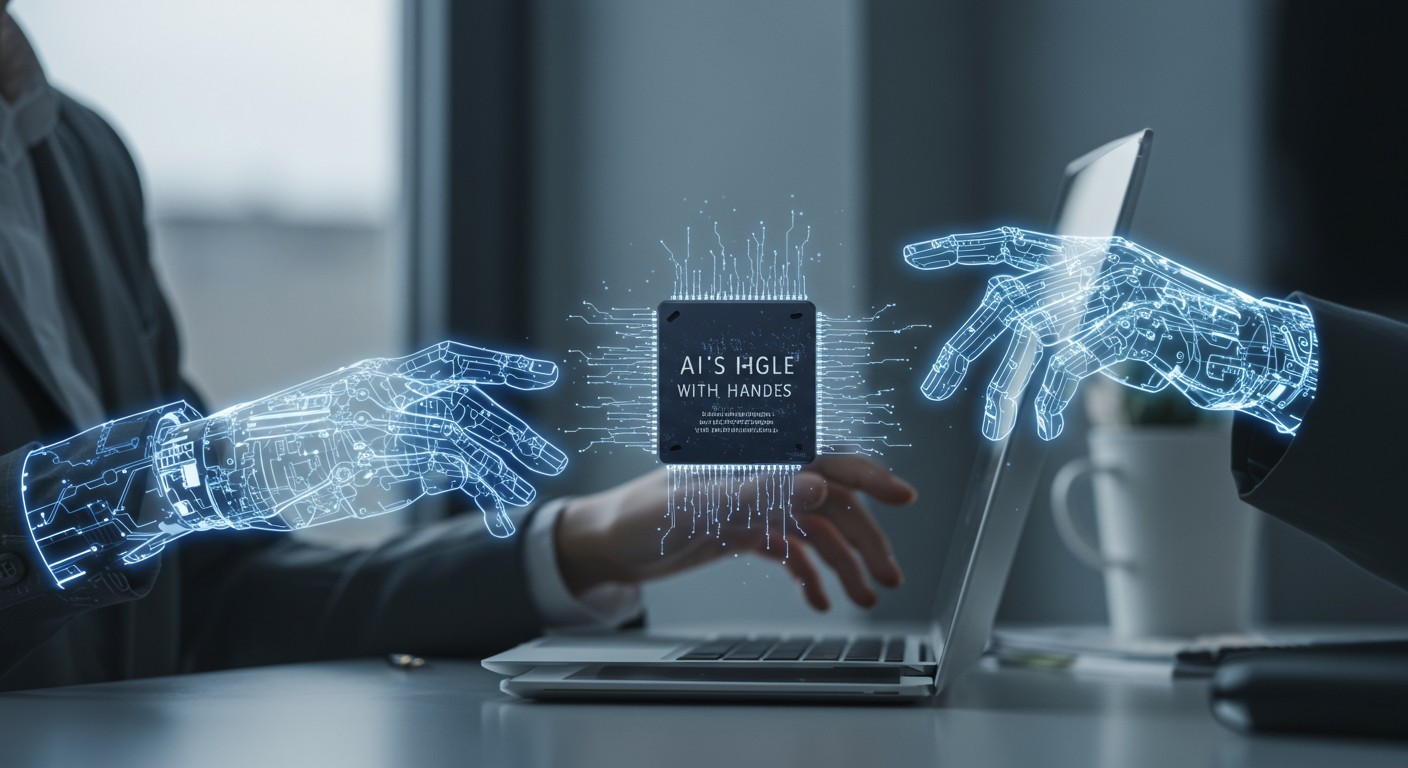
AI-generated images often depict human hands inaccurately due to the complexity of hand anatomy, limitations in training data, and the models' lack of 3D understanding. This article explores these challenges and highlights tools like PixelDojo's Image-to-Image transformation that help users refine AI-generated hands.
The Intricacies of Human Hands
Human hands are anatomically complex, comprising 27 bones, numerous joints, and a vast range of motion. This complexity makes them challenging to depict accurately, even for skilled human artists. AI models, which rely on pattern recognition from 2D images, often struggle to replicate the nuanced structures and positions of hands. As noted in a BBC Science Focus article, AI image generators "have absolutely no concept of the three-dimensional geometry of something like a hand." (sciencefocus.com)
Limitations in Training Data
AI models are trained on extensive datasets of images and their descriptions. However, these datasets often contain fewer images of hands compared to faces or other body parts. This imbalance leads to a lack of detailed understanding of hand anatomy. Additionally, existing images may depict hands in varied positions, lighting, and occlusions, further complicating the learning process. A study highlighted that "the training data currently available lacks sufficient details like each finger’s joint positions and angles." (techinspection.net)
The Uncanny Valley Effect
When AI-generated hands deviate from natural human anatomy, they often fall into the "uncanny valley," where images appear almost human but have unsettling inaccuracies. This effect is particularly pronounced with hands due to our sensitivity to their appearance and function. As discussed in The New Yorker, "the hands are both real... and totally at odds with the way hands are supposed to be." (newyorker.com)
Advances in AI Hand Generation
Researchers are actively working to address these challenges. For instance, the HandRefiner method employs a conditional inpainting approach to correct malformed hands in AI-generated images. This technique uses a hand mesh reconstruction model to ensure accurate hand shapes and poses, integrating them seamlessly into the original image. (arxiv.org)
Leveraging PixelDojo's Tools
For artists and developers seeking to refine AI-generated images, PixelDojo offers several tools:
-
Image-to-Image Transformation: This feature allows users to input an existing image and guide the AI to generate a refined version, making it particularly useful for correcting specific elements like hands.
-
Inpainting Tool: Users can select areas of an image to regenerate, enabling targeted corrections of anomalies such as distorted fingers or unnatural hand positions.
By utilizing these tools, users can enhance the quality of AI-generated images, ensuring more accurate and realistic depictions of hands.
Conclusion
While AI has made significant strides in image generation, accurately rendering human hands remains a notable challenge due to anatomical complexity, training data limitations, and the models' lack of 3D understanding. However, with ongoing research and the development of specialized tools like those offered by PixelDojo, the gap between AI-generated imagery and human-like accuracy continues to narrow.
Original Source
Read original articlePremium AI Tools
Create Incredible AI Images Today
Join thousands of creators worldwide using PixelDojo to transform their ideas into stunning visuals in seconds.
125
Creative AI Tools
4M+
Creations
60+
AI Video Models