Industry News
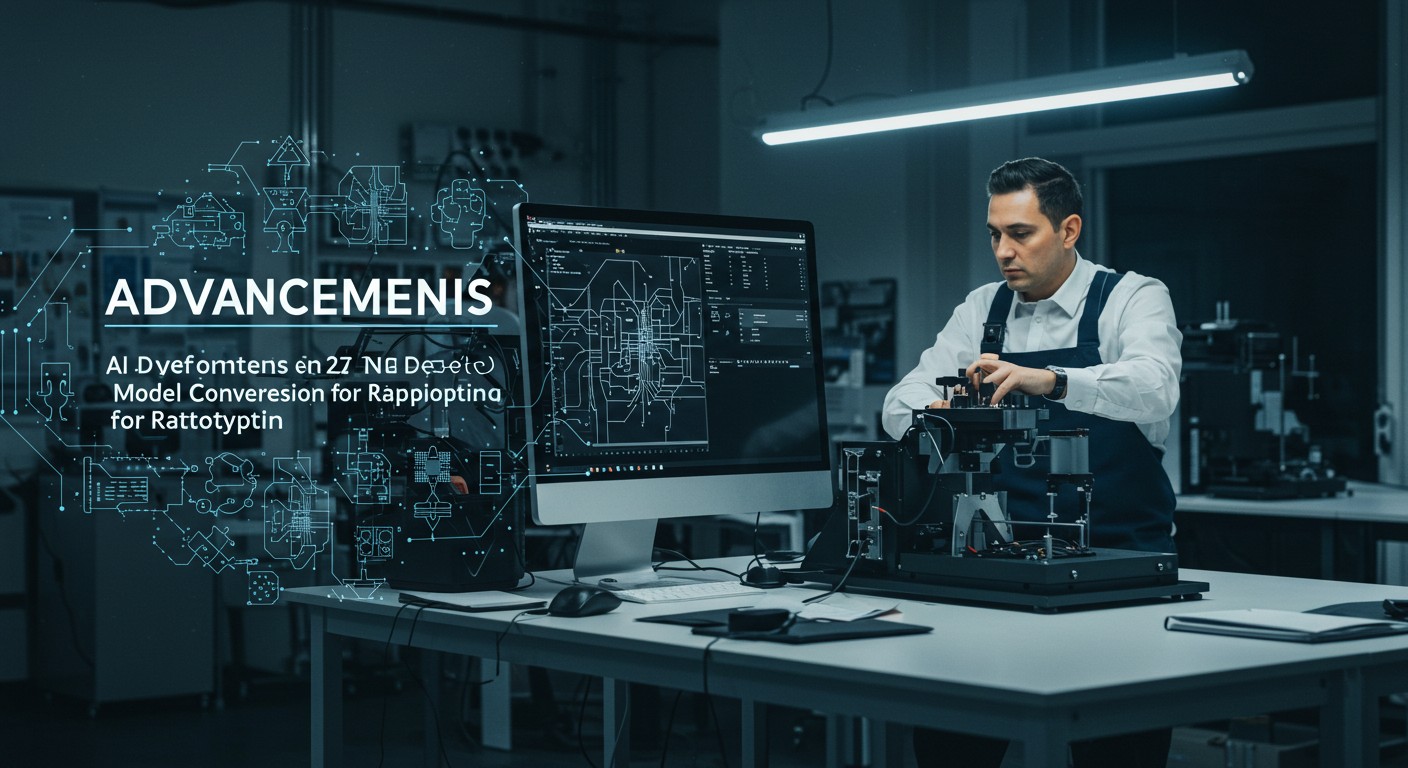
Advancements in AI-Driven 2D to 3D Model Conversion for Rapid Prototyping
MIT researchers have developed a system that enhances the conversion of 2D designs into accurate 3D models, streamlining rapid prototyping processes. This advancement leverages AI to improve efficiency and accuracy in design workflows.
Introduction
The transition from 2D designs to 3D models is a critical step in product development, enabling engineers and designers to visualize, test, and refine their concepts before manufacturing. Traditionally, this process has been labor-intensive and time-consuming, often requiring extensive manual input. However, recent advancements in artificial intelligence (AI) are revolutionizing this workflow, making it more efficient and accessible.
MIT's Breakthrough in 2D to 3D Conversion
Researchers at the Massachusetts Institute of Technology (MIT) have introduced a novel system that significantly improves the conversion of 2D designs into 3D models. This system utilizes a vision-language model trained to automatically generate computer-aided design (CAD) programs from 2D images. The key innovation lies in the system's ability to learn from its own errors, enhancing its performance over time without the need for extensive human intervention.
The process involves the model generating multiple CAD code solutions for a given 2D design. It then evaluates these solutions, identifying and correcting errors to create a dataset of successful and near-successful attempts. This iterative learning approach enables the model to tackle complex design challenges more effectively, resulting in more accurate and functional 3D models. (techxplore.com)
Implications for Rapid Prototyping
The integration of AI into the 2D to 3D conversion process offers several benefits for rapid prototyping:
-
Increased Efficiency: Automating the conversion reduces the time required to develop 3D models, accelerating the prototyping phase.
-
Enhanced Accuracy: AI-driven models can produce more precise 3D representations, minimizing errors that may arise from manual conversions.
-
Cost Reduction: By streamlining the design process, companies can reduce labor costs and material waste associated with prototyping.
PixelDojo's AI Tools for 2D to 3D Conversion
To leverage these advancements, designers and engineers can utilize PixelDojo's suite of AI tools tailored for 2D to 3D model conversion:
-
Rodin: This tool enables the generation of production-quality 3D models quickly, offering both fast and standard modes to suit various project needs. Learn more about Rodin
-
Hunyuan 3D: With Hunyuan 3D, users can create 3D models from text or image inputs, facilitating a seamless transition from conceptual designs to tangible prototypes. Explore Hunyuan 3D
By incorporating these tools into their workflows, professionals can enhance their rapid prototyping capabilities, ensuring that 3D models are both accurate and efficiently produced.
Broader Context and Future Directions
MIT's development is part of a larger trend toward integrating AI into design and manufacturing processes. Other notable advancements include:
-
AI Agents in CAD Software: AI models that operate CAD software similarly to human users, converting 2D sketches into 3D models by executing commands within the software interface. (news.mit.edu)
-
Generative AI for 3D Shape Creation: Techniques that utilize generative AI to produce realistic 3D shapes from 2D images, enhancing the quality and realism of generated models. (news.mit.edu)
These innovations collectively contribute to a more efficient and accessible design process, empowering designers and engineers to bring their ideas to life with greater speed and precision.
Conclusion
The integration of AI into the conversion of 2D designs to 3D models marks a significant advancement in rapid prototyping. MIT's recent development exemplifies how AI can enhance accuracy and efficiency in this process. By utilizing tools like PixelDojo's Rodin and Hunyuan 3D, professionals can further streamline their workflows, reducing time and costs associated with product development. As AI continues to evolve, its role in design and manufacturing is poised to expand, offering even more sophisticated solutions for creators across industries.
Original Source
Read original articlePremium AI Tools
Create Incredible AI Images Today
Join thousands of creators worldwide using PixelDojo to transform their ideas into stunning visuals in seconds.
124
Creative AI Tools
4M+
Creations
60+
AI Video Models