Industry News
Dataland: Pioneering the Intersection of AI and Art
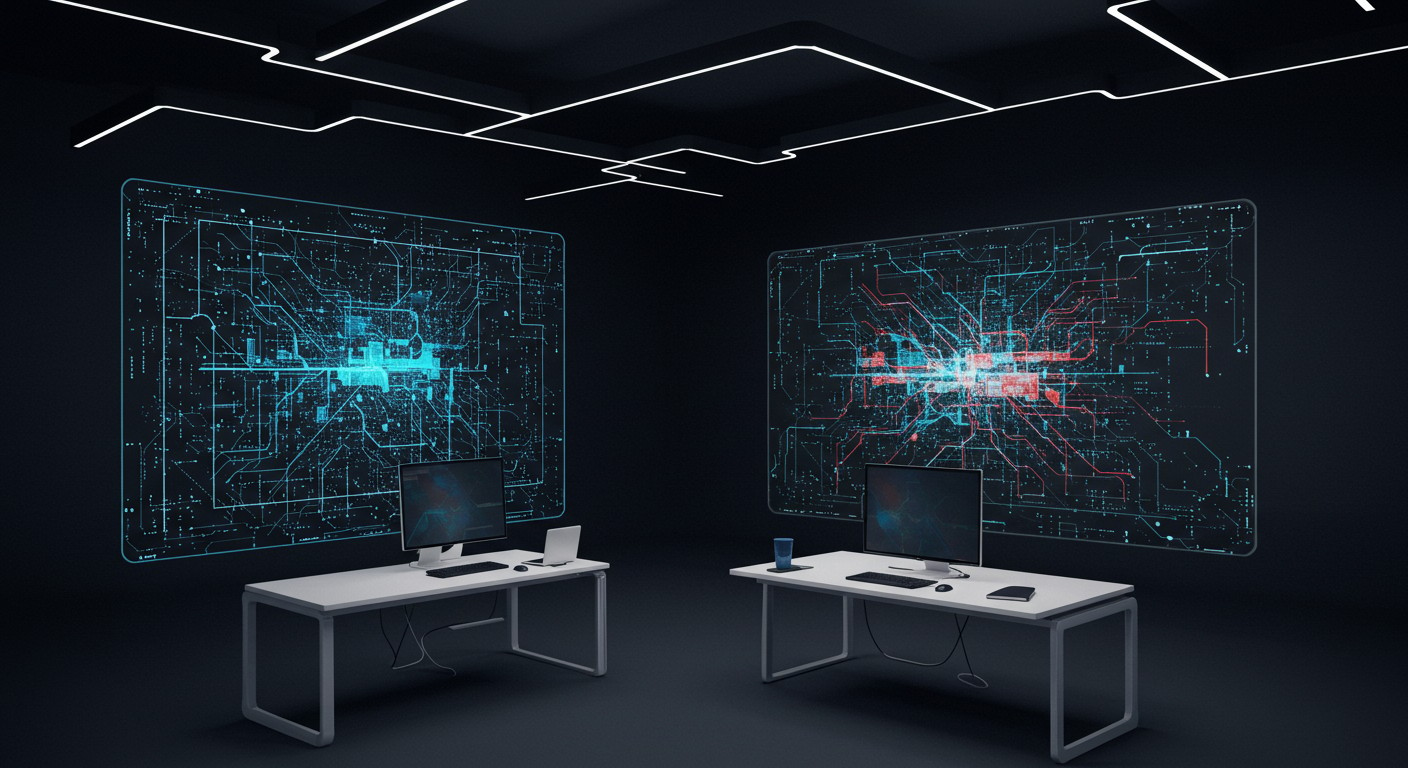
Dataland, the world's first AI arts museum, co-founded by media artist Refik Anadol and Efsun Erkılıç, showcases the transformative power of artificial intelligence in the art world. Powered by Google Cloud, Dataland offers immersive, real-time generative art experiences, setting a new standard for interactive art spaces.
Introduction
The fusion of artificial intelligence (AI) and art has reached a groundbreaking milestone with the opening of Dataland, the world's first AI arts museum. Co-founded by media artist Refik Anadol and Efsun Erkılıç, Dataland is a 25,000-square-foot interactive space located in The Grand LA, a Frank Gehry-designed development in Los Angeles. This innovative museum leverages AI to create dynamic, immersive art experiences, redefining the boundaries of creativity and technology.
The Genesis of Dataland
The inception of Dataland is rooted in a decade-long collaboration between Refik Anadol and Google. Anadol's journey with AI began in 2016 when he joined Google's Artists and Machine Intelligence (AMI) program. This partnership led to several notable projects, including:
-
LA Philharmonic's Archives Projection (2018): Anadol utilized AI to project the orchestra's archives onto architectural surfaces, creating a visual symphony that blended music and imagery.
-
Google Quantum AI Visualization (2020): Collaborating with Google, Anadol visualized complex quantum data, making abstract concepts accessible through art.
-
MRI of the Earth Project: This initiative reframed planetary data through a neural lens, offering a unique perspective on environmental information.
These projects culminated in the creation of Dataland, a space where data becomes pigment, and art evolves in real-time.
Technological Backbone
Dataland's inaugural exhibition, "Machine Dreams: Rainforest," is powered by the Large Nature Model—a foundational AI trained on extensive datasets of the natural world. This model transforms complex environmental data into 1.2 billion pixels of hyper-generative reality. The technological infrastructure supporting Dataland includes:
-
Omni-Sensory Experiences: The museum introduces a new paradigm for interactive art, where galleries respond dynamically to visitors. Google's infrastructure processes data to create generative soundscapes, sense emotions in real-time, and algorithmically augment scents, enhancing the immersive experience.
-
Real-Time Generation: Running on Google Cloud's efficient computing infrastructure, powered by 87% carbon-free renewable energy, Dataland utilizes the Gemini Enterprise Agent Platform and Compute Engine. These tools coordinate complex AI models, including generative adversarial networks (GANs), diffusion models, and Gemini, bringing the galleries to life.
From ticketing systems to the dynamic visuals on gallery walls, Google Cloud ensures the museum operates smoothly and sustainably.
Nurturing Future Creators
In conjunction with the museum's opening, Google Arts & Culture supports the Dataland AI Artist Residency. This six-month incubator program provides four artists with $25,000 grants, mentorship from Refik Anadol Studio, and direct access to advanced Google Cloud tools and machine learning models. The residency aims to empower the next generation of digital creators, with their work featured on Dataland's global stage and the Google Arts & Culture website.
Exploring AI Art with PixelDojo
For enthusiasts and artists inspired by Dataland's fusion of AI and art, PixelDojo offers a suite of tools to explore and create AI-generated art:
-
MAI Image: Microsoft's text-to-image tool provides crisp detail and natural lighting, enabling users to generate high-quality images from textual descriptions. Explore MAI Image
-
Google Nano Banana: This tool allows for multi-image fusion and editing, leveraging Google's advanced AI capabilities to blend and modify images seamlessly. Discover Google Nano Banana
-
GPT Image 2: OpenAI's GPT Image 2 offers 4K rendering and sharper text, facilitating the creation of detailed and high-resolution AI-generated images. Try GPT Image 2
These tools empower users to experiment with AI-driven art creation, mirroring the innovative spirit of Dataland.
The Future of AI in Art
Dataland exemplifies the transformative potential of AI in the art world. By integrating advanced AI models with creative expression, the museum offers a glimpse into a future where art is not only created by humans but also in collaboration with intelligent machines. This synergy opens new avenues for artistic exploration, challenging traditional notions of authorship and creativity.
As AI continues to evolve, its role in art will likely expand, leading to more immersive and interactive experiences. Dataland stands as a testament to this potential, inviting visitors to engage with art in unprecedented ways.
Conclusion
The opening of Dataland marks a significant milestone in the intersection of AI and art. Through the visionary work of Refik Anadol and the technological support of Google, the museum offers a dynamic space where data and creativity converge. For artists and enthusiasts eager to explore this frontier, platforms like PixelDojo provide accessible tools to experiment with AI-generated art, fostering a new era of artistic innovation.
To experience Dataland firsthand, visit The Grand LA in Los Angeles, and immerse yourself in the future of art.
Sources:
Original Source
Read original articlePremium AI Tools
Create Incredible AI Images Today
Join thousands of creators worldwide using PixelDojo to transform their ideas into stunning visuals in seconds.
125
Creative AI Tools
4M+
Creations
60+
AI Video Models