Industry News
Exploring the Intersection of Art and Artificial Intelligence: Columbia University's Interdisciplinary Initiatives
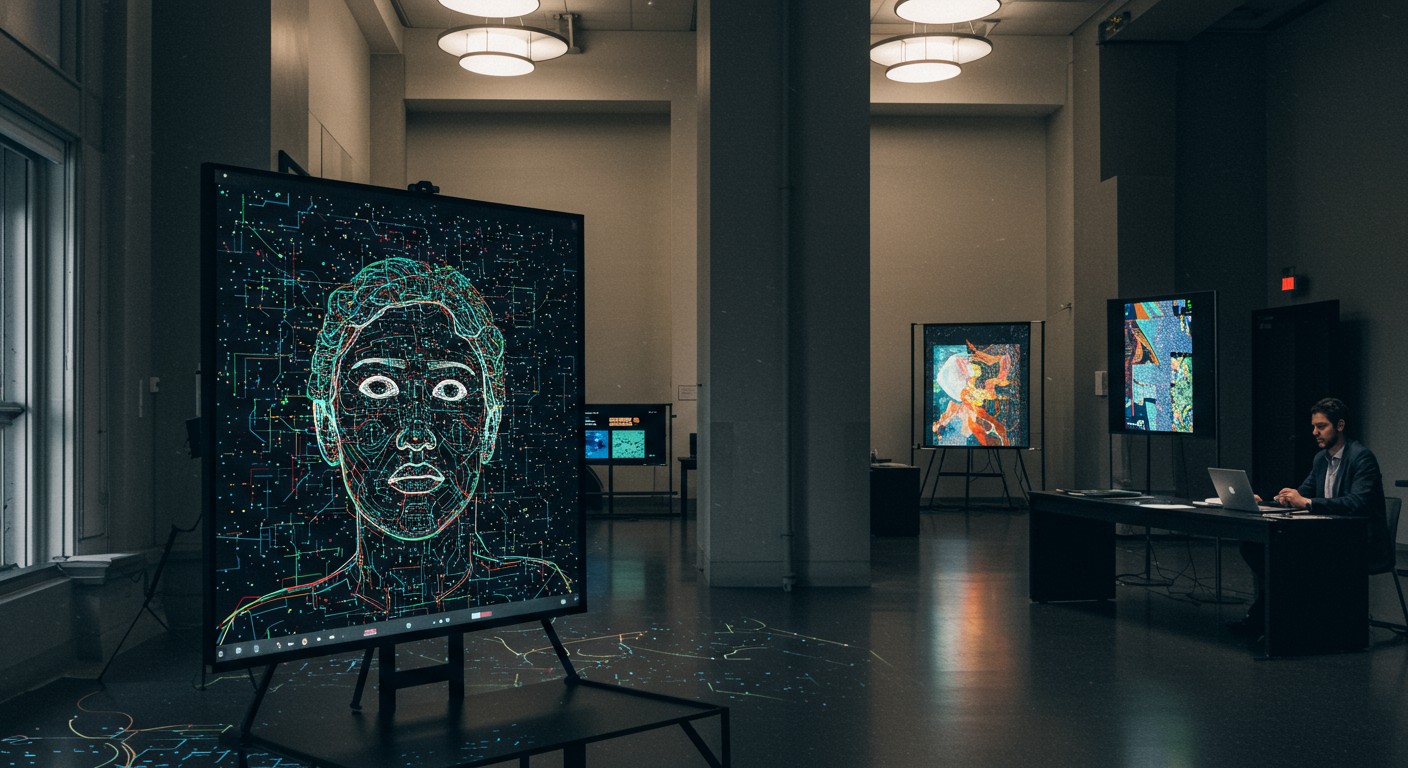
Columbia University is at the forefront of integrating artificial intelligence into the arts, fostering innovative collaborations that redefine creative expression. Through installations like Refik Anadol's 'Artificial Realities: New York City' and educational programs on AI-generated imagery, the university is exploring the dynamic relationship between technology and art.
Introduction
The fusion of art and artificial intelligence (AI) is revolutionizing creative expression, offering new avenues for artists and technologists alike. Columbia University stands at the forefront of this interdisciplinary exploration, hosting projects and educational initiatives that delve into the synergy between AI and the arts.
Refik Anadol's 'Artificial Realities: New York City'
One of the most compelling examples of this integration is Refik Anadol's installation, "Artificial Realities: New York City," displayed at Columbia Business School's Kravis Hall. This generative AI data painting visualizes New York City as a dynamic, living archive, transforming the lobby into a meditative space that blurs the lines between data and imagination. Anadol's work utilizes advanced AI techniques, including GAN-based image synthesis and diffusion modeling, to interpret over 119 million publicly sourced images of the city. The result is a 52-minute looped AI data painting presented on a high-resolution LED canvas, inviting viewers to reflect on the evolving nature of urban landscapes and the role of technology in art. (business.columbia.edu)
Educational Initiatives: 'Creating Images with AI'
Beyond installations, Columbia University is committed to educating its community on the practical applications of AI in art. The Digital Futures Institute hosted a webinar titled "Creating Images with AI," providing an overview of AI image generators like DALL·E, Midjourney, and Ideogram. This session aimed to equip educators, students, and staff with the skills to transform ideas into compelling visuals using AI tools, emphasizing ethical considerations and fostering creativity without the need for traditional artistic skills. (tc.columbia.edu)
Symposiums and Discussions
Columbia has also organized events such as the "Visualizing Science Symposium: The Impact of Art on Scientific Discovery," which explored the evolving relationship between scientific and artistic communities, particularly in the context of AI technologies. This symposium highlighted how AI is transforming both fields, encouraging interdisciplinary collaboration and innovation. (scienceandsociety.columbia.edu)
Broader Context: AI in the Art World
The integration of AI into art is not unique to Columbia University. For instance, Carnegie Mellon University's Robotics Institute developed CoFRIDA, a robotic system that collaborates with humans to create art, enhancing human creativity through interactive co-painting. (cs.cmu.edu) Additionally, the AI-generated artwork "Théâtre D'opéra Spatial" by Jason M. Allen won the 2022 Colorado State Fair's fine art competition, sparking discussions about creativity, originality, and the role of AI in art. (en.wikipedia.org)
Exploring AI Art with PixelDojo
For individuals interested in exploring AI-generated art, platforms like PixelDojo offer a suite of tools that align with the technologies discussed. For example:
-
GPT-Image: Utilizing OpenAI's latest models, this tool allows users to generate images with strong prompt adherence, enabling precise control over the creative process.
-
Flux.2 Studio: This platform provides access to professional and developer models with multi-reference capabilities, facilitating the creation of complex, multi-faceted artworks.
-
Recraft V4: Designed for generating design-quality images and vector SVGs from text, Recraft V4 empowers users to produce high-quality visuals suitable for various applications.
These tools democratize the creation of AI-generated art, making it accessible to a broader audience and encouraging experimentation at the intersection of technology and creativity.
Conclusion
Columbia University's interdisciplinary projects exemplify the transformative potential of integrating AI into the arts. By fostering collaborations between artists, technologists, and educators, the university is not only redefining creative expression but also preparing the next generation to navigate and contribute to this evolving landscape. As AI continues to permeate various facets of society, such initiatives underscore the importance of interdisciplinary approaches in harnessing technology for artistic innovation.
Original Source
Read original articlePremium AI Tools
Create Incredible AI Images Today
Join thousands of creators worldwide using PixelDojo to transform their ideas into stunning visuals in seconds.
125
Creative AI Tools
4M+
Creations
60+
AI Video Models