Industry News
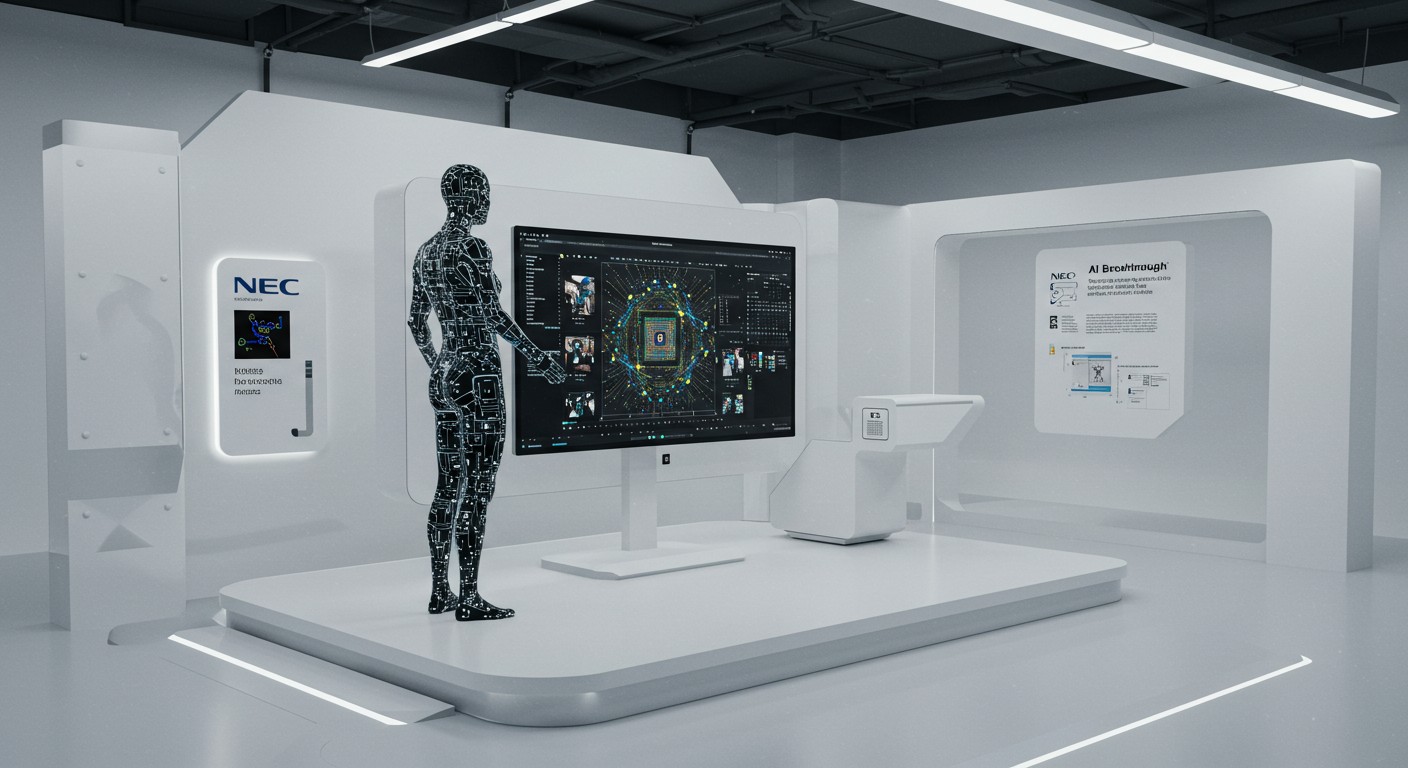
NEC's AI Breakthrough: Transforming 2D Footage into 3D Models
NEC has developed AI technology that converts standard 2D camera footage into detailed 3D models, revolutionizing fields like gaming, virtual reality, and digital content creation.
NEC's AI Breakthrough: Transforming 2D Footage into 3D Models
NEC Corporation has recently unveiled a groundbreaking artificial intelligence technology capable of converting standard 2D camera footage into detailed 3D models. This innovation holds the potential to revolutionize various industries, including gaming, virtual reality (VR), and digital content creation.
The Technology Behind the Transformation
NEC's AI system utilizes advanced machine learning algorithms to analyze 2D video input and reconstruct corresponding 3D structures. By interpreting depth cues, object boundaries, and spatial relationships within the footage, the AI generates accurate three-dimensional representations. This process involves:
- Depth Estimation: Assessing the distance of objects from the camera to create a depth map.
- Object Recognition: Identifying and segmenting objects within the scene.
- 3D Reconstruction: Combining depth information and object data to build a cohesive 3D model.
Implications for Various Industries
The ability to generate 3D models from 2D footage has far-reaching implications:
- Gaming and VR: Developers can create immersive environments more efficiently by converting real-world scenes into 3D assets.
- Film and Animation: Filmmakers can reconstruct sets and scenes digitally, facilitating special effects and post-production processes.
- Architecture and Real Estate: Professionals can generate 3D models of buildings and interiors from video tours, aiding in design and visualization.
Exploring 3D Model Generation with PixelDojo
For those interested in experimenting with 3D model generation, PixelDojo offers tools that complement NEC's technology:
-
Rodin: This tool enables users to create production-quality 3D models quickly, offering both fast and standard processing options. Explore Rodin
-
Hunyuan 3D: Allows generation of 3D models from text or image inputs, providing a versatile approach to 3D content creation. Discover Hunyuan 3D
By leveraging these tools, users can delve into 3D model creation, transforming their ideas into tangible digital assets.
Comparing with Existing Technologies
While 3D model generation from 2D images isn't entirely new, NEC's approach stands out due to its:
- Efficiency: The AI processes standard video footage without the need for specialized equipment.
- Accuracy: Advanced algorithms ensure precise depth estimation and object recognition.
- Scalability: The technology can handle various scenes and environments, making it adaptable across industries.
Future Prospects and Challenges
As NEC's technology matures, we can anticipate:
- Enhanced Realism: Improved algorithms will produce more lifelike 3D models.
- Broader Applications: Expansion into fields like healthcare for medical imaging and education for interactive learning materials.
However, challenges remain, such as:
- Data Privacy: Ensuring that video data used for 3D modeling respects individual privacy rights.
- Computational Resources: Managing the processing power required for real-time 3D reconstruction.
Conclusion
NEC's development marks a significant advancement in AI-driven 3D modeling, offering new possibilities for content creators and industries reliant on digital visualization. By integrating tools like PixelDojo's Rodin and Hunyuan 3D, users can further explore and harness the potential of 3D model generation, bridging the gap between 2D imagery and immersive 3D experiences.
Original Source
Read original articlePremium AI Tools
Create Incredible AI Images Today
Join thousands of creators worldwide using PixelDojo to transform their ideas into stunning visuals in seconds.
124
Creative AI Tools
4M+
Creations
60+
AI Video Models