Industry News
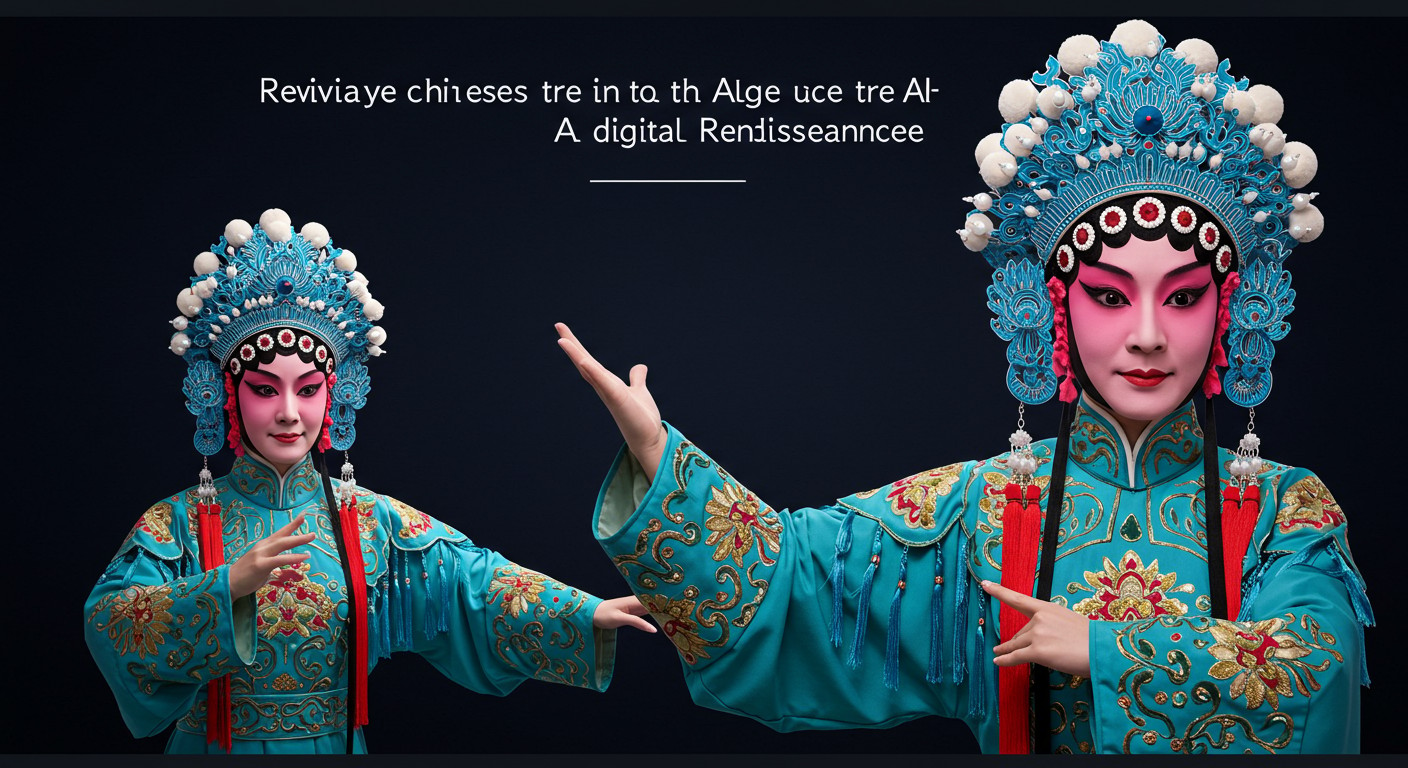
Reviving Chinese Opera in the Age of AI: A Digital Renaissance
Exploring how artificial intelligence is revitalizing traditional Chinese opera through innovative applications in performance, makeup, and stage design.
Introduction
Chinese opera, a cornerstone of the nation's cultural heritage, faces challenges in preserving its rich traditions amidst modern technological advancements. However, artificial intelligence (AI) is emerging as a powerful tool to rejuvenate this ancient art form, offering innovative solutions that bridge the gap between tradition and technology.
AI in Performance Restoration and Enhancement
Revitalizing Classic Performances
Tencent, in collaboration with the Ministry of Culture and Tourism, has embarked on projects to restore and enhance classic Chinese opera performances using AI. By applying advanced algorithms, Tencent has successfully revitalized a 1956 recording of the opera "Hua Mulan," improving its visual and auditory quality. This initiative attracted over 7 million viewers, demonstrating the potential of AI to bring historical performances to contemporary audiences. (scmp.com)
Virtual Reality Integration
Beyond restoration, Tencent is integrating virtual reality (VR) technologies to capture the intricate movements of opera characters. Utilizing six degrees of freedom (6DoF) technology, they aim to create immersive experiences that allow audiences to engage with traditional performances in novel ways. (gizmochina.com)
AI in Makeup and Costume Design
Augmented Reality Applications
The complexity of traditional Chinese opera makeup poses a learning challenge for newcomers. To address this, researchers have developed "OperARtistry," an augmented reality (AR) application that provides step-by-step guidance for applying opera makeup. This tool overlays AR effects onto the user's face, facilitating the learning process and ensuring the preservation of authentic makeup techniques. (researchportal.hkust.edu.hk)
Generative AI for Personalized Makeup
In the realm of costume design, generative AI models are being employed to create personalized Peking opera facial makeup. By analyzing existing designs, these models generate new, high-fidelity makeup patterns that maintain the art form's intricate details. This approach not only preserves traditional aesthetics but also introduces a level of personalization previously unattainable. (nature.com)
AI in Stage Design and Production
Intelligent Stage Design
AI technologies are revolutionizing stage design by merging traditional elements with modern innovations. Researchers have utilized AI to develop scientific and technical equipment for stage design, enhancing the overall performance experience. This integration has led to significant improvements in performance efficiency compared to conventional methods. (sciencedirect.com)
Multi-Agent Frameworks for Script Generation
The automation of opera production is another area where AI is making strides. A novel multi-agent framework integrates large language models, visual generation, and text-to-speech synthesis to automate the end-to-end production of Qinqiang opera. This system crafts coherent scripts, renders accurate stage scenes, and produces synchronized vocal performances, streamlining the preservation and dissemination of traditional performing arts. (arxiv.org)
Exploring AI-Generated Content with PixelDojo
For enthusiasts and practitioners interested in exploring AI-generated content in the context of Chinese opera, PixelDojo offers a suite of tools that can be instrumental:
-
Ernie: Baidu's multilingual text-to-image model capable of producing high-definition outputs. Users can generate images inspired by traditional opera scenes, costumes, and makeup designs, facilitating creative exploration and preservation efforts.
-
Seedance 2: A cinematic video generation tool that supports up to 2K resolution with native audio. This tool allows users to create dynamic video content that captures the essence of Chinese opera performances, aiding in both educational and promotional endeavors.
-
Flux.2 Studio: Provides advanced image generation capabilities with multi-reference support. This tool can be used to design intricate stage backdrops and props, ensuring that the visual elements of opera productions are both authentic and captivating.
By leveraging these tools, individuals can actively participate in the digital renaissance of Chinese opera, contributing to its preservation and evolution in the modern era.
Conclusion
The integration of AI into Chinese opera signifies a harmonious blend of tradition and technology. Through performance restoration, makeup guidance, stage design, and production automation, AI is playing a pivotal role in revitalizing this ancient art form. As these technologies continue to evolve, they offer promising avenues for preserving and celebrating Chinese opera for future generations.
Original Source
Read original articlePremium AI Tools
Create Incredible AI Images Today
Join thousands of creators worldwide using PixelDojo to transform their ideas into stunning visuals in seconds.
125
Creative AI Tools
4M+
Creations
60+
AI Video Models