Industry News
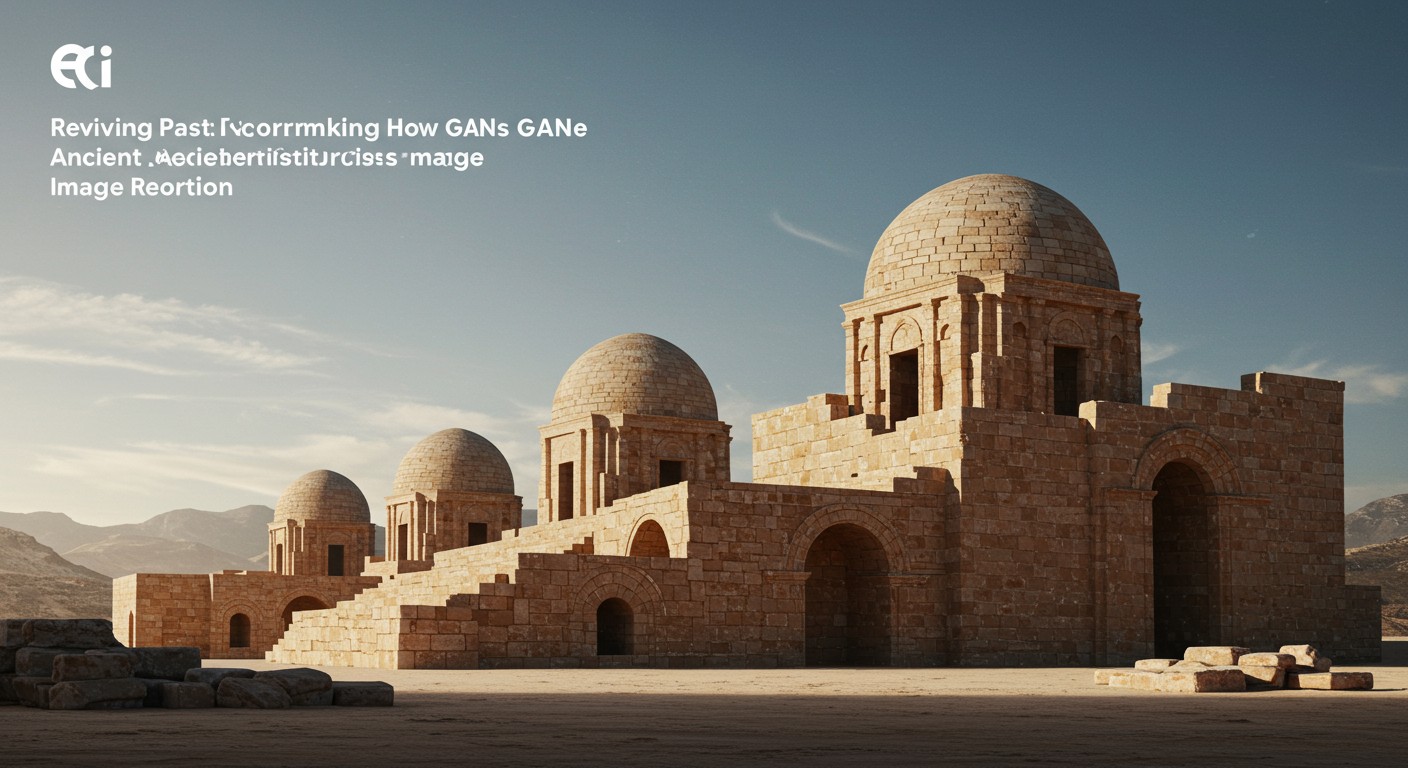
Reviving the Past: How GANs Are Transforming Ancient Architectural Image Restoration
Generative Adversarial Networks (GANs) are revolutionizing the restoration of ancient architectural images by reconstructing damaged structures with remarkable accuracy. This article explores the methodologies, challenges, and future prospects of applying GANs in preserving our architectural heritage.
Introduction
The preservation of ancient architectural heritage is a pressing concern as time, environmental factors, and human activities continue to degrade these invaluable structures. Traditional restoration methods often rely on textual interpretations and limited field measurements, which can lead to reconstructions that lack visual intuition and structural certainty. Recent advancements in artificial intelligence, particularly Generative Adversarial Networks (GANs), offer a promising solution by enabling the digital restoration of damaged architectural images with enhanced accuracy and realism.
The Role of GANs in Architectural Restoration
GANs consist of two neural networks—the generator and the discriminator—that work in tandem to produce images that are indistinguishable from real ones. In the context of architectural restoration, GANs can be trained to reconstruct missing or damaged parts of historical structures by learning from existing data.
Case Study: Han and Tang Dynasty Beacon Towers
A notable application of GANs in architectural restoration is the reconstruction of beacon towers from the Han and Tang dynasties. Researchers have developed a framework that integrates deep generative models to enhance and restore images of these ancient structures. The study introduced a two-stage reproduction process and a semantic constraint enhancement mechanism, which can be extended to other types of ancient architectural heritage scenes. This interdisciplinary approach combines architecture and computer vision, providing a new technical path for the digital conservation of historical structures. (nature.com)
Methodologies Employed
Data Collection and Augmentation
The restoration process begins with the construction of two core databases:
-
Damaged Beacon Database: This collection comprises numerous images of deteriorated beacon towers, capturing various degrees of damage, angles, and time periods to fully represent the current state of these structures.
-
Restoration Target Database: This database provides ideal image samples of well-preserved beacon towers, serving as references for the restoration process. It includes both real images of minimally damaged towers and virtual images generated by AI technologies to enrich the diversity and representativeness of the restoration targets.
Model Selection: CycleGAN and Pix2Pix
Two prominent GAN architectures have been utilized in this restoration framework:
-
CycleGAN: This model facilitates unsupervised image-to-image translation by learning the mapping between two domains without paired data. It is particularly effective for converting current images of damaged beacons to their restored counterparts, ensuring content consistency through cyclic constraints. (nature.com)
-
Pix2Pix: Unlike CycleGAN, Pix2Pix requires paired datasets and employs a conditional GAN framework to learn the mapping from input to output images. It is adept at processing images of damaged beacons and generating their restored versions with high fidelity. (nature.com)
Challenges and Solutions
Small Sample Sizes
One of the primary challenges in applying GANs to architectural restoration is the limited availability of training data. To address this, researchers have implemented a mixed data enhancement strategy that combines field samples with virtual samples generated based on historical documents and archaeological catalogs. This approach not only increases the diversity of the training set but also ensures historical authenticity by constraining the generated images to align with architectural scales and stylistic features.
Ensuring Structural and Historical Accuracy
Maintaining the structural integrity and historical accuracy of restored images is crucial. The proposed framework incorporates structural rationality constraints and semantic generation prompts based on architectural scale and logic. These measures help mitigate the limitations of traditional methods by enhancing visual intuition and structural consistency in the reconstructed images.
Broader Applications and Future Prospects
The success of GANs in restoring beacon towers opens avenues for their application in other areas of cultural heritage preservation. For instance, similar methodologies can be employed to reconstruct murals, sculptures, and other architectural elements that have suffered damage over time. The scalability and adaptability of GAN-based frameworks make them valuable tools in the digital conservation of diverse historical artifacts.
Exploring GANs with PixelDojo's Tools
For enthusiasts and professionals interested in exploring GAN technologies, PixelDojo offers a suite of AI tools that facilitate experimentation and application:
-
Image-to-Image Transformation: This tool allows users to apply GAN-based transformations to images, enabling the restoration of damaged architectural photos by generating plausible reconstructions.
-
Text-to-Image Generation: Users can input descriptive text prompts to generate images of historical structures, aiding in visualizing restoration outcomes or conceptualizing designs inspired by ancient architecture.
-
Image Editing: PixelDojo's image editing capabilities leverage AI to enhance and modify images, providing functionalities that can be used to refine and perfect restored images of architectural heritage.
By utilizing these tools, users can gain hands-on experience with GAN applications in image restoration and contribute to the preservation of cultural heritage through digital means.
Conclusion
The integration of GANs into the field of ancient architectural image restoration represents a significant advancement in cultural heritage preservation. By leveraging deep learning and computer vision, researchers can reconstruct damaged structures with a level of detail and accuracy previously unattainable. As these technologies continue to evolve, they hold the promise of revitalizing our connection to the past and ensuring that the architectural marvels of ancient civilizations are preserved for future generations.
Original Source
Read original articlePremium AI Tools
Create Incredible AI Images Today
Join thousands of creators worldwide using PixelDojo to transform their ideas into stunning visuals in seconds.
125
Creative AI Tools
4M+
Creations
60+
AI Video Models