Industry News
Tavus Unveils Phoenix-4: Pioneering Real-Time Human Rendering with Emotional Intelligence
Tavus introduces Phoenix-4, a groundbreaking AI model that delivers real-time, emotionally intelligent human rendering, setting a new standard in AI-driven human-computer interaction.
Introduction
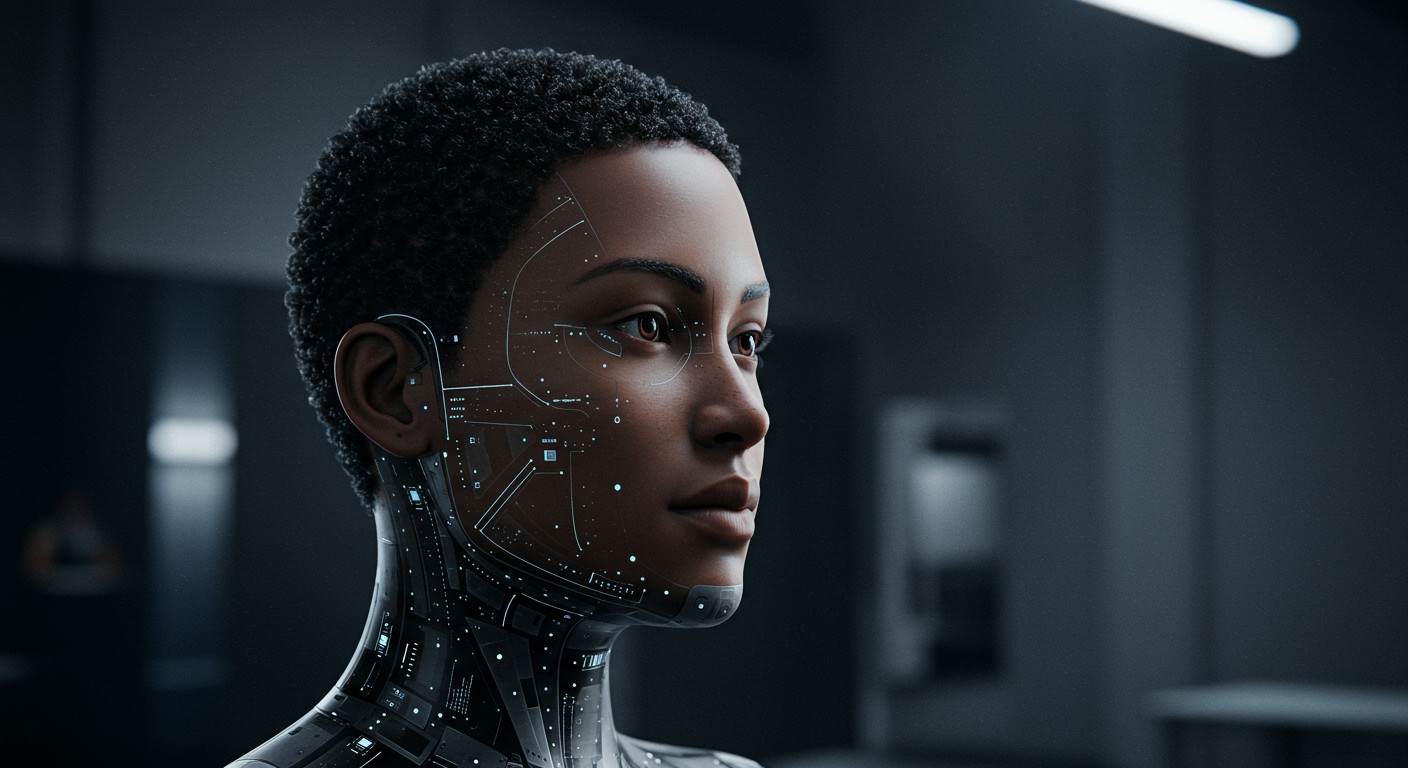
In a significant advancement for AI-driven human-computer interaction, Tavus has unveiled Phoenix-4, the first real-time human rendering model equipped with emotional intelligence. This innovative model is designed to generate emotionally responsive, context-aware human presence during live conversations, marking a substantial leap forward in creating lifelike digital humans.
The Core Architecture of Phoenix-4
Phoenix-4's architecture is built upon a trio of specialized models, each contributing to the system's overall realism and responsiveness:
-
Raven-1 (Perception): This model functions as the system's 'eyes and ears,' analyzing users' facial expressions and vocal tones to comprehend the emotional context of interactions.
-
Sparrow-1 (Timing): Responsible for managing conversational flow, Sparrow-1 determines optimal moments for the AI to speak, pause, or listen, ensuring natural and fluid exchanges.
-
Phoenix-4 (Rendering): At the heart of the system, this Gaussian-diffusion model synthesizes photorealistic video in real-time, capturing subtle facial movements and micro-expressions that are crucial for authentic human interaction.
This integrated approach enables Phoenix-4 to deliver a seamless and emotionally intelligent user experience.
Technical Innovations: Gaussian-Diffusion Rendering
Departing from traditional Generative Adversarial Networks (GANs), Phoenix-4 employs a proprietary Gaussian-diffusion rendering model. This technique allows the AI to accurately calculate complex facial movements, such as skin stretching and the emergence of micro-expressions around the eyes. Consequently, the model maintains spatial consistency, ensuring that textures and lighting remain stable even as the digital human moves. This advancement supports streaming at 30 frames per second (fps), which is essential for maintaining the illusion of life.
Achieving Ultra-Low Latency
In conversational video interfaces, minimizing latency is critical. Phoenix-4 achieves an end-to-end conversational latency of under 600 milliseconds by adopting a 'stream-first' architecture. Utilizing WebRTC (Web Real-Time Communication), the model streams video data directly to clients' browsers, rendering and transmitting video packets incrementally. This approach ensures minimal delay between user input and AI response, preserving the natural flow of conversation.
Programmatic Emotion Control
A standout feature of Phoenix-4 is its Emotion Control API, which allows developers to explicitly define the emotional state of the AI persona during interactions. By specifying parameters such as joy, sadness, anger, or surprise, the model adjusts facial geometry to reflect genuine emotional expressions. For instance, setting the emotion to joy prompts the AI to produce a sincere smile, engaging the cheeks and eyes, not just the mouth. This capability enables more nuanced and contextually appropriate AI responses.
Rapid Creation of Digital Replicas
Creating a custom digital twin, or 'Replica,' with Phoenix-4 requires only two minutes of video footage for training. Once trained, the Replica can be deployed via the Tavus Conversational Video Interface (CVI) SDK. This streamlined process allows developers to quickly integrate lifelike digital humans into their applications, enhancing user engagement and interaction.
Implications for AI Image and Video Generation
The introduction of Phoenix-4 represents a significant milestone in AI image and video generation. By combining real-time rendering with emotional intelligence, Tavus addresses the longstanding challenge of the 'uncanny valley,' where digital representations often fall short of true human likeness. This advancement opens new possibilities for applications in customer service, virtual assistants, and interactive media, where authentic human-like interactions are paramount.
Exploring Similar Technologies with PixelDojo
For those interested in exploring similar technologies, PixelDojo offers a suite of AI tools that complement the capabilities of Phoenix-4:
-
OmniHuman: This tool enables users to generate animated videos from audio and images, facilitating the creation of lifelike digital humans with synchronized speech and expressions.
-
Kling Video Character Swap: Allows for the swapping of characters in videos while maintaining natural motion, providing flexibility in creating diverse digital personas.
-
Pose Control: Offers precise control over character poses, enabling users to direct the movements and expressions of digital humans to achieve desired outcomes.
By leveraging these tools, users can experiment with and implement advanced AI-driven human rendering techniques in their projects.
Conclusion
Tavus's launch of Phoenix-4 marks a transformative moment in the field of AI-driven human rendering. By integrating real-time processing with emotional intelligence, Phoenix-4 sets a new benchmark for creating digital humans that are not only visually convincing but also emotionally responsive. As AI continues to evolve, models like Phoenix-4 pave the way for more natural and engaging human-computer interactions, bridging the gap between technology and genuine human connection.
Original Source
Read original articlePremium AI Tools
Create Incredible AI Images Today
Join thousands of creators worldwide using PixelDojo to transform their ideas into stunning visuals in seconds.
125
Creative AI Tools
4M+
Creations
60+
AI Video Models