Industry News
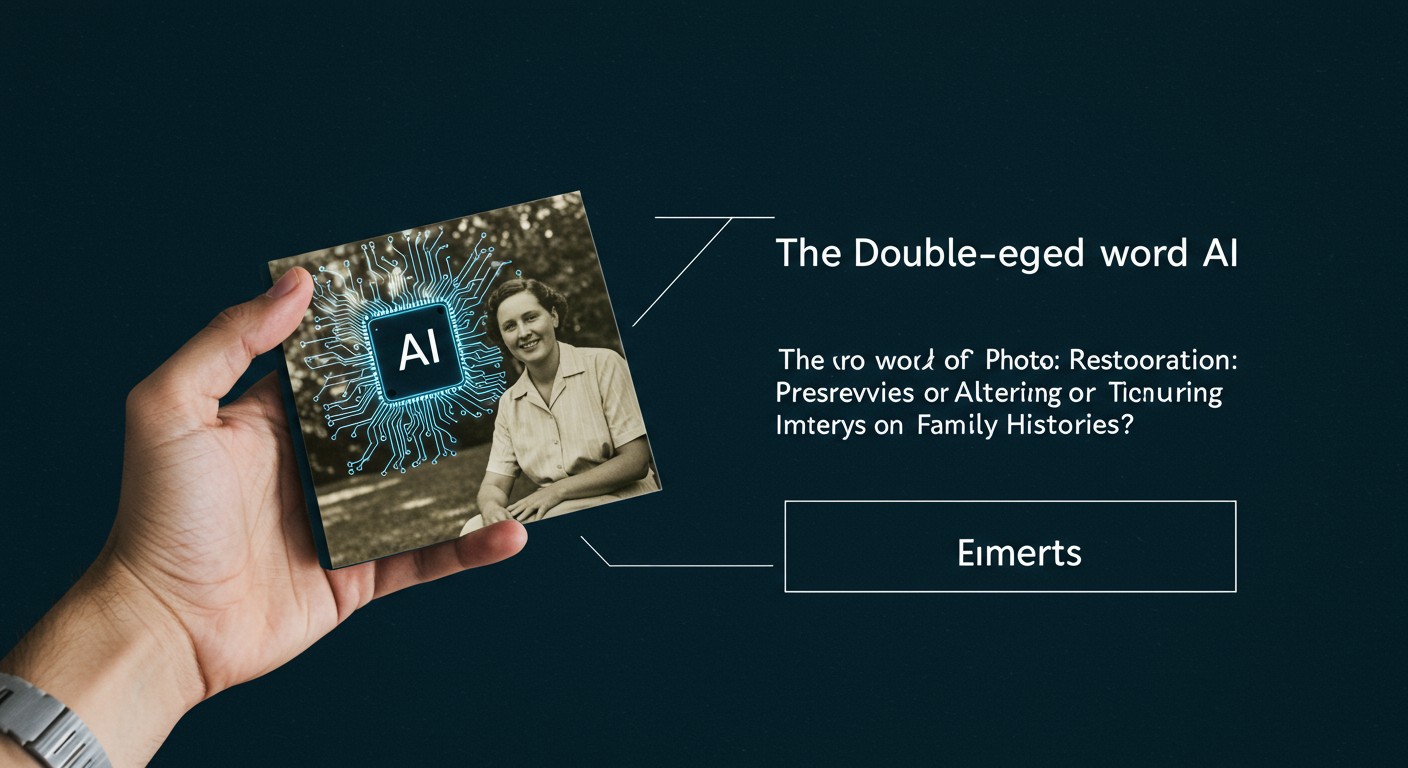
The Double-Edged Sword of AI Photo Restoration: Preserving or Altering Family Histories?
AI photo restoration tools offer the promise of reviving old family photographs, but they also pose risks of altering historical accuracy. This article explores the benefits and ethical considerations of using AI in photo restoration, emphasizing the importance of responsible usage.
The Rise of AI in Photo Restoration
Artificial Intelligence (AI) has revolutionized numerous fields, including the restoration of old and damaged photographs. Tools like GFP-GAN (howtogeek.com) and Ancestry's colorization feature (howtogeek.com) have made it possible for individuals to breathe new life into faded or damaged family photos with just a few clicks. These advancements have democratized photo restoration, making it accessible to a broader audience.
How AI Photo Restoration Works
AI-driven photo restoration typically involves:
- Damage Detection and Repair: Identifying and correcting imperfections such as scratches, tears, and spots.
- Colorization: Adding color to black-and-white photos based on learned patterns from vast datasets.
- Upscaling: Enhancing the resolution of low-quality images to make them clearer and more detailed.
These processes rely on machine learning models trained on extensive image datasets to predict and fill in missing or damaged parts of photos.
The Benefits of AI Photo Restoration
- Accessibility: AI tools have made photo restoration more accessible to non-professionals, allowing individuals to restore personal photos without specialized skills.
- Efficiency: Automated processes can restore photos in a fraction of the time it would take a human expert.
- Cost-Effectiveness: Many AI restoration tools are free or affordable, reducing the financial barrier to photo restoration.
Ethical Considerations and Potential Pitfalls
Despite the advantages, AI photo restoration is not without its challenges:
- Historical Accuracy: AI algorithms may introduce inaccuracies by making educated guesses about missing details, potentially altering the original content of the photo. (technicalgenealogist.com)
- Loss of Authenticity: Over-reliance on AI can lead to a loss of the original photo's character, as the AI-generated content may not accurately reflect the historical context.
- Privacy Concerns: Using AI tools, especially those that require uploading photos to online platforms, raises questions about data privacy and the potential misuse of personal images. (hitpaw.com)
Best Practices for Responsible AI Photo Restoration
To mitigate these risks, consider the following practices:
- Preserve Originals: Always keep unaltered copies of original photos to maintain historical integrity.
- Document Changes: Clearly note any modifications made during the restoration process to distinguish between original and altered content.
- Use AI as an Assistive Tool: Combine AI capabilities with human judgment to ensure restorations are both accurate and respectful of the original material.
- Verify Results: Cross-reference AI-restored images with other historical records or consult experts to confirm accuracy.
Leveraging PixelDojo's Tools for Thoughtful Restoration
PixelDojo offers a suite of AI-powered tools that can assist in the photo restoration process while allowing users to maintain control over the outcome:
-
Image to Image Transformation: This tool enables users to transform images with AI, allowing for enhancements while preserving the original's essence. Learn more
-
Inpainting: Edit specific areas of an image to repair damage or remove imperfections without altering the entire photo. Explore Inpainting
-
Reality Polisher: Remove AI artifacts with iterative refinement, ensuring that restorations remain true to the original image. Discover Reality Polisher
By utilizing these tools, users can approach photo restoration with a balance of AI efficiency and human oversight, ensuring that family histories are preserved accurately and respectfully.
Conclusion
AI photo restoration offers powerful capabilities to revive and enhance old photographs, making them more accessible and visually appealing. However, it's crucial to approach these tools with caution, considering the ethical implications and potential for historical inaccuracies. By combining AI technology with thoughtful human intervention and utilizing responsible tools like those offered by PixelDojo, we can honor and preserve our family's true history for future generations.
Original Source
Read original articlePremium AI Tools
Create Incredible AI Images Today
Join thousands of creators worldwide using PixelDojo to transform their ideas into stunning visuals in seconds.
125
Creative AI Tools
4M+
Creations
60+
AI Video Models