Industry News
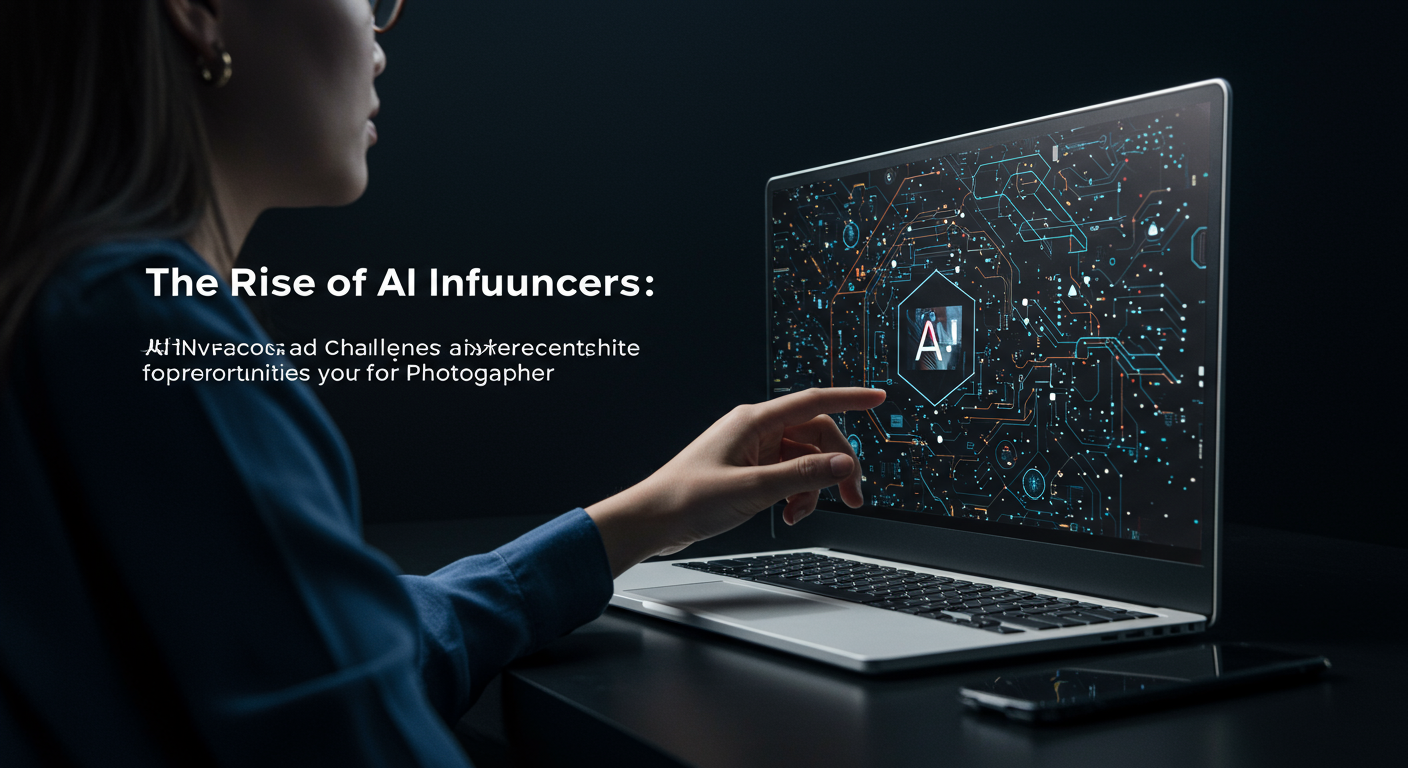
The Rise of AI Influencers: Challenges and Opportunities for Photographers
The emergence of AI-generated influencers is reshaping the digital landscape, presenting both challenges and opportunities for professional photographers. While AI models can produce realistic images and personas, they lack the authenticity and emotional depth inherent in human-created content. Photographers can leverage AI tools to enhance their work, streamline workflows, and explore new creative avenues, ensuring their relevance in an evolving industry.
The Emergence of AI Influencers
Artificial intelligence has made significant strides in content creation, leading to the rise of AI-generated influencers. These virtual personas, crafted entirely by AI, are gaining popularity on social media platforms, collaborating with brands, and engaging audiences. While this innovation showcases the capabilities of AI, it also raises questions about authenticity, ethics, and the future role of human photographers.
Challenges Posed by AI Influencers
Authenticity and Trust
AI influencers, despite their realistic appearances, lack genuine human experiences and emotions. This absence can lead to a disconnect with audiences who value authenticity. The use of AI-generated content in marketing can blur the lines between reality and fabrication, potentially misleading consumers. Transparency becomes crucial to maintain trust and credibility.
Ethical and Legal Concerns
The creation of AI influencers often involves training models on vast datasets of real images, sometimes without the consent of the original creators. This practice raises ethical questions about intellectual property rights and the potential exploitation of photographers' work. Additionally, the proliferation of AI-generated content can contribute to the spread of misinformation, as distinguishing between real and fabricated images becomes increasingly challenging.
Opportunities for Photographers
Despite these challenges, AI technology offers photographers tools to enhance their craft and adapt to the changing landscape.
Enhancing Creativity and Efficiency
AI-powered tools can automate repetitive tasks, allowing photographers to focus more on creative aspects. For instance, PixelDojo's suite of AI tools enables users to generate photography-style images with authentic lighting and depth, rivaling traditional photography. By entering descriptive prompts, photographers can experiment with various styles and compositions without the constraints of physical equipment or locations. (pixeldojo.ai)
Streamlining Post-Processing
Post-processing is a time-consuming aspect of photography. AI-driven software can automate complex editing tasks, such as color correction, exposure adjustment, and noise reduction. PixelDojo's Image-to-Image Transformation tool exemplifies this trend by enabling users to apply sophisticated edits effortlessly, enhancing image quality and transforming photos into artistic renditions. (pixeldojo.ai)
Exploring New Creative Avenues
AI opens up new possibilities for creative expression. Photographers can use AI to generate entirely new images from textual descriptions, allowing for the visualization of concepts without traditional photography or illustration skills. PixelDojo's Text-to-Image Generator empowers users to explore this creative frontier, converting textual ideas into visual representations. (pixeldojo.ai)
Navigating the Integration of AI in Photography
To remain competitive, photographers should consider integrating AI tools into their workflows while maintaining the authenticity that sets human-created content apart.
Embracing Hybrid Approaches
Combining AI tools with human-led photography can enhance the creative process. For example, photographers can use AI to test concepts, create quick visual iterations, or produce alternative edits, while still centering the shoot around their creative leadership. This hybrid approach allows for efficiency without compromising the human touch that audiences value. (dk3studios.com)
Upholding Ethical Standards
Photographers should be transparent about the use of AI in their work to maintain trust with clients and audiences. Disclosing the extent of AI involvement ensures clarity and upholds ethical standards. Additionally, photographers can advocate for stronger copyright protections to prevent AI from exploiting creative work without consent. (fstoppers.com)
Conclusion
The rise of AI influencers presents both challenges and opportunities for photographers. While AI-generated content can mimic realism, it lacks the authenticity and emotional depth inherent in human-created work. By leveraging AI tools like those offered by PixelDojo, photographers can enhance their creativity, streamline workflows, and explore new artistic avenues. Embracing these technologies, while maintaining ethical standards and authenticity, will enable photographers to thrive in an evolving digital landscape.
Original Source
Read original articlePremium AI Tools
Create Incredible AI Images Today
Join thousands of creators worldwide using PixelDojo to transform their ideas into stunning visuals in seconds.
125
Creative AI Tools
4M+
Creations
60+
AI Video Models