Industry News
Stanford's AI Innovations Aim to Enhance Human Creativity
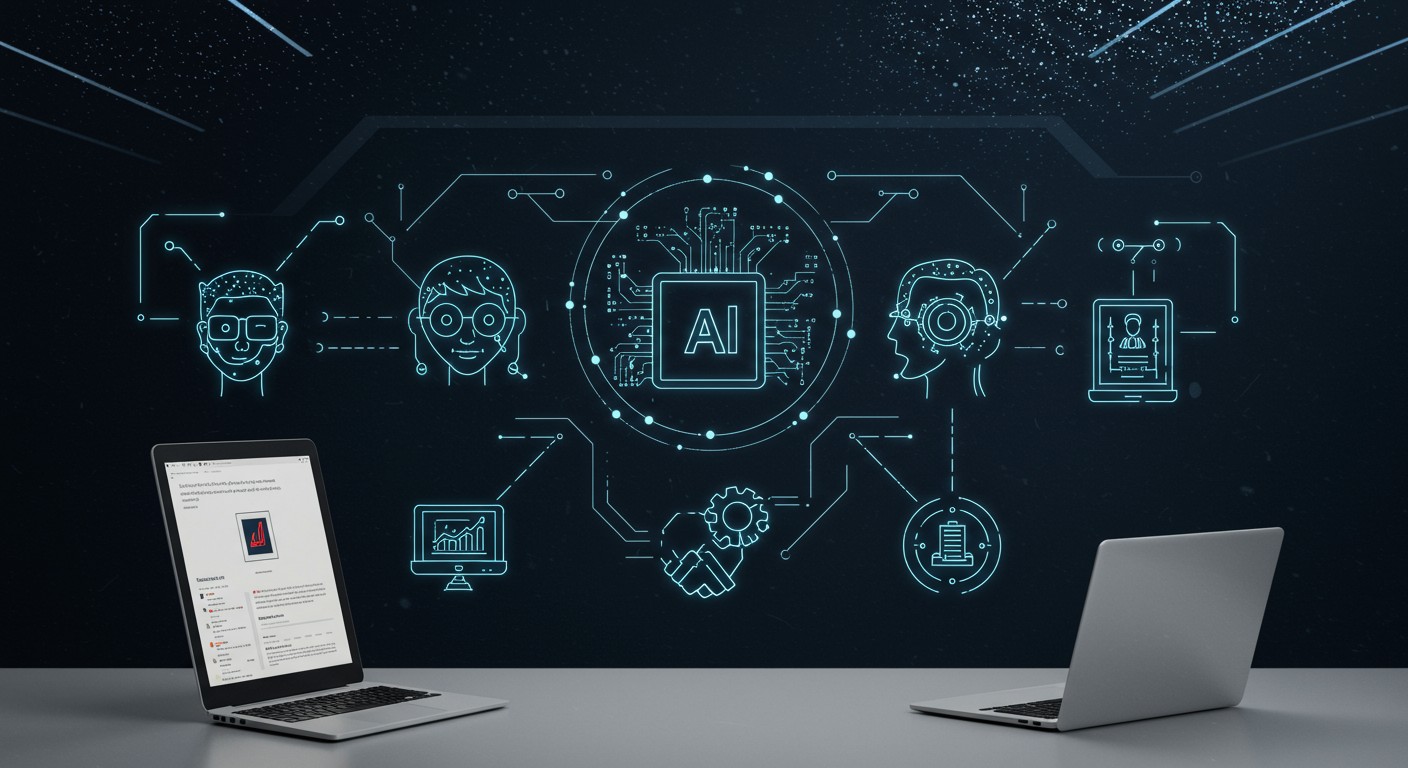
Stanford researchers are developing AI tools to improve collaboration with artists, focusing on precision in creative projects and effective communication. These advancements could revolutionize various fields by empowering creators to express their ideas seamlessly.
Stanford's AI Innovations Aim to Enhance Human Creativity
Bridging the Gap Between AI and Artistic Collaboration
In the evolving landscape of artificial intelligence, a team of Stanford scholars is pioneering efforts to make AI a more effective collaborator in the creative process. Their research focuses on enhancing generative AI tools to better understand and augment human creativity, particularly in visual arts. (news.stanford.edu)
Understanding Human Creative Communication
The Stanford team is conducting experiments to analyze how individuals collaborate on visual content. By studying chat logs and sketches from creative tasks, they aim to decipher the nuances of human communication during artistic collaboration. This understanding is crucial for developing AI systems that can effectively interpret and respond to human creative intentions. (news.stanford.edu)
Developing AI Tools for Enhanced Creativity
Building on their research, the team is creating open-source AI tools designed to align more closely with human creative processes:
-
ControlNet: This tool teaches text-to-image diffusion models about spatial composition, allowing creators to guide AI-generated layouts to match their vision. (news.stanford.edu)
-
FramePack: Enables the generation of 3D videos from text prompts, prioritizing scenes based on their importance to the overall story, similar to human storytelling techniques. (news.stanford.edu)
-
Neuro-Symbolic AI: Combines neural networks with reasoning capabilities to increase transparency in AI-generated content, allowing creators to inspect and edit code that produces 3D scenes. (news.stanford.edu)
Implications for Various Fields
The integration of these AI tools has the potential to transform multiple domains:
-
Design and Animation: Artists can achieve more precise control over AI-generated visuals, enhancing the quality and relevance of their work.
-
Education: Educators can utilize AI to create customized visual aids and interactive content, improving engagement and comprehension.
-
Robotics and Simulation: Improved AI understanding of human creative processes can lead to more effective simulations and robotic designs.
PixelDojo's Role in Empowering Creators
For creators looking to explore these advancements, PixelDojo offers a suite of AI tools that align with Stanford's innovations:
-
Flux.2 Studio: Provides professional and developer models with multi-reference capabilities, enabling precise control over image generation. Explore Flux.2 Studio
-
Grok Image: Offers fast edits and generation, facilitating quick iterations in the creative process. Discover Grok Image
-
QWEN Image 2: Supports multi-image fusion, text rendering, and style transfer, allowing artists to experiment with various styles and compositions. Learn about QWEN Image 2
By leveraging these tools, creators can bridge the gap between human creativity and AI capabilities, leading to more innovative and personalized artistic expressions.
Future Prospects
The Stanford team's work underscores a shift towards AI systems that serve as collaborative partners rather than mere tools. This approach not only enhances individual creativity but also democratizes access to advanced creative resources, enabling artists of all skill levels to bring their visions to life with greater ease and precision.
As AI continues to evolve, the focus on human-centered design and collaboration will be pivotal in ensuring that technology serves to augment and amplify human creativity, rather than replace it.
Original Source
Read original articlePremium AI Tools
Create Incredible AI Images Today
Join thousands of creators worldwide using PixelDojo to transform their ideas into stunning visuals in seconds.
125
Creative AI Tools
4M+
Creations
60+
AI Video Models