3D Style Renders AI Generator
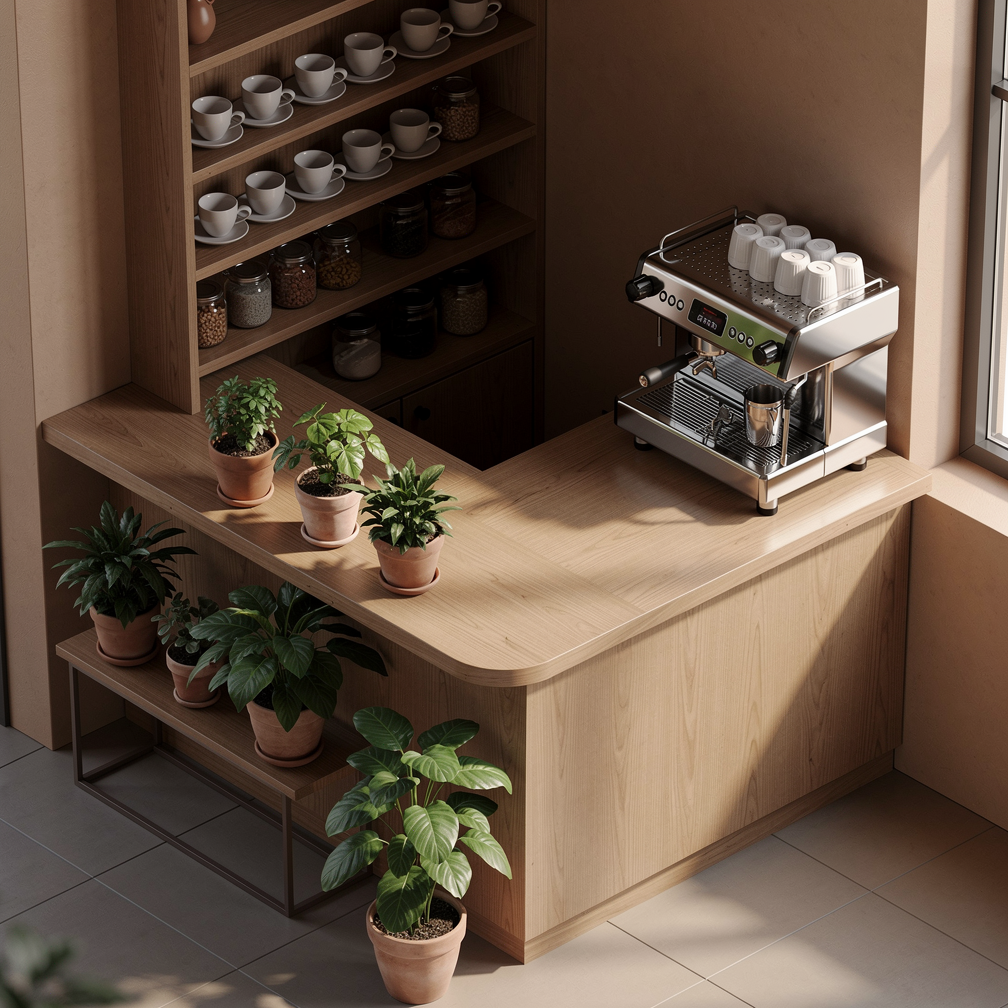
Generated on PixelDojo. Produced by PixelDojo's generation pipeline.
Flux 2 Max is the best default for 3D style renders. It was the only model of the three that produced surfaces behaving like real render materials, and it was both the cheapest and the fastest, at 2 credits in about 31 seconds. We sent one isometric coffee shop corner prompt to Flux 2 Max, Nano Banana Pro and Seedream 5 on August 26, 2026 and kept the first result from each. Nano Banana Pro charged 3 credits, finished in about 34 seconds, and was the only one that honoured the word isometric with a true parallel projection. Seedream 5 charged 2.5 credits and took about 232 seconds, but came back at 1776 by 2368 pixels with far more objects in the scene than either sibling. Each output is below, ranked, with the reason to pass on it.
Side-by-side, same prompt
Every model below ran the identical prompt on PixelDojo so the outputs are directly comparable: “A 3D rendered isometric coffee shop corner with an espresso machine, a wooden counter and potted plants, soft global illumination, matte clay materials, shallow depth of field”
Flux 2 Max
31sReal render materials. Brushed steel, correct specular highlights, hard sunlight and grounded contact shadows. 2 credits, about 31 seconds, 1008 by 1008.
Nano Banana Pro
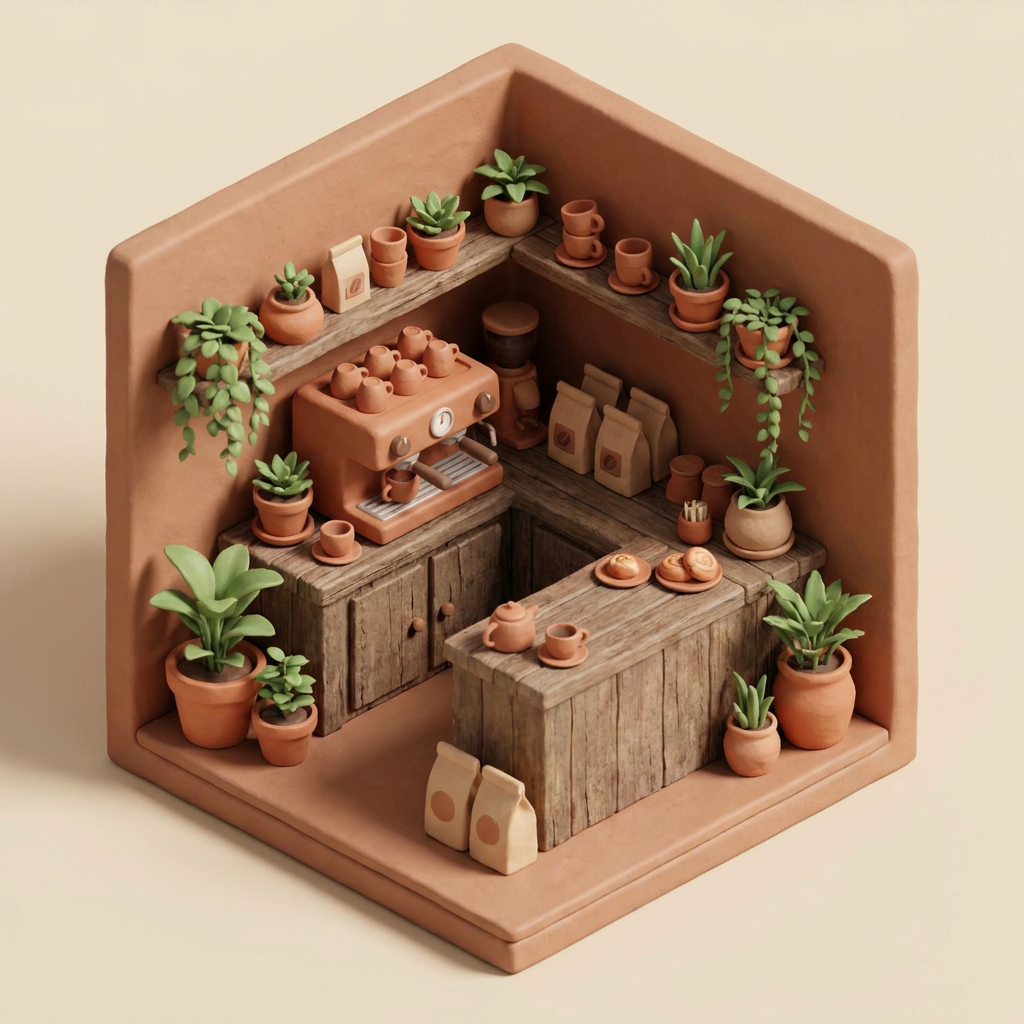
34sThe only true isometric. A hexagonal cutaway room in parallel projection, matte clay throughout, centred on plain cream. 3 credits, about 34 seconds.
Seedream 5
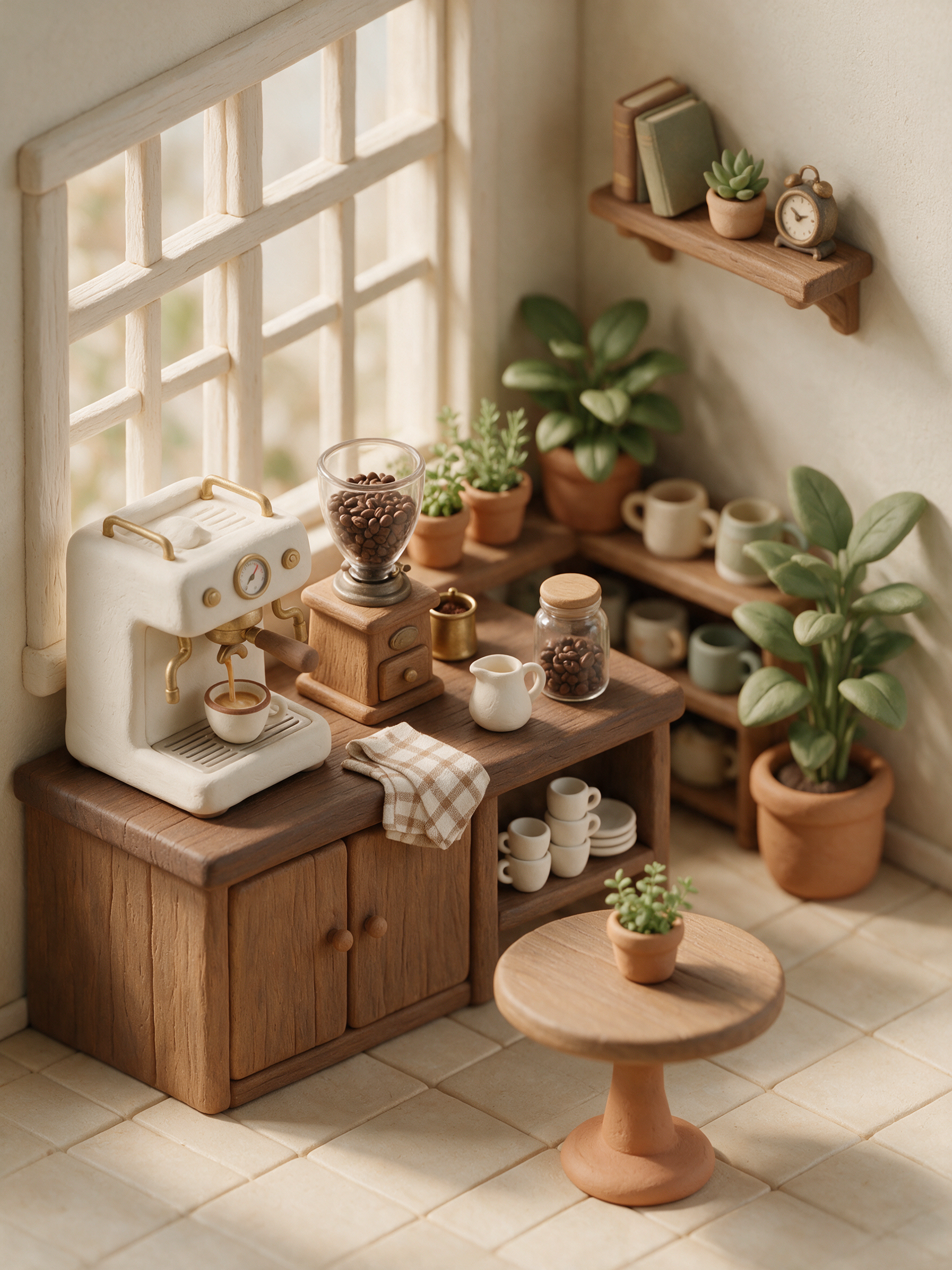
232sThe most objects and the most texture, at 1776 by 2368 pixels, but it read the brief as a photographed miniature. 2.5 credits, about 232 seconds.
Placings in full, with the tradeoff attached to each
1. Flux 2 Max, 2 credits, about 31 seconds
This is the one that looks like it came out of a renderer. Flux 2 Max built an L shaped light oak service counter with a chrome and steel espresso machine sitting on the end, and the metal actually behaves like metal, with a bright specular strip along the drip tray and softer reflections down the group head. Hard sunlight comes in from the right and lays a clean shadow across the floor tiles, and every potted plant sits on the surface with a proper contact shadow underneath it, which is the detail that stops a render looking pasted together. The camera is a high three quarter view rather than a strict parallel projection, and it ignored the matte clay instruction entirely in favour of physically plausible wood and steel. It was also the cheapest and the fastest here, so iteration costs the least. Skip it if you specifically want the clay diorama look, or if you need the whole room in frame, because our result crops tight on the counter corner.
2. Nano Banana Pro, 3 credits, about 34 seconds
Nano Banana Pro was the only model that read the word isometric literally. It returned a hexagonal cutaway room in parallel projection, floating on a plain cream backdrop, with two open walls and shelving that runs cleanly along both. Everything inside is matte terracotta clay, exactly as asked, including the espresso machine, the grinder, the cups and the coffee bags, with green plants as the only colour break. The shapes are simplified and soft cornered, which is what makes this style work as a game tile, an app icon or an explainer illustration, and it is the only output here that would sit on a slide without a background removal step. Two things it dropped from the brief. There is no shallow depth of field at all, everything is uniformly sharp, and the wood surfaces read as clay too rather than as wood. It also costs 3 credits, the highest of the three. Skip it if you need photographic realism or a scene with real material variety.
3. Seedream 5, 2.5 credits, about 232 seconds
Seedream 5 produced the richest scene by a distance. There is a clay espresso machine with brass fittings, a wooden grinder with beans visible in a glass hopper, a checked tea towel over the counter edge, a jar of beans, a milk jug, stacked cups and saucers on a lower shelf, a wall shelf with books, a succulent and an alarm clock, terracotta pots on the floor and a tiled floor running to the corner. Warm window light rakes across all of it with soft, believable shadows. It also came back at 1776 by 2368 pixels, roughly four times the pixel count of the other two, so it is the only one you could print large. The tradeoffs are real. It used a perspective camera rather than an isometric one, and the result reads as a photograph of a handmade miniature rather than as a computer render. It took about 232 seconds, more than seven times the Flux 2 Max wait. Skip it if you are iterating, or if the isometric projection is the point.
Three models, one isometric brief, one afternoon. 7.5 credits total, and a wait that ranged from about 31 seconds to about 232 seconds.
Why Choose Pixel Dojo for 3D Style Renders
Professional-quality results with cutting-edge AI technology
Ranked on materials first, then price, then wait
The top spot went to the model whose surfaces behave like rendered surfaces. Price and turnaround broke the ties below that.
The full comparison cost 7.5 credits
Flux 2 Max 2 credits, Seedream 5 2.5 credits, Nano Banana Pro 3 credits, one image each at default settings on August 26, 2026.
Two very different looks live under one prompt
The same sentence produced a physically lit interior, a clay diorama and a photographed miniature. Pick the model for the look, not the other way round.
How It Works
The method behind the three results:
Write one brief that names projection, material and light
We asked for a 3D rendered isometric coffee shop corner with an espresso machine, a wooden counter and potted plants, soft global illumination, matte clay materials and shallow depth of field. Those four terms are the ones models disagree about, which is what makes them useful in a test.
Run each model once, unchanged, at default settings
No aspect ratio overrides, no seeds, no retries. The first result from a plain prompt is what a new user gets, so that is what we compared.
Time the request, then check the file at full size
We bracketed each request with a clock, recorded the credit charge, then downloaded and inspected all three images. Flux 2 Max 2 credits in about 31 seconds, Nano Banana Pro 3 credits in about 34 seconds, Seedream 5 2.5 credits in about 232 seconds.
Loved by creators on PixelDojo
Real feedback from people using PixelDojo, pulled from our in-product surveys.
This is the best image generator I've used so far. Well done!
es facil de comprender asi uno no sea programador
amazing web site
phenomenal site. would highly recommend
Amazing features, easy to use, privacy
the number of options, and especially the quick response to questions on Discord
Explore more AI tools on PixelDojo
AI Tools
Compare & Switch
- Best AI Image Generators
- Best AI Video Generators
- Midjourney Alternatives
- Civitai Alternatives
- Runway Alternatives
- Leonardo Alternatives
- Pika Alternatives
- Luma Alternatives
- Magnific Alternatives
- Veo Alternatives
- Flux Alternatives
- Freepik Alternatives
- Seedance Alternatives
- Seedream Alternatives
- Pixverse Alternatives
- GPT Image Alternatives
- Synthesia Alternatives
- Playground Alternatives
- NightCafe Alternatives
- Canva AI Alternatives
- ElevenLabs Alternatives
- ComfyUI Alternatives
- Fal Alternatives
- Replicate Alternatives
Common Questions
Everything you need to know about 3D Style Renders
Which AI model is best for 3D style renders?
Flux 2 Max in this test. Its materials behave like render materials, with correct specular highlights on metal and contact shadows under every object, and it was the cheapest and fastest of the three at 2 credits in about 31 seconds. Pick Nano Banana Pro when you need a true isometric clay diorama, and Seedream 5 when you want the most objects and the largest file.
What did all three cost together?
7.5 credits on August 26, 2026. Flux 2 Max charged 2 credits, Seedream 5 charged 2.5 credits and Nano Banana Pro charged 3 credits, one image each at default settings.
Which model actually understands isometric projection?
Nano Banana Pro was the only one of the three that returned a parallel projection. Flux 2 Max used a high three quarter perspective camera and Seedream 5 used a normal perspective camera, both of which have converging lines that a true isometric view does not.
Why did Seedream 5 take almost four minutes?
It ran well past the 30 second sync window and finished as an async job at about 232 seconds. Turnaround moves with queue load on every model, so treat this as a same day snapshot rather than a fixed figure. The credit price does not change with the wait.
Can I get 3D style renders through the API?
Yes. POST to /api/v1/models/flux-2-max/run, /api/v1/models/nano-banana-pro/run or /api/v1/models/seedream-5/run with your API key and a prompt. One key covers all three, so a single script can produce the same scene in three looks.
How do I get the clay look out of a photorealistic model?
Ask for the material and the lighting, not the style word. Naming matte clay, soft global illumination and a plain backdrop moves the result much further than the word render does. If a model still returns photoreal surfaces, that is the model's default and a different one will get you there faster than more prompt tuning will.