Comic Style Art
Generated on PixelDojo. Produced by PixelDojo's generation pipeline.
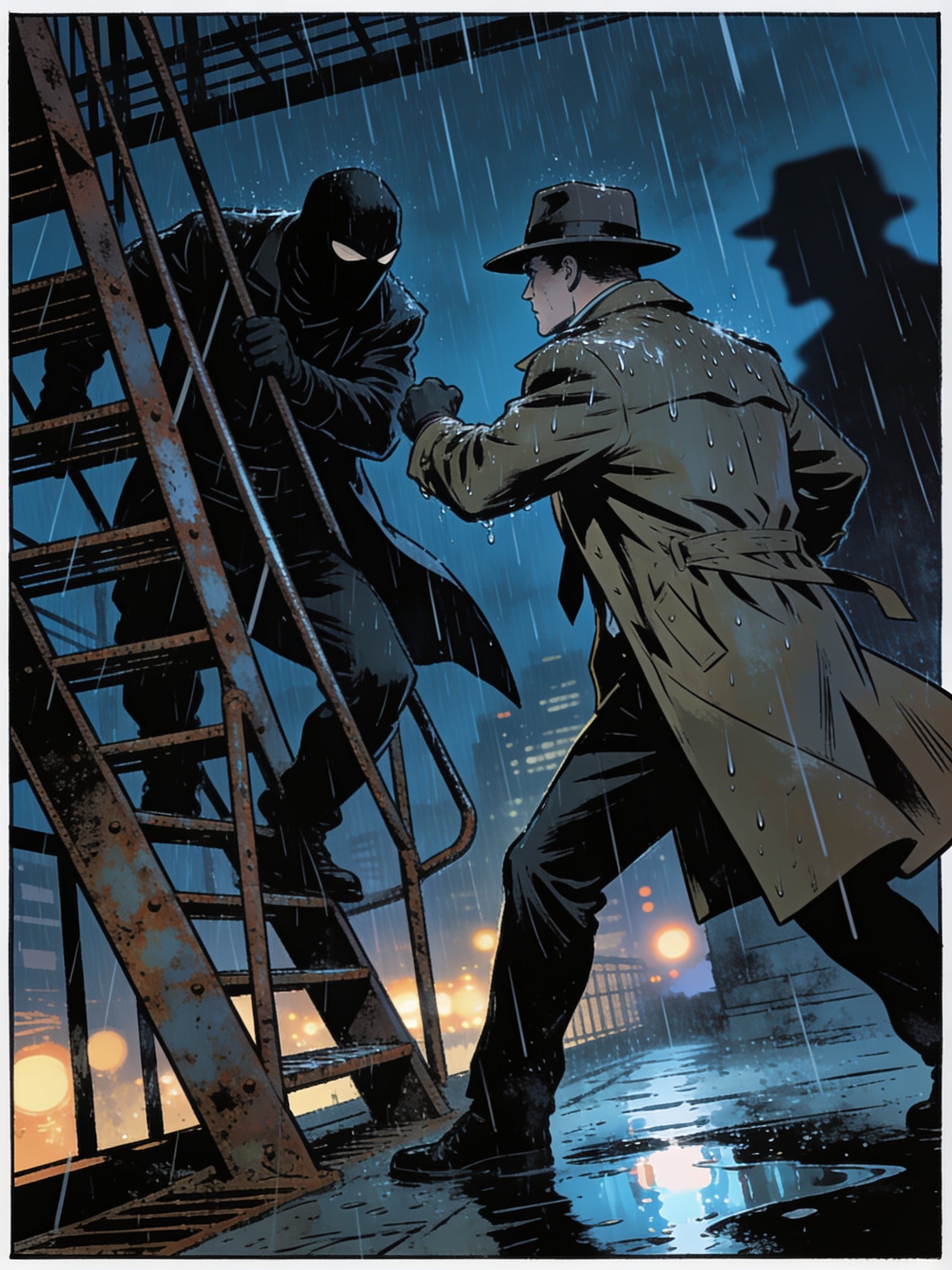
Seedream 4.5 is the best pick for comic style art. It was the only one of the three that returned something shaped like a printed comic page, at 1728 by 2304 pixels, for 1 credit in about 21 seconds. We sent one rain soaked detective panel prompt to Seedream 4.5, Kling Image and Flux 2 Dev on August 26, 2026 and kept the first result from each. All three charged 1 credit, so price does not separate them at all. What separates them is staging, ink weight and how long you wait. Kling Image laid down the heaviest blacks and the best single light source but took about 50 seconds. Flux 2 Dev came back in about 18 seconds with the cleanest perspective and the flattest drama. Below is each output, ranked, with the case for skipping it.
Side-by-side, same prompt
Every model below ran the identical prompt on PixelDojo so the outputs are directly comparable: “Comic book style illustration of a rain-soaked detective confronting a masked thief on a fire escape at night, bold ink outlines, halftone shading, dramatic low angle”
Seedream 4.5
21sThe only page shaped result. Portrait 1728 by 2304 pixels, a cast shadow on the wall, and the two figures actually grappling. 1 credit, about 21 seconds.
Kling Image
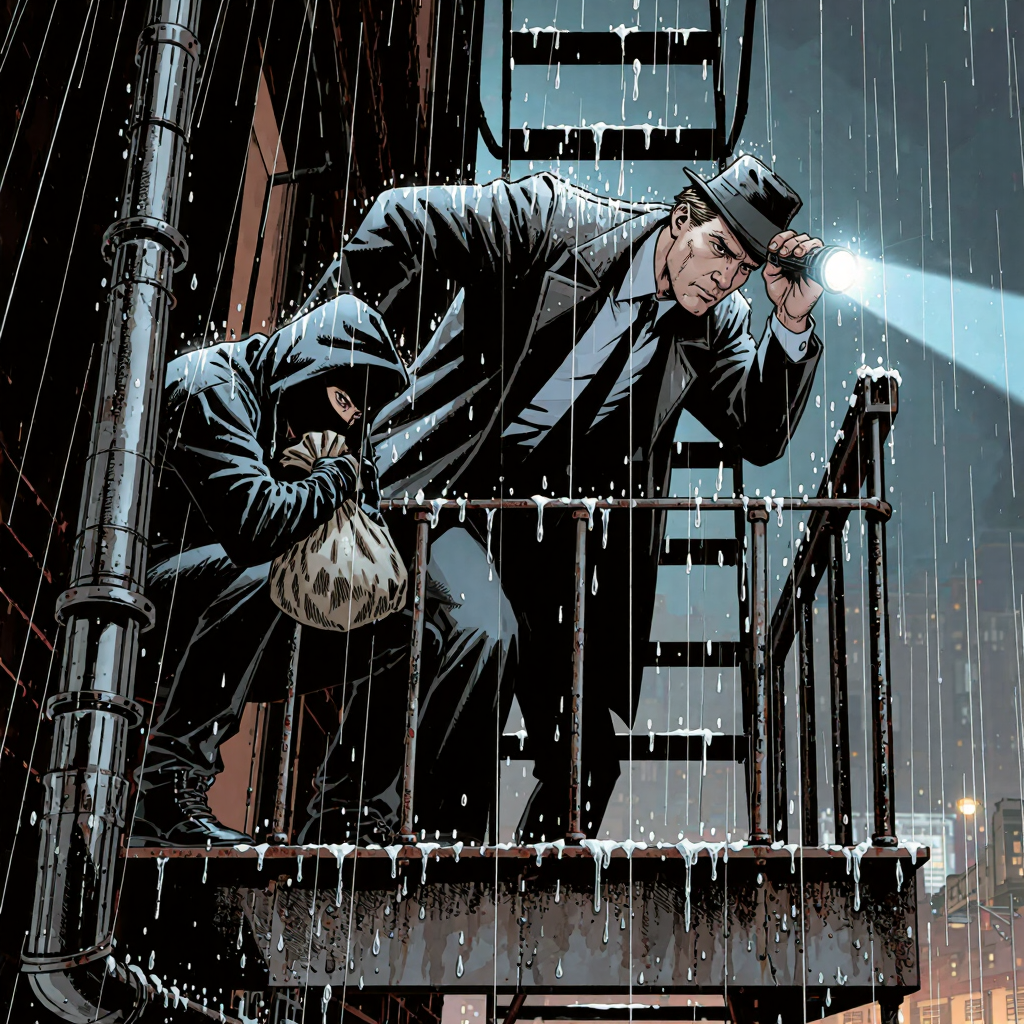
50sHeaviest ink and the only clear single light source, a flashlight beam cutting the rain. 1 credit, about 50 seconds, square 1024 by 1024.
Flux 2 Dev
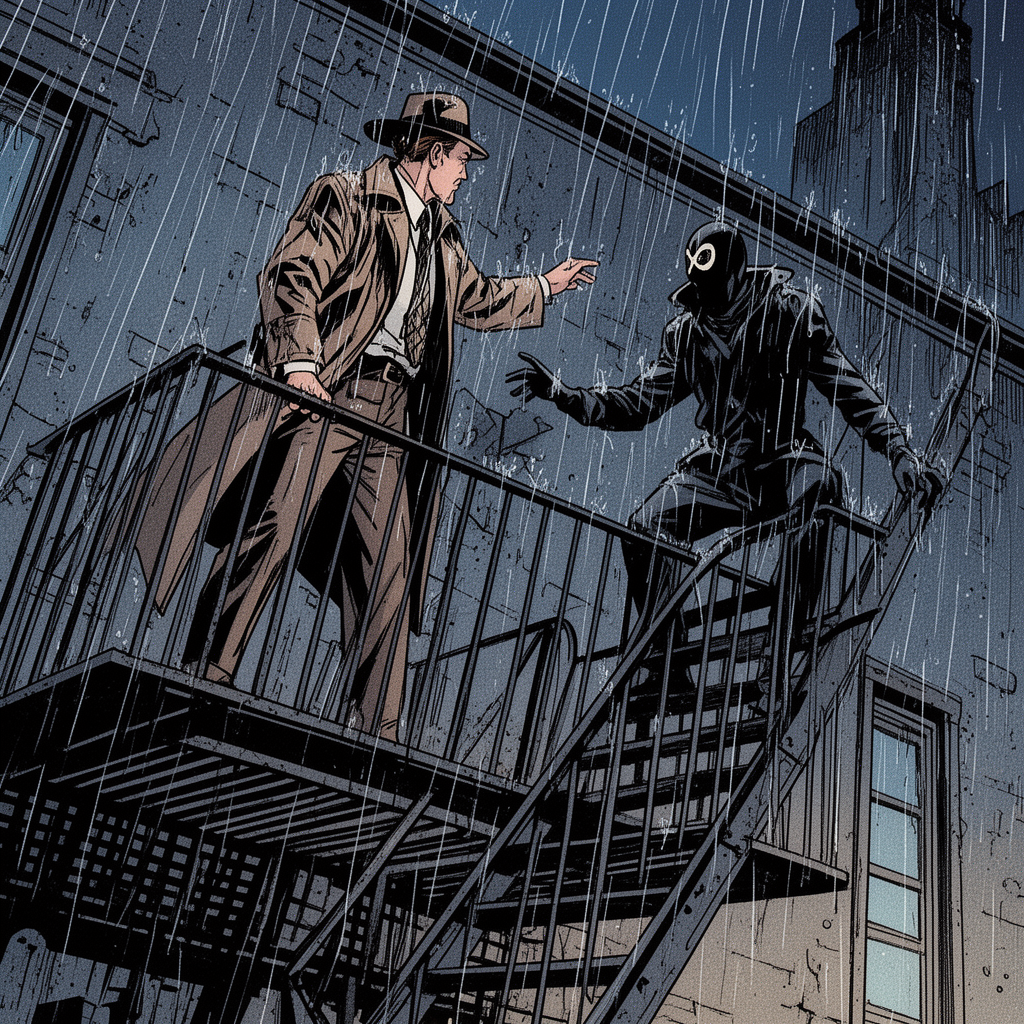
18sFastest of the three and the only one whose fire escape geometry fully resolves from a low angle. Flat staging though. 1 credit, about 18 seconds.
The order we put them in, and what earned each place
1. Seedream 4.5, 1 credit, about 21 seconds
Seedream 4.5 returned the only result shaped like a comic page. The frame is portrait at 1728 by 2304 pixels with a thin white margin around the art, the way a printed page carries a gutter. Inside it the detective has the thief by the wrist mid struggle, and the detective's own silhouette is thrown onto the brick wall behind them as a hard cast shadow, which is a compositional choice none of the others made. Orange street lamps and city bokeh fill the gap between the fire escape and the skyline, and the wet ground reflects them back in streaks. Line weight varies the way an inker varies it, heavy on the two figures, lighter on the background rails and rust. At roughly 4 megapixels it is the only one of the three you could place in a print layout without upscaling first. Skip it if you want a square panel or a full bleed image, because that white border is baked into the picture and has to be cropped.
2. Kling Image, 1 credit, about 50 seconds
Kling Image laid down the strongest ink of the three. Blacks are solid and heavy, the rain is drawn as hundreds of separate white streaks with droplets hanging off every rail and rung, and the detective holds a lit flashlight that throws a hard cone across the frame. That gives the panel one clear light source, which is what makes a noir panel read at thumbnail size. The two figures are close and physically involved, the thief crouched low with a swag sack, the detective leaning in over the rail, so it plays as a single beat of a story rather than two characters standing in the same shot. Colour stays in a tight blue and black range with a warm glow from city windows behind. The output is square at 1024 by 1024. The cost is time. About 50 seconds is more than double either sibling here, on the same 1 credit charge. Skip it when you are drafting a script and need to see many panels quickly.
3. Flux 2 Dev, 1 credit, about 18 seconds
Flux 2 Dev was the fastest of the three at about 18 seconds and gave the cleanest, flattest line art. It is the only one that drew the fire escape as a real piece of architecture, with stair stringers, treads, railings and landings that all connect, seen from a genuine low angle that looks up past the platform toward a tower in the distance. Perspective is the hardest part of this prompt and Flux 2 Dev is the one that solved it. What it lacks is drama. The two figures stand apart with arms extended toward each other rather than touching, the faces are small and simply drawn, and the rain reads as a light overlay rather than as weather. The palette is muted slate and tan, closer to a European graphic novel than to a noir comic. Output is square at 1024 by 1024. Skip it if the panel has to carry emotion, because the staging is the weakest of the three.
Three models, one panel prompt, one day. Identical 1 credit price on all three, and a spread from 18 seconds to 50 seconds.
Why Choose Pixel Dojo for Comic Style Art
Professional-quality results with cutting-edge AI technology
Price is a tie, so the tiebreak is what you saw
All three charged 1 credit for one image. The ranking is decided by page shape, ink weight and staging, then by how long each request took.
The whole comparison cost 3 credits
One image from each model at default settings on August 26, 2026. No retries, no seed hunting, first result kept.
Same key, same request shape
The three models sit in one catalog and answer the same API call, so swapping between them while you find a house style is a one string change.
How It Works
How the test was run, so you can repeat it:
Write one panel description that names the style and the angle
We asked for a rain soaked detective confronting a masked thief on a fire escape at night, in comic book style, with bold ink outlines, halftone shading and a dramatic low angle. Naming the camera angle is what forces a model to build the architecture rather than float the figures.
Send it to all three unchanged, at default settings
No per model tuning, no seed, no second attempt. Whatever each model does with a plain prompt is what you get on your first try, which is the only fair way to compare them.
Time each request, then open the files and look
We timed from submission to the finished file, recorded the charge, downloaded all three images and inspected them at full size. Seedream 4.5 about 21 seconds, Flux 2 Dev about 18 seconds, Kling Image about 50 seconds, 1 credit each.
Loved by creators on PixelDojo
Real feedback from people using PixelDojo, pulled from our in-product surveys.
versatile menu of tools
Best AI tool availble the suite is rad
Versatility quality, value, ROI, innovation
variety of tools available and prompt tools
A "one-stop-shop" for creators! Thanks!!
Lots of different tools. It's easy to purchase more credits.
Explore more AI tools on PixelDojo
AI Tools
Compare & Switch
- Best AI Image Generators
- Best AI Video Generators
- Midjourney Alternatives
- Civitai Alternatives
- Runway Alternatives
- Leonardo Alternatives
- Pika Alternatives
- Luma Alternatives
- Magnific Alternatives
- Veo Alternatives
- Flux Alternatives
- Freepik Alternatives
- Seedance Alternatives
- Seedream Alternatives
- Pixverse Alternatives
- GPT Image Alternatives
- Synthesia Alternatives
- Playground Alternatives
- NightCafe Alternatives
- Canva AI Alternatives
- ElevenLabs Alternatives
- ComfyUI Alternatives
- Fal Alternatives
- Replicate Alternatives
Common Questions
Everything you need to know about Comic Style Art
Which AI model is best for comic style art?
Seedream 4.5 in this test. It returned the only page shaped frame, at 1728 by 2304 pixels, with the two figures actually grappling and a cast shadow behind them, for 1 credit in about 21 seconds. Choose Kling Image when you want heavier ink and one hard light source, and Flux 2 Dev when perspective accuracy and speed matter more than drama.
What did it cost to compare all three?
3 credits on August 26, 2026. Seedream 4.5, Kling Image and Flux 2 Dev each charge 1 credit for one image, so the price is identical across the three and the choice comes down to the output.
Which one gives the biggest file for print?
Seedream 4.5. Its frame arrived at 1728 by 2304 pixels, about four times the pixel count of the 1024 by 1024 results from Kling Image and Flux 2 Dev. That is the practical reason to pick it for anything headed to paper.
Why was Kling Image so much slower on the same price?
It ran past the 30 second sync window and finished as an async job at about 50 seconds. Turnaround moves with queue load on any model, so read these as a same day snapshot. The credit charge does not change with the wait.
Can I generate comic panels through the API?
Yes. POST to /api/v1/models/seedream-4/run, /api/v1/models/kling-image/run or /api/v1/models/flux-2-dev/run with your API key and a prompt. One key covers all three, so a script can fan the same panel description out to every model and you compare the returns.
How do I keep the same character across several panels?
Generate the character once, then feed that image back as a reference on each following panel instead of describing the character again in words. Editing tools that take a source image hold a face far better than a repeated text description does.