Isometric Art Models
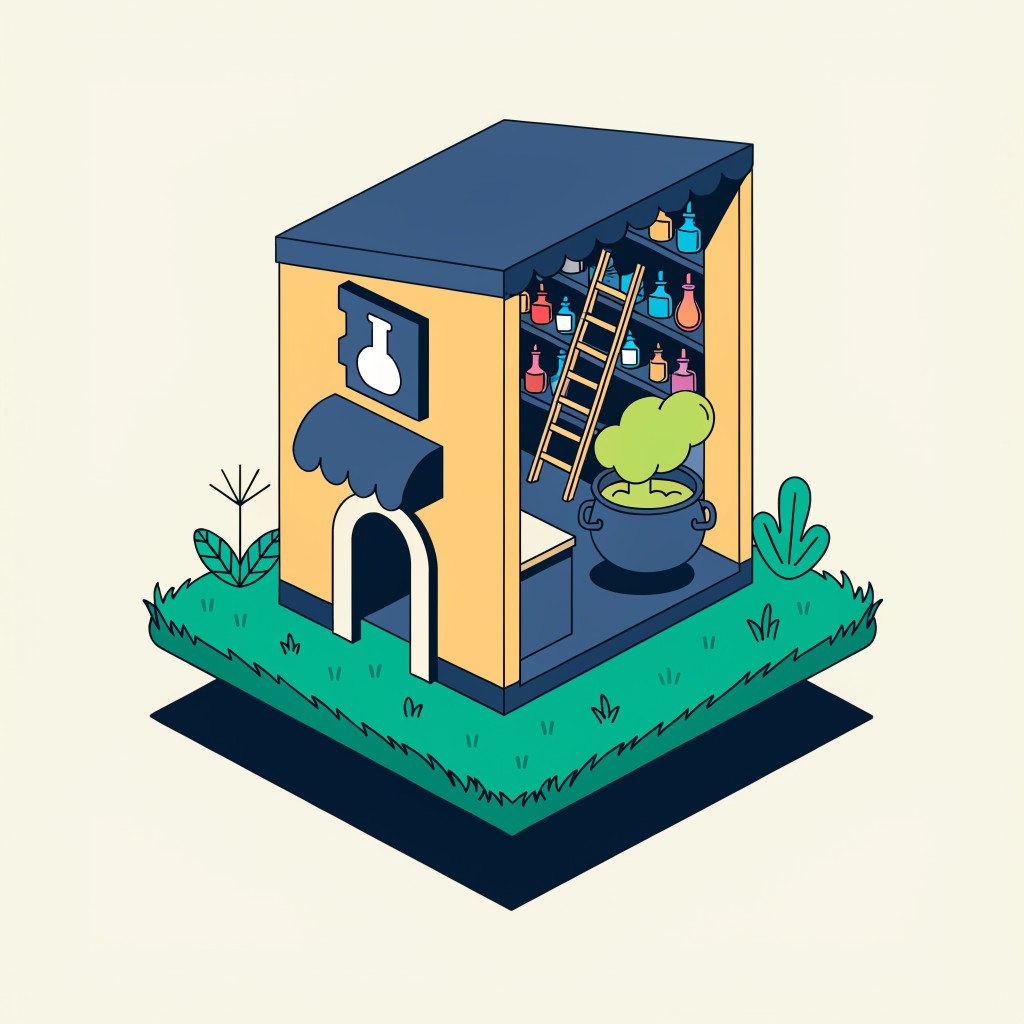
Generated on PixelDojo with Recraft V4.1. Produced by PixelDojo's generation pipeline.
Recraft V4.1 produced the cleanest isometric art of the three models we tested, for 1 credit in about 19 seconds. QWEN Image 2.0 built the busiest interior for the same 1 credit, and Flux 2 Klein 4B returned a usable game tile for 0.1 credits in about 10 seconds. We sent one isometric prompt to all three on August 26, 2026, downloaded every file, and looked at the projection, the line weight and the object count before ranking them. The ranking basis is style fidelity to the isometric brief first, then price, then measured turnaround.
Side-by-side, same prompt
Every model below ran the identical prompt on PixelDojo so the outputs are directly comparable: “Isometric illustration of a tiny fantasy alchemist shop on a floating grass tile, cutaway walls showing shelves of potion bottles, a bubbling cauldron and a wooden ladder, bold clean outlines, flat colors, 45 degree orthographic view”
Recraft V4.1
19sThe only one that answered the style words. Uniform line weight, genuinely flat color, a whole building with a hard shadow under the tile. 1 credit, about 19 seconds, 1024 by 1024.
QWEN Image 2.0
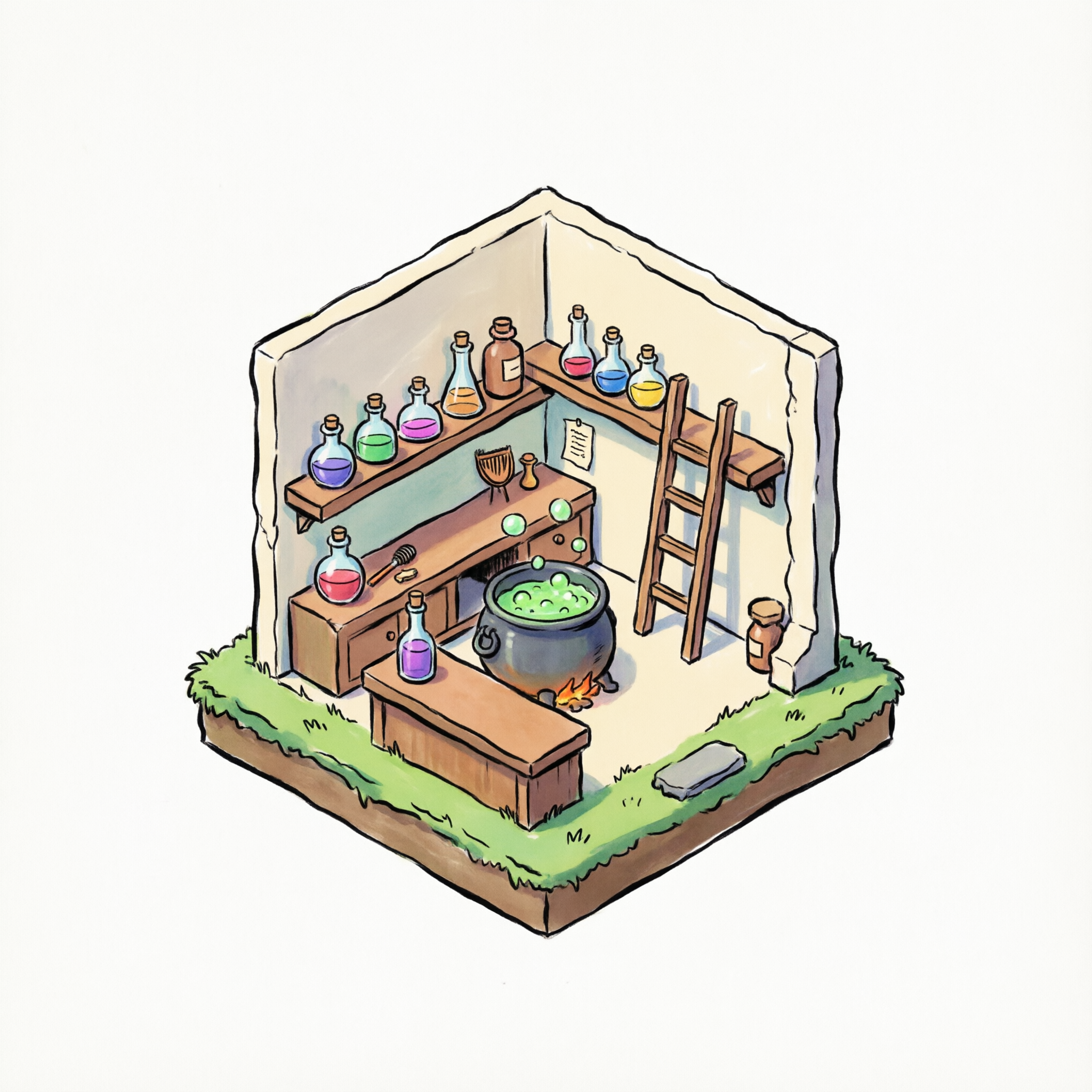
16sRichest cutaway interior and the largest file, at 2048 by 2048 for the same 1 credit. Style drifted to inked watercolor rather than flat color.
Flux 2 Klein 4B
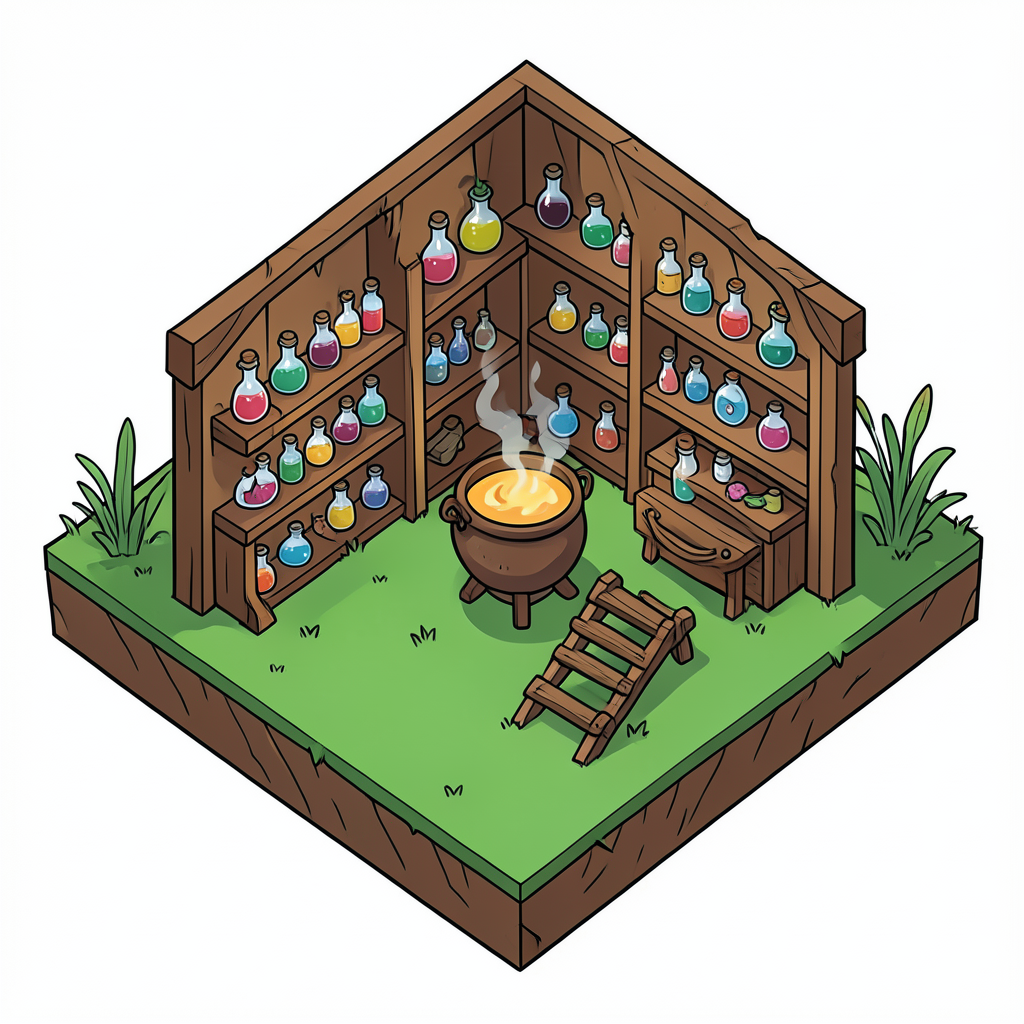
10sA tenth of the price and the fastest run of the three. Thick outlined cartoon tile, but it dropped the walls and laid the ladder flat on the grass.
Grid, line weight and clutter: how each model handled the tile
First: Recraft V4.1, 1 credit, about 19 seconds
Recraft V4.1 was the only one of the three that answered the style words in the prompt. Bold clean outlines came back as a single uniform line weight across the whole drawing, and flat colors came back genuinely flat: a cream background, yellow shop walls, and one navy reused for the roof, the door arch and the cauldron. It built a small complete building rather than a corner, put the potion shelves and a leaning ladder inside the cutaway wall, and dropped a hard diamond shadow under the grass tile so the object reads as a game piece rather than a picture. The projection held steady across every edge, which is what lets a tile sit next to another tile without fighting it. Ours arrived at 1024 by 1024 pixels. Skip it if you want a densely furnished interior. The shop it drew is deliberately sparse, roughly a dozen bottles in total, and pushing for clutter tends to cost the tidiness that makes this style work.
Second: QWEN Image 2.0, 1 credit, about 16 seconds
QWEN Image 2.0 built the richest scene of the three and delivered it at 2048 by 2048 pixels for the same 1 credit. Two walls, a floor, a grass and dirt base, two shelf runs holding nine corked flasks in six colors, a green cauldron bubbling over a small open fire, a workbench with tools scattered on it, a ladder leaning correctly against the right wall, a note pinned to the plaster and a stone step set into the grass. The isometric grid is correct and the cutaway reads instantly. The catch is style drift. We asked for flat colors and bold clean outlines and it answered in inked storybook watercolor, with varying line weight and washed shading. Skip it if the tile has to sit in a flat vector set, because the cleanup pass will cost more time than the credits you saved. Pick it when the brief is a detailed diorama and the painterly texture is welcome.
Third: Flux 2 Klein 4B, 0.1 credits, about 10 seconds
Flux 2 Klein 4B costs a tenth of what the other two charge and it was the fastest run of the set at about 10 seconds. What comes back is a thick outlined cartoon tile: three wooden shelf walls packed with dozens of colored bottles, a cauldron glowing orange under a curl of smoke, tufts of grass on a brown dirt block, cel shading on a white background. For a background prop, a mood test or a first pass across a set, that is enough. It also made the two clearest mistakes we saw. It skipped the walls and roof and read cutaway as open shelving, and it laid the ladder flat on the grass instead of leaning it against anything. Skip it if the tile is hero art or has to be geometrically exact. Use it when volume matters, since ten variations still cost 1 credit and you only need one of them to land.
The prompt words that did the real work
Three phrases moved every result. The words 45 degree orthographic view fixed the projection, cutaway walls opened the interior, and floating grass tile gave the scene a base to sit on instead of a floor that runs off frame. All three models honored the projection, which is the part people usually expect to fight with. Style was where they split. Naming a medium, vector or inked or cel shaded, proved more reliable than asking for flat colors, which two of the three treated as a mood rather than an instruction.
One prompt, three models, same afternoon. Total spend 2.1 credits. Every image was back in under 20 seconds.
Why Choose Pixel Dojo for Isometric Art Models
Professional-quality results with cutting-edge AI technology
1 credit for the top two placings
Recraft V4.1 and QWEN Image 2.0 both charge 1 credit per image. The full three model test cost 2.1 credits.
Every run finished in under 20 seconds
Timed on August 26, 2026 from request to finished file: about 19 seconds, about 16 seconds and about 10 seconds.
A tenth of a credit buys a usable tile
Flux 2 Klein 4B charges 0.1 credits, so a ten variation sweep on one tile costs 1 credit in total.
How It Works
The exact setup behind these three tiles:
Write the projection into the prompt
One prompt was used for all three runs, and it named the 45 degree orthographic view, the cutaway walls and the floating grass tile. Those three phrases are what kept the geometry honest.
Send the identical prompt to each model
No per model tuning, no negative prompts, no seeds, default settings throughout. Each model got one attempt and we kept the first result.
Judge at full size, not on a thumbnail
Every file was downloaded and opened at native resolution. The ladder lying flat on the grass and the varying line weight are both invisible in a small preview.
Loved by creators on PixelDojo
Real feedback from people using PixelDojo, pulled from our in-product surveys.
Versatility quality, value, ROI, innovation
variety of tools available and prompt tools
A "one-stop-shop" for creators! Thanks!!
Lots of different tools. It's easy to purchase more credits.
Amazing performance!
Excellent website for creating all types of media
Explore more AI tools on PixelDojo
AI Tools
Compare & Switch
- Best AI Image Generators
- Best AI Video Generators
- Midjourney Alternatives
- Civitai Alternatives
- Runway Alternatives
- Leonardo Alternatives
- Pika Alternatives
- Luma Alternatives
- Magnific Alternatives
- Veo Alternatives
- Flux Alternatives
- Freepik Alternatives
- Seedance Alternatives
- Seedream Alternatives
- Pixverse Alternatives
- GPT Image Alternatives
- Synthesia Alternatives
- Playground Alternatives
- NightCafe Alternatives
- Canva AI Alternatives
- ElevenLabs Alternatives
- ComfyUI Alternatives
- Fal Alternatives
- Replicate Alternatives
Common Questions
Everything you need to know about Isometric Art Models
What is the best AI model for isometric art?
Recraft V4.1 on our August 26, 2026 test. It was the only model of the three that returned true flat color and one consistent line weight, which is what the isometric game tile look depends on. It charges 1 credit and took about 19 seconds.
What does an isometric image cost?
1 credit each on Recraft V4.1 and QWEN Image 2.0, and 0.1 credits on Flux 2 Klein 4B. Our whole three model comparison came to 2.1 credits.
Do these models get the isometric grid right?
All three held the 45 degree projection on the building itself. The errors were in the props: Flux 2 Klein 4B laid the ladder flat on the grass and left off the walls we asked to cut away, while the other two placed the ladder against a wall as written.
What should an isometric prompt actually say?
Name the projection explicitly, say cutaway walls if you want to see inside, and give the scene a base such as a floating grass tile. Then name a medium, vector or inked or cel shaded, because asking for flat colors alone was read as a mood by two of the three models.
How do I make a set of tiles that match?
Keep the model, the style sentence and the projection wording identical and change only the subject of the scene. Then send any tile that drifts to an edit pass rather than regenerating the whole set, which keeps the palette and line weight consistent across the batch.
How do I call these three from the API?
POST to /api/v1/models/recraft-v4.1/run, /api/v1/models/qwen-image-2.0/run or /api/v1/models/flux-2-klein-4b/run with your API key and a prompt. Same key, same request shape, so swapping models means changing one string.