Board Game Art Prototyping
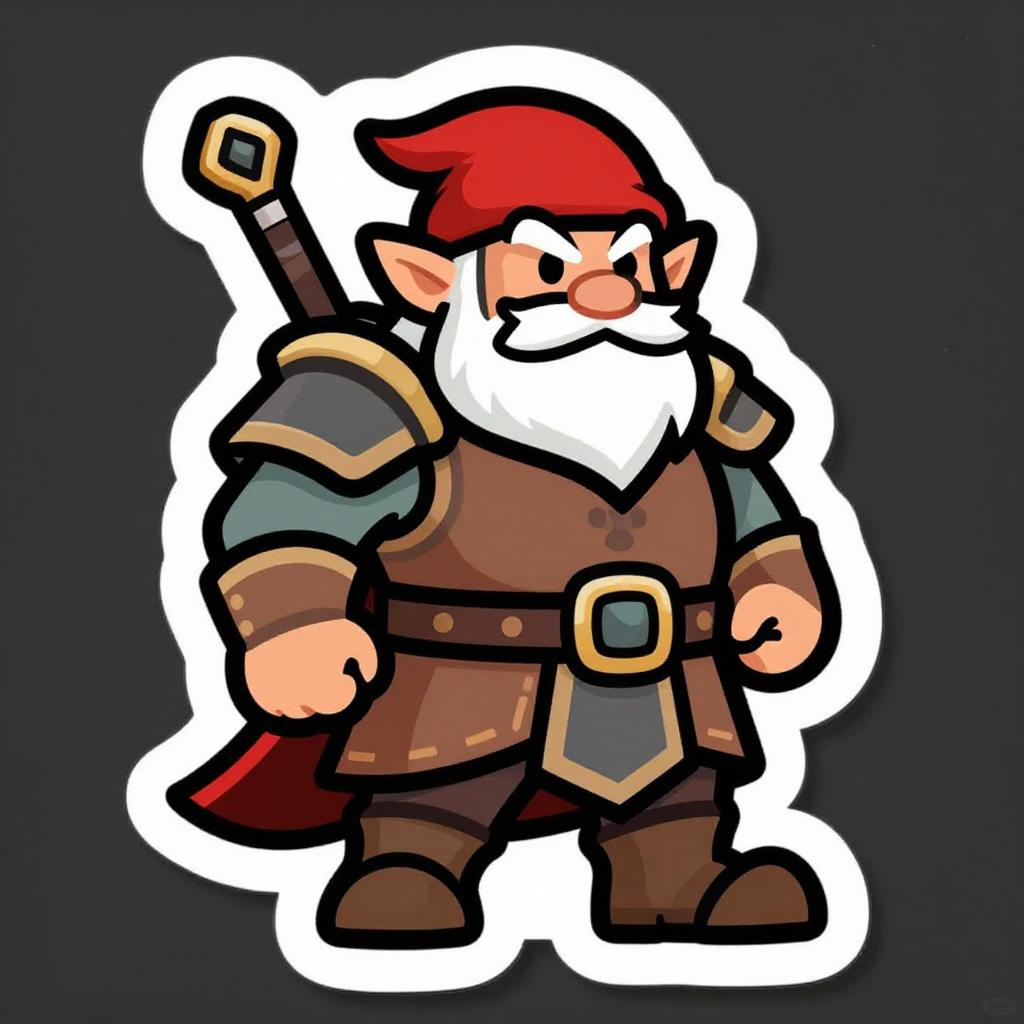
Generated on PixelDojo with Z-Image Turbo. Produced by PixelDojo's generation pipeline.
Describe the character, the outline style, and the flat colors the way a sticker sheet brief would, and a usable prototype token comes back before a real illustrator is booked. We ran this on August 26, 2026 with Z-Image Turbo, 0.5 credits, and got a dwarf warrior token in about 18 seconds. A prototype needs several tokens to playtest a rule set, so a low price per piece matters more than any single image looking final.
The 0.5 credit prototype token, first result kept
Every example below was produced on PixelDojo. Hover to see the prompt.
A bold sticker-style illustration of a dwarf warrior character token for a board game, thick black outlines, flat colors, die-cut style
Z-Image Turbo
One prompt, one game token, one run on August 26, 2026: Z-Image Turbo, 0.5 credits, about 18 seconds, first result kept.
How It Works
How we ran the first prototype token, so you can build a full set:
Describe the character and the art style, not a scene
Name the character type, the outline weight, and the color treatment. Our prompt asked for thick black outlines, flat colors, and a die-cut sticker style, and all three showed up in the result.
Generate the token
We ran the prompt through Z-Image Turbo for 0.5 credits, and the dwarf warrior came back in about 18 seconds: a white beard, a red hood, gilded brown leather armor, a mace, thick black cel-shaded outlines, and a white die-cut border on a plain dark background.
Build out the rest of the roster
Swap the character description and regenerate for each piece the game needs. At 0.5 credits a token, a twelve-piece roster costs about 6 credits, cheap enough to redraw pieces during playtesting.
Loved by creators on PixelDojo
Real feedback from people using PixelDojo, pulled from our in-product surveys.
Awesome site with so many features
Love how I can almost create anything
The Flux Pro Ultra is just amazing!
Very easy to use, and they have fast wan 2.2 video generation with custom loras available.
The overall quality of the site and it's amazing variety of tools. The continued updates of the UI. The unbelievable level of tech support.
THIS IS SO DOPE !
Explore more AI tools on PixelDojo
AI Tools
Compare & Switch
- Best AI Image Generators
- Best AI Video Generators
- Midjourney Alternatives
- Civitai Alternatives
- Runway Alternatives
- Leonardo Alternatives
- Pika Alternatives
- Luma Alternatives
- Magnific Alternatives
- Veo Alternatives
- Flux Alternatives
- Freepik Alternatives
- Seedance Alternatives
- Seedream Alternatives
- Pixverse Alternatives
- GPT Image Alternatives
- Synthesia Alternatives
- Playground Alternatives
- NightCafe Alternatives
- Canva AI Alternatives
- ElevenLabs Alternatives
- ComfyUI Alternatives
- Fal Alternatives
- Replicate Alternatives
Common Questions
Everything you need to know about Board Game Art Prototyping
What does one AI board game token cost to prototype?
0.5 credits on Z-Image Turbo, the model we used. A twelve-piece roster for a full playtest set comes to about 6 credits.
How fast is it?
Our dwarf token came back in about 18 seconds on August 26, 2026, measured from submission to the finished file.
What should the prompt include for a game token?
The character type, the outline weight, and the color treatment, the way a sticker sheet brief would describe it. See the exact prompt we used in the gallery caption above.
Can I keep the same character consistent across multiple cards?
For a fixed character appearing on several cards or a rulebook, a character sheet tool locks the same face, outfit, and features across variants before you place it on new card layouts. A one-off token like ours does not need that step.
Is generated art usable in a real printed game?
Prototype art is meant for playtesting and pitch decks. Whether generated art fits a final print run is a licensing and quality decision for the designer, not something this page decides.
Can I generate a whole roster through the API?
Yes. POST to /api/v1/models/z-image-turbo/run with the same API key used for every model in the catalog, so a script can loop over a list of character names and outfits.