Macro Style Models AI Generator
Generated on PixelDojo. Produced by PixelDojo's generation pipeline.
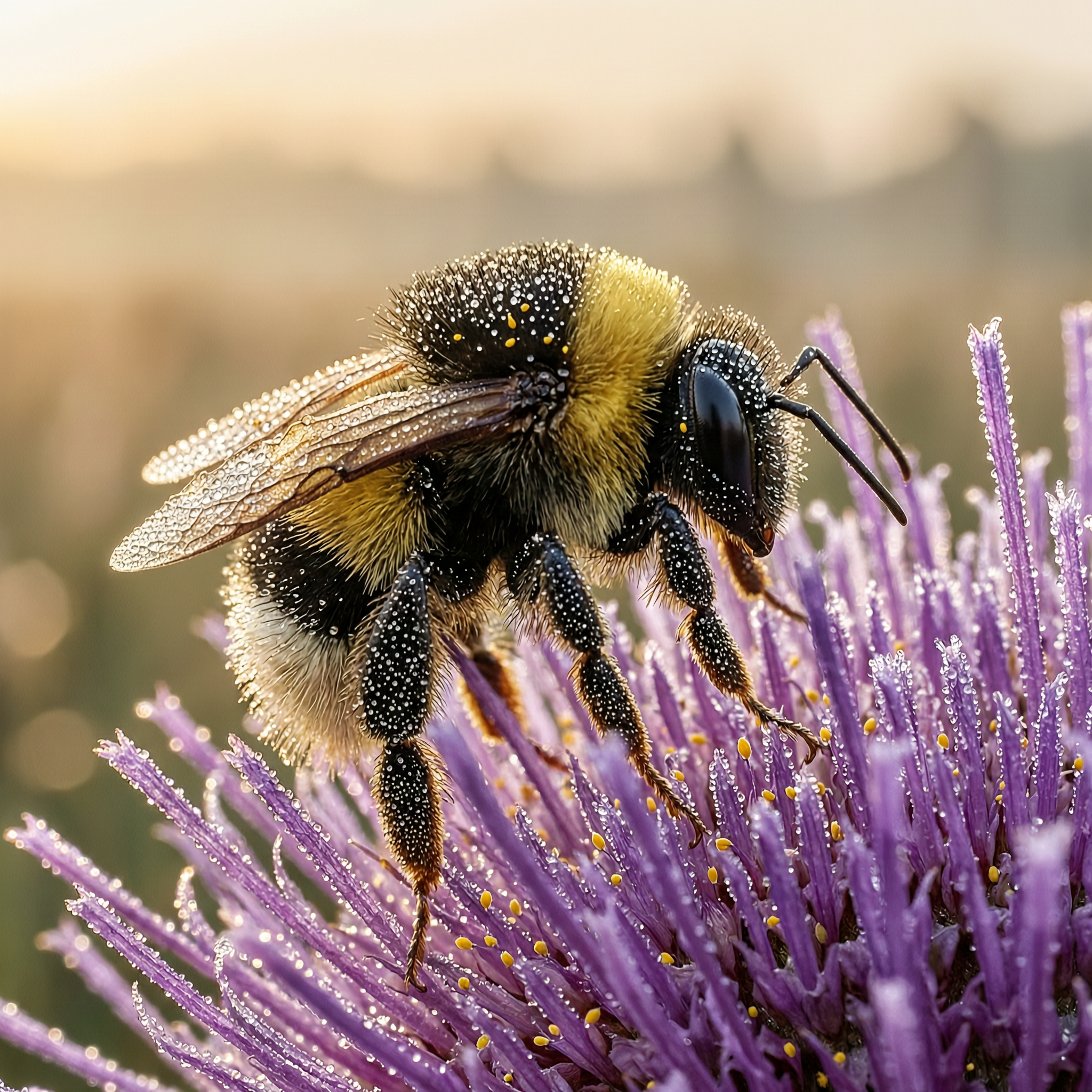
WAN 2.7 Standard gave us the best macro image and it was not the most expensive one. We sent one dew covered bumblebee prompt to three models on August 26, 2026 and timed every request. WAN 2.7 Standard cost 1 credit, answered in about 23 seconds, and returned 2048 by 2048 with correct insect anatomy and the individual pollen grains the prompt asked for. Flux 2 Klein 9B cost 0.5 credits and came back in about 6 seconds, which is remarkable for the price, though its anatomy is softer. Flux 2 Max cost 2 credits, took about 31 seconds, gave the prettiest light and the weakest bee. At this magnification the deciding factor is whether the subject survives inspection.
Side-by-side, same prompt
Every model below ran the identical prompt on PixelDojo so the outputs are directly comparable: “Extreme macro photograph of a dew covered bumblebee on a purple thistle at sunrise, individual pollen grains visible, razor thin depth of field, soft natural backlight”
WAN 2.7 Standard
23sSeparated hairs, wing venation, correct antennae and six legs, plus actual pollen grains on the thistle. 1 credit, about 23 seconds, 2048 by 2048.
Flux 2 Klein 9B
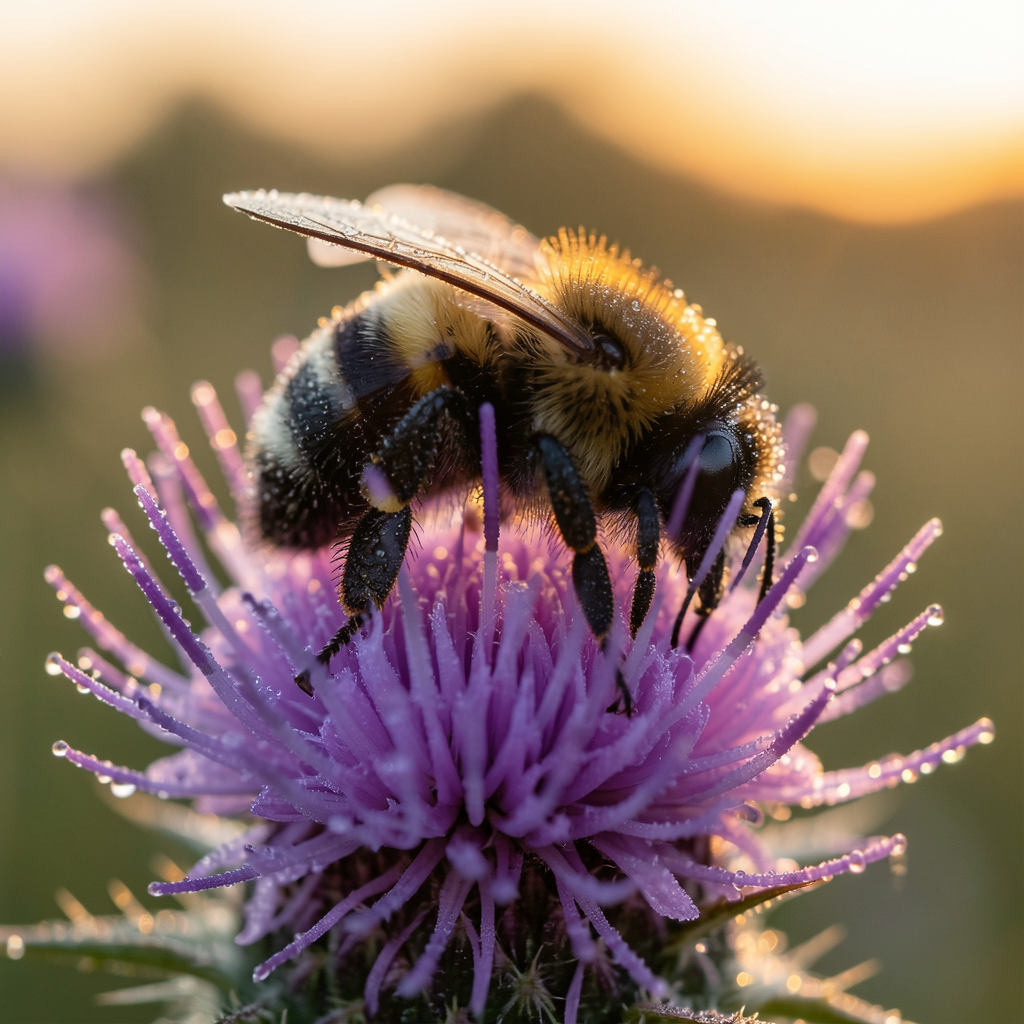
6.0sClean, warm and back in about 6 seconds for 0.5 credits. Softer anatomy on the legs and abdomen. 1024 by 1024.
Flux 2 Max
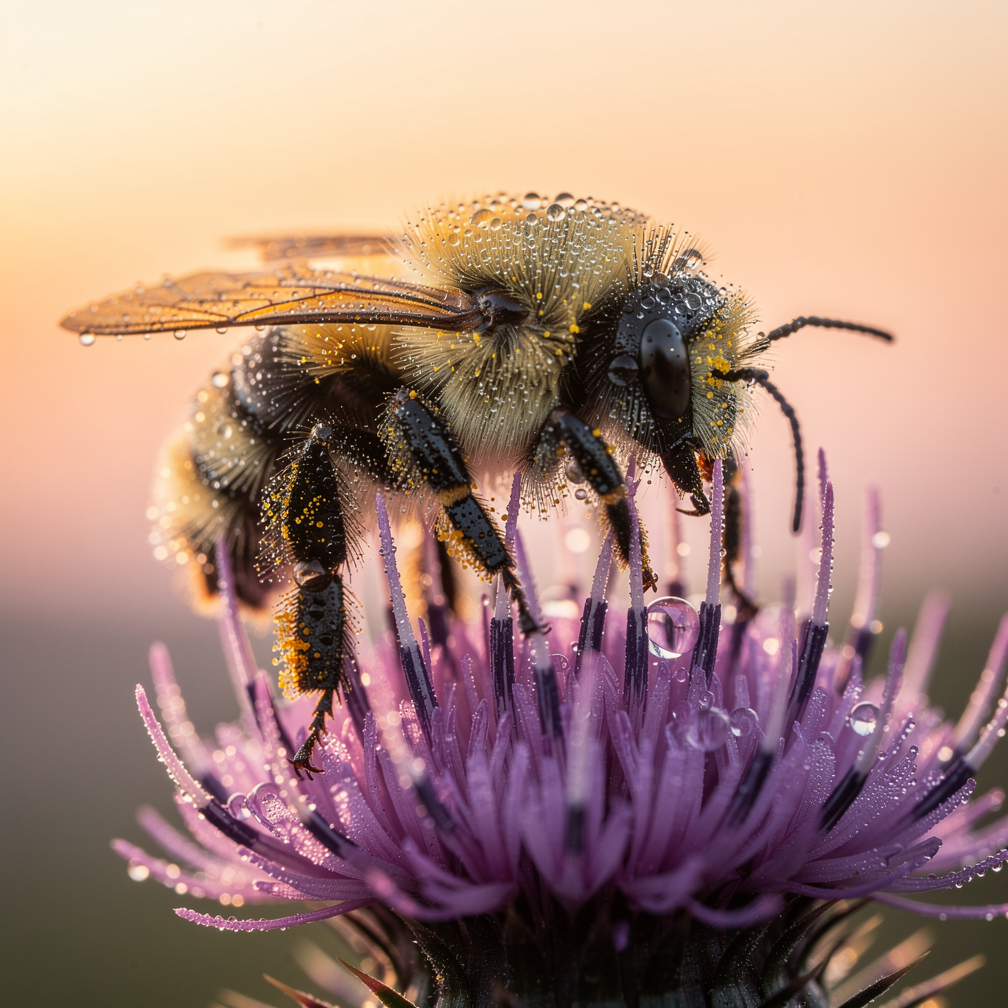
31sBest light of the three, a peach sunrise gradient and heavy pollen on the legs, but the anatomy slipped. 2 credits, about 31 seconds, 1008 by 1008.
Anatomy, pollen and pixel count, ranked
1. WAN 2.7 Standard, 1 credit, about 23 seconds
WAN 2.7 Standard was the only model whose bee holds up when you go looking for mistakes. The hairs on the thorax separate individually, a dew bead sits on the tip of most of them, the wing membrane is speckled with water and the venation still reads through it, and there is one large glossy compound eye with correctly jointed antennae above it. Six legs, all in believable positions, with brown hair along each segment. Underneath, the thistle is a mass of dew covered purple filaments with small yellow pollen grains scattered across them, which is the one specific thing the prompt asked for and the only image of the three that clearly delivered it. Behind that sits a warm dawn field in soft bokeh. It arrived at 2048 by 2048 for 1 credit. Skip it if you want a soft painterly macro. This result is clinical rather than romantic, closer to a field guide plate than to a mood piece.
2. Flux 2 Klein 9B, 0.5 credits, about 6 seconds
Flux 2 Klein 9B was the cheapest model in the test and by far the fastest, at about 6 seconds from submission to finished file. What it handed back is genuinely pretty. The bee sits three quarters from above on the thistle head with dew across its fur and one wing raised, the purple filaments are rim lit and crisply separated, and blurred hills catch a warm sunrise behind. Depth of field falls off exactly the way the prompt asked. For half a credit and under ten seconds, this is the model you point at a macro idea before you commit to anything. Skip it if the file is going anywhere large or anyone is going to crop in. The abdomen banding is mushy, not all six legs read clearly, and 1024 by 1024 is a quarter of the pixel area WAN 2.7 Standard gave us for one credit.
3. Flux 2 Max, 2 credits, about 31 seconds
Flux 2 Max was the most expensive image here and it made the most beautiful light. A soft peach and lavender sunrise gradient fills the whole background, the bee is lit from behind so every hair glows, orange pollen is packed thickly onto the pollen baskets, and the thistle spines below are picked out with dew. As a piece of atmosphere it is the best looking frame in the test. Then you look at the insect. The legs merge into the thistle spines rather than gripping them, the count is hard to resolve, and the head reads as a smooth black blob with no eye structure. It also came back at 1008 by 1008, the smallest file of the three, for twice the price of the winner. Skip it whenever the subject is an animal at this magnification. Backlit flowers and abstract close ups play to its strengths. Insect anatomy does not.
One macro prompt, three models, same session. Prices ran 0.5 to 2 credits. Measured turnaround ran about 6 seconds to about 31 seconds.
Why Choose Pixel Dojo for Macro Style Models
Professional-quality results with cutting-edge AI technology
The middle price won on detail
1 credit bought correct anatomy and 2048 by 2048. The 2 credit option came back smaller and with anatomy errors.
Half a credit gets you a real draft
About 6 seconds and 0.5 credits produced a usable composition. That is cheap enough to run a dozen looks before spending on the final.
Named details are the honest test
The prompt asked for individual pollen grains. Only one of the three clearly put them in the frame. Check for the specific thing you asked for, not the overall vibe.
How It Works
How we ran and judged it:
Same prompt, no per model tuning
All three models got the identical bee and thistle prompt at default settings, with no size instruction and no retries. First result kept in every case.
Bracketed each request with a clock
A timestamp before submission, read against the delivered file. About 6, about 23 and about 31 seconds come from those brackets.
Inspected at full size, not thumbnail size
We opened each file at native resolution and checked legs, antennae, eye structure, wing venation and whether pollen grains were actually present. That ordering came first, then price and speed.
Loved by creators on PixelDojo
Real feedback from people using PixelDojo, pulled from our in-product surveys.
Accurate results
Great site and so much fun to use!
very useful set of tools for image creation, upscaling and enhancement
ease of use, variety of tools, high quality trainings, and a well-maintained discord channel
Ease of use, friendliness and support of the owner, continued innovation.
it is an amazing site to create a pics and vids for those who don't have the hardware themselves
Explore more AI tools on PixelDojo
AI Tools
Compare & Switch
- Best AI Image Generators
- Best AI Video Generators
- Midjourney Alternatives
- Civitai Alternatives
- Runway Alternatives
- Leonardo Alternatives
- Pika Alternatives
- Luma Alternatives
- Magnific Alternatives
- Veo Alternatives
- Flux Alternatives
- Freepik Alternatives
- Seedance Alternatives
- Seedream Alternatives
- Pixverse Alternatives
- GPT Image Alternatives
- Synthesia Alternatives
- Playground Alternatives
- NightCafe Alternatives
- Canva AI Alternatives
- ElevenLabs Alternatives
- ComfyUI Alternatives
- Fal Alternatives
- Replicate Alternatives
Common Questions
Everything you need to know about Macro Style Models
Which AI model is best for macro photography style?
WAN 2.7 Standard on this test. For 1 credit and about 23 seconds it returned 2048 by 2048 with separated hairs, readable wing venation, correct antennae and legs, and the pollen grains the prompt named. Flux 2 Klein 9B is the fast cheap draft, and Flux 2 Max is for backlit atmosphere rather than insect subjects.
How much does one macro image cost?
Between 0.5 and 2 credits for the three models here. Flux 2 Klein 9B is 0.5 credits per image, WAN 2.7 Standard is 1 credit, and Flux 2 Max is 2 credits at its default resolution.
Which one was fastest?
Flux 2 Klein 9B at about 6 seconds from submission to finished file. WAN 2.7 Standard took about 23 seconds and Flux 2 Max about 31 seconds in the same session.
Why do AI macro images get insect legs wrong?
At this magnification legs, joints and eyes take up enough of the frame that small errors become obvious, and thin overlapping shapes against a busy flower head are the hardest case. In our run the model with the largest output handled it best, and the one with the softest rendering handled it worst.
What resolution do these models return?
WAN 2.7 Standard gave us 2048 by 2048 with no size instruction. Flux 2 Klein 9B returned 1024 by 1024 and Flux 2 Max returned 1008 by 1008. That is a four times difference in pixel area between the largest and the smallest.
Can I call these models from an API?
Yes. POST to /api/v1/models/wan-2.7-image/run, /api/v1/models/flux-2-klein-9b/run or /api/v1/models/flux-2-max/run with the same key and the same request shape. Swapping models means changing one string.