People, faces, editorial looks
Portraits with real skin and light
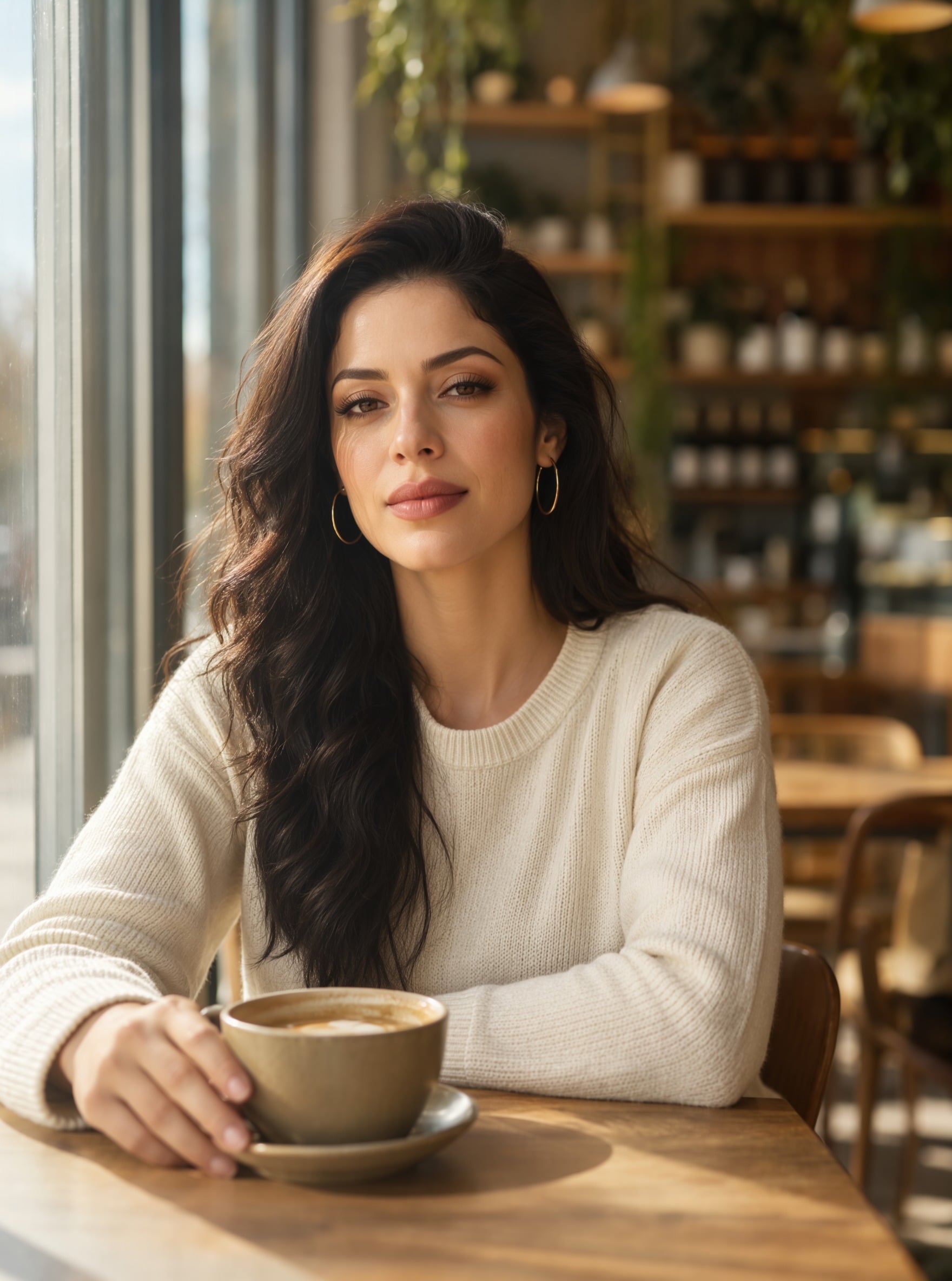
Name the lens, say where the light comes from and describe the face in plain words. Skin, hair and fabric come out with natural texture.
MOSS-Image Prompting Guide
MOSS-Image turns long, detailed prompts into rich photos and illustrations. It makes images up to 2K, starts at 0.5 credits, and lets you add your own trained LoRAs. This guide gives you a simple way to write a long prompt, with six prompts and the image each one made.
Most image models like a short prompt. MOSS-Image is different. It reads the whole description and uses it. A prompt of a few sentences gives a richer picture than one line of keywords.
You can write up to 8000 characters. In English or in Chinese. You do not need that much. Five or six sentences is the sweet spot.
It costs 0.5 credits per image at 1K and 1.5 credits at 2K. You can make up to 4 images in one run. Add up to 3 of your own LoRAs to bring a trained style or character into the picture.
Every image on this page was made with the prompt shown beside it, in one try, at 2K on Pixel Dojo.
1K · 2K
Image sizes
0.5 credits
An image at 1K
3
LoRAs at once
Name the lens, say where the light comes from and describe the face in plain words. Skin, hair and fabric come out with natural texture.
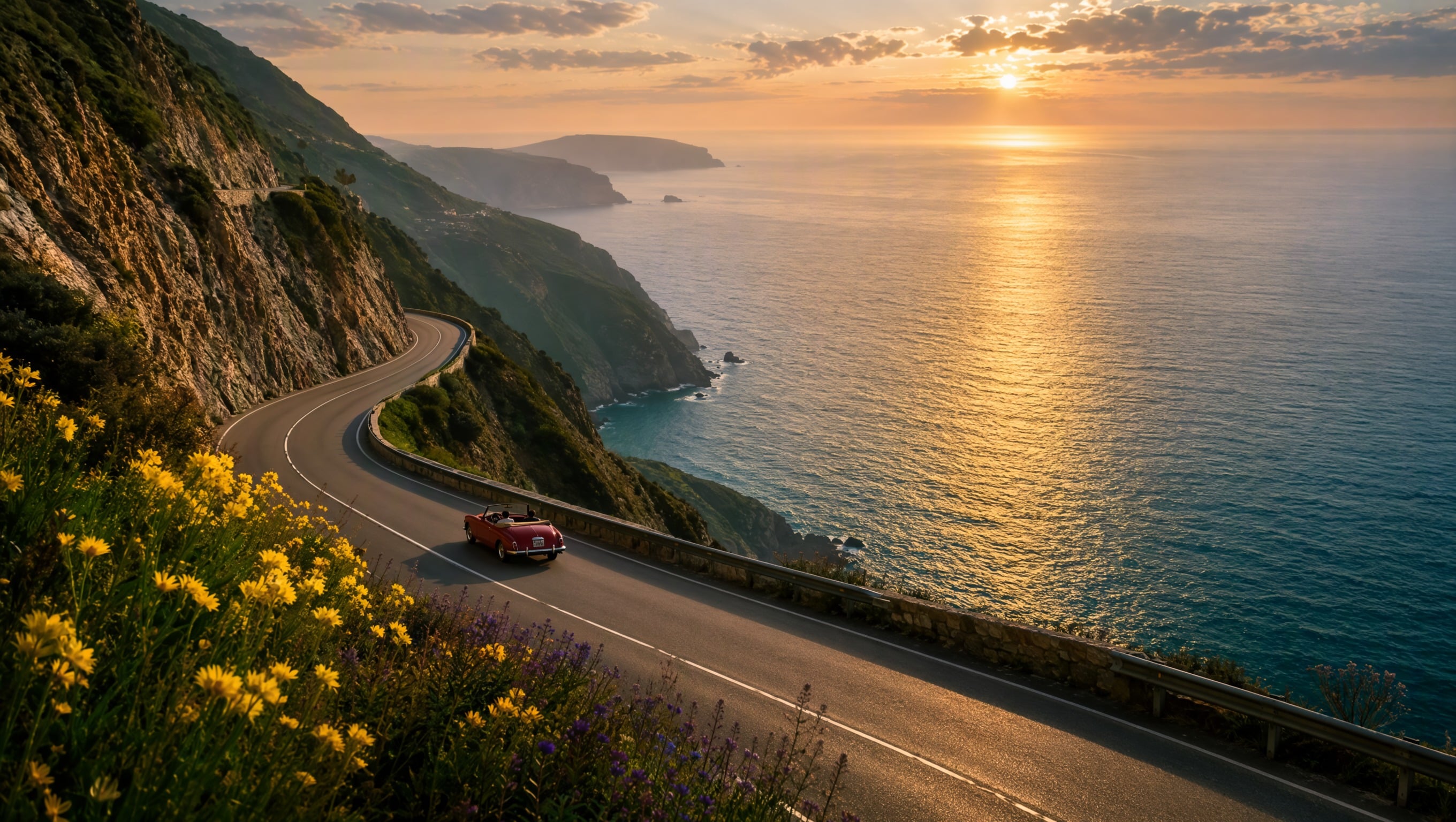
Describe the foreground, the middle and the far distance in turn. The whole frame stays sharp and the colors stay rich.
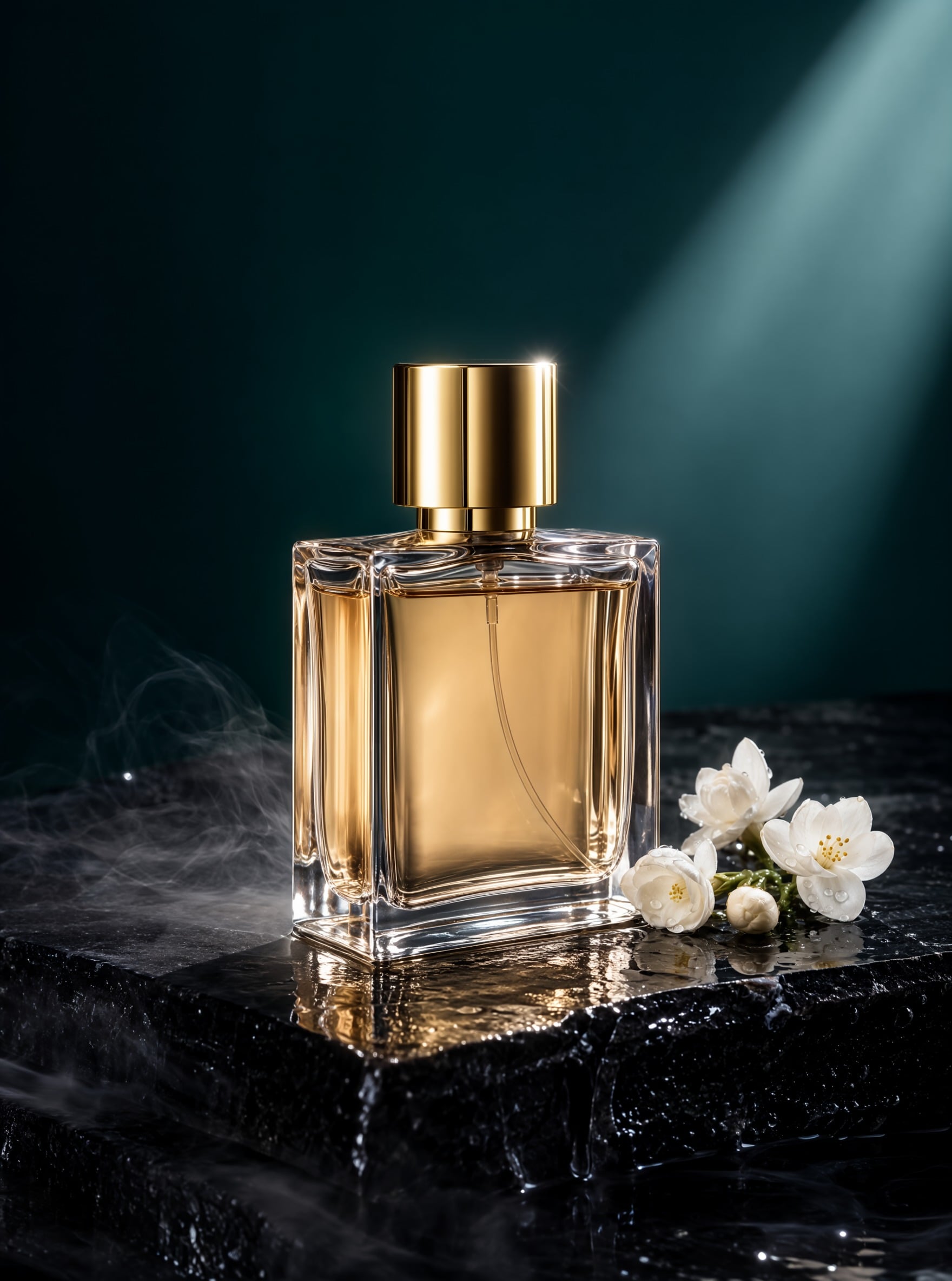
Say what the product stands on, where the highlight falls and what color the backdrop is. You get a clean advertising look.
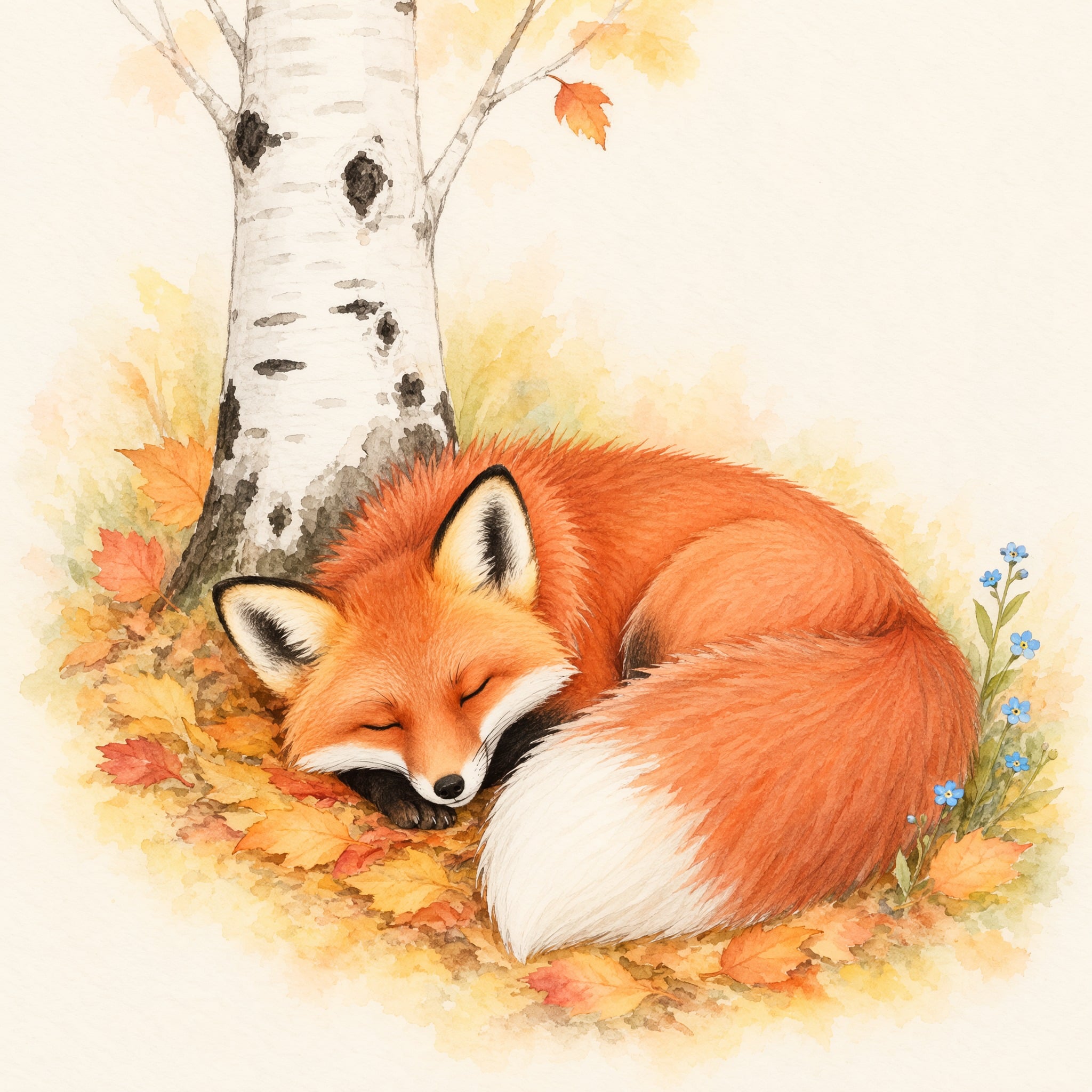
Name the medium, the brush work and the paper. The same long-prompt method works for painted looks as well as photos.
Each example shows the exact prompt that produced the result. Copy any prompt with one click.
2K · 3:4 · 1.5 credits · seed 1327937182
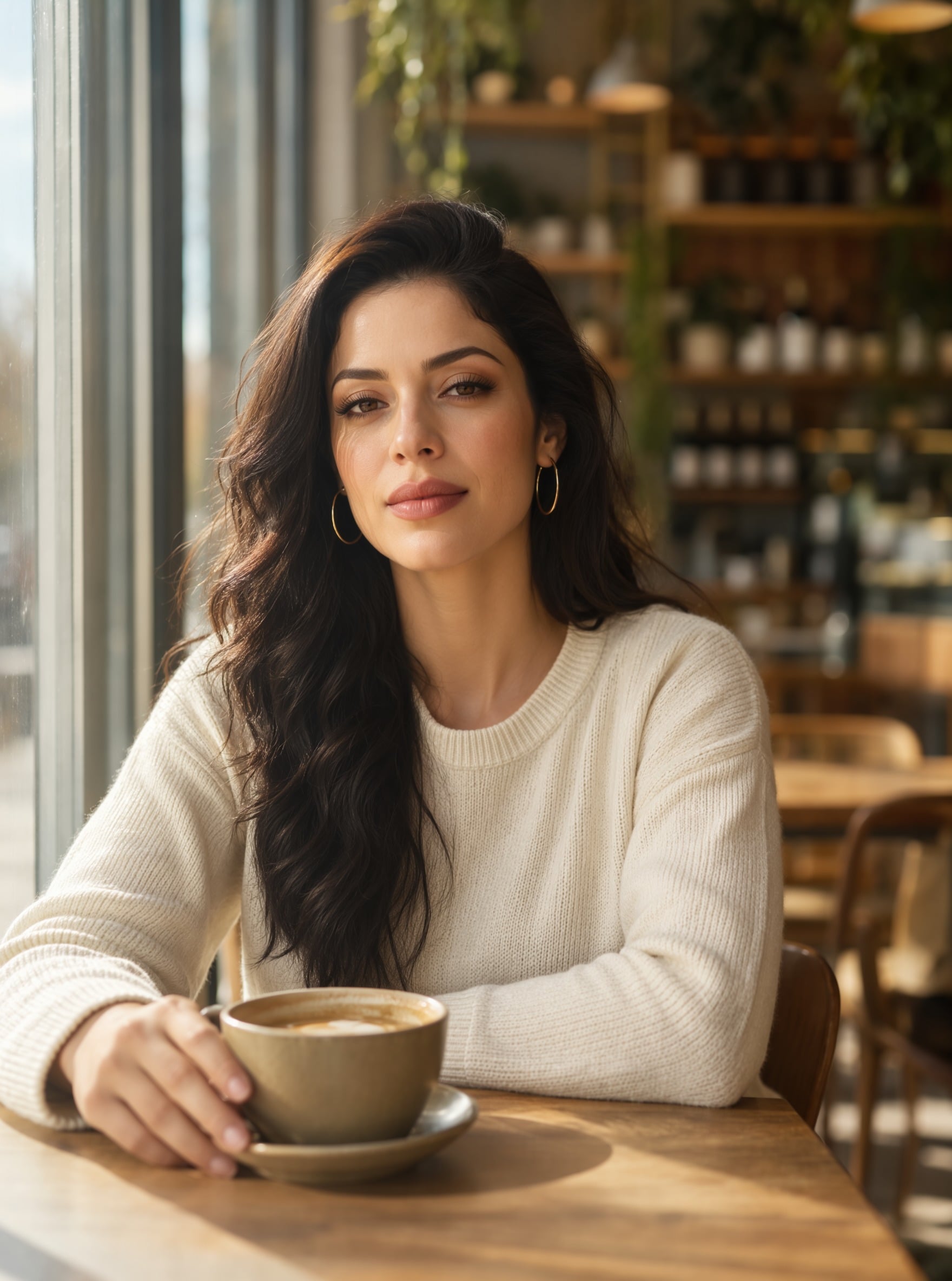
Editorial portrait of a beautiful woman in her late twenties with long dark wavy hair and warm brown eyes, sitting at a sunlit cafe table by a tall window. She wears a cream knit sweater and thin gold hoop earrings. One hand rests around a ceramic cup of coffee. Soft morning light falls across her face from the left and leaves a gentle shadow on the far cheek. Behind her the cafe blurs into warm wood shelves and hanging plants. Shot on an 85mm lens at f/1.8, natural skin texture, calm confident expression, muted warm color palette.
Subject first, then the setting, then the light, then the lens, then the palette. The light has a direction and the lens has a number. That is what makes it feel like a photograph.
2K · 16:9 · 1.5 credits · seed 1854319363
A wide cinematic landscape of a winding coastal road at golden hour. The road hugs steep green cliffs on the left and drops to a turquoise sea on the right. A single vintage red convertible drives away from the camera, small in the frame. Low sun breaks through thin clouds and paints long warm streaks across the water. Wildflowers in yellow and purple line the roadside in the foreground, sharp and detailed. Distant headlands fade into soft haze. Shot from a high vantage point with a 35mm lens, rich color, crisp detail from front to back.
Walk the frame from near to far: flowers, road, sea, headlands. Each layer gets its own sentence, so each layer gets its own detail.
2K · 3:4 · 1.5 credits · seed 1086379994
A luxury product photo of a square glass perfume bottle filled with pale amber liquid, standing on a slab of wet black stone. A polished gold cap catches a single hard highlight. Thin ribbons of mist drift across the stone surface. Behind the bottle a dark teal backdrop falls into shadow, with one soft beam of light crossing it from the upper right. Three white jasmine flowers rest beside the bottle, with water droplets on the petals. Studio lighting, 100mm macro lens, sharp reflections, deep contrast, premium advertising look.
Give the product one surface, one prop and one beam of light. Small touches like mist and water droplets are what make an ad look expensive.
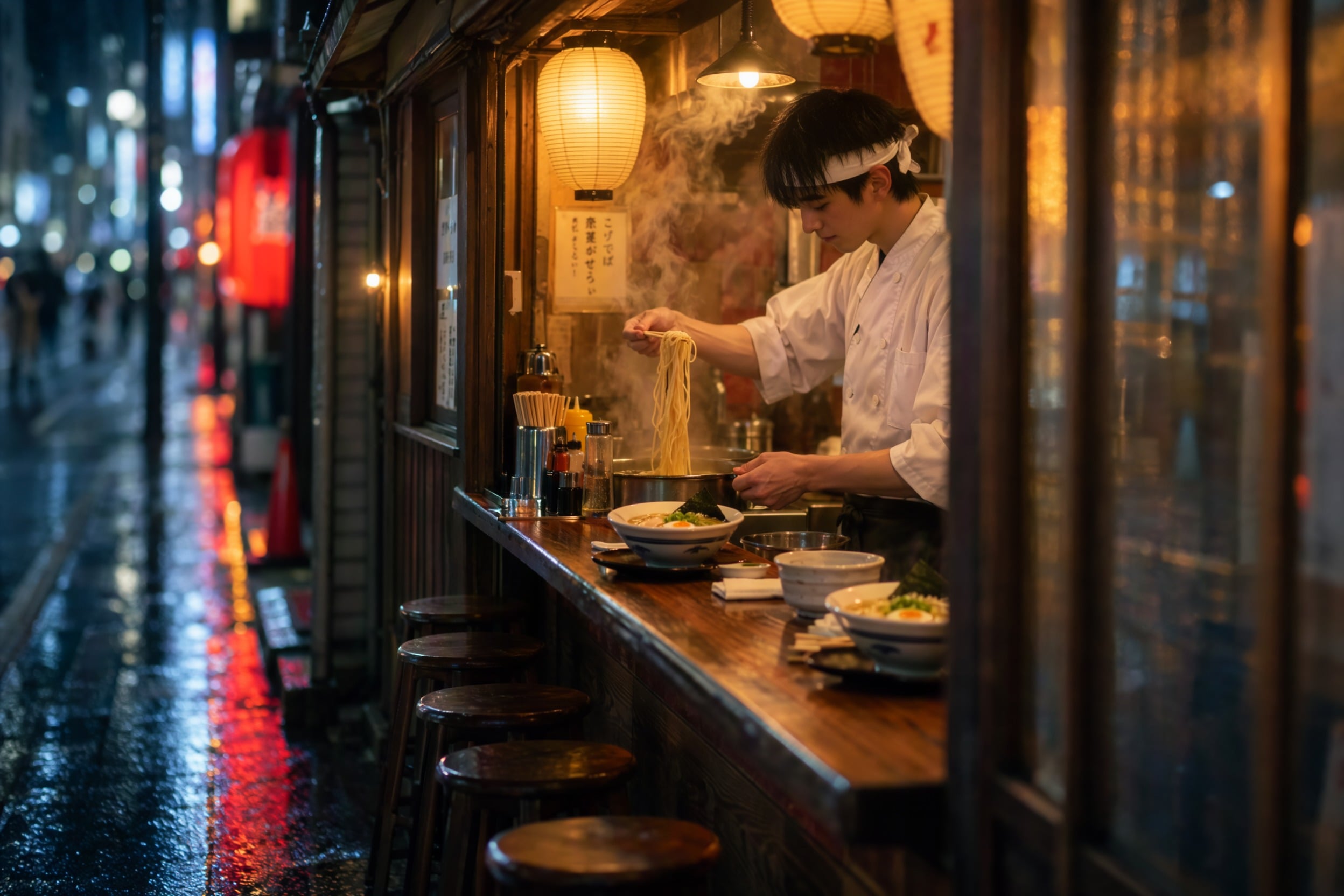
2K · 3:2 · 1.5 credits · seed 1958464759
A cozy night scene inside a tiny Tokyo ramen shop seen from the street through an open wooden counter. A handsome young chef with short black hair and a white headband lifts noodles from a steaming pot, lit by warm paper lanterns. Steam curls up into the light. Six wooden stools line the counter, and two bowls of ramen with soft eggs and green onion sit ready in the foreground. Rain glistens on the pavement outside and reflects red and gold neon. Shallow depth of field, 50mm lens, warm amber and deep blue tones, filmic grain.
A busy scene is fine when you count things. Six stools, two bowls, one chef. Then end with a two-color palette so the warm and cool tones stay in balance.
2K · 1:1 · 1.5 credits · seed 309004536
A soft watercolor illustration of a red fox curled up asleep under a birch tree in early autumn. Loose washes of ochre, rust and pale gold form fallen leaves around it. The white birch trunk has gentle grey pencil lines and a few black knots. Small blue forget-me-nots grow near the fox's tail. The background is unpainted cream paper with a few light splashes of color. Visible brush strokes, soft bleeding edges, delicate ink outlines on the fox's face and ears, calm storybook mood.
For an illustration, swap the lens for the medium. Name the paint, the paper and how the edges look. The same five parts still apply.
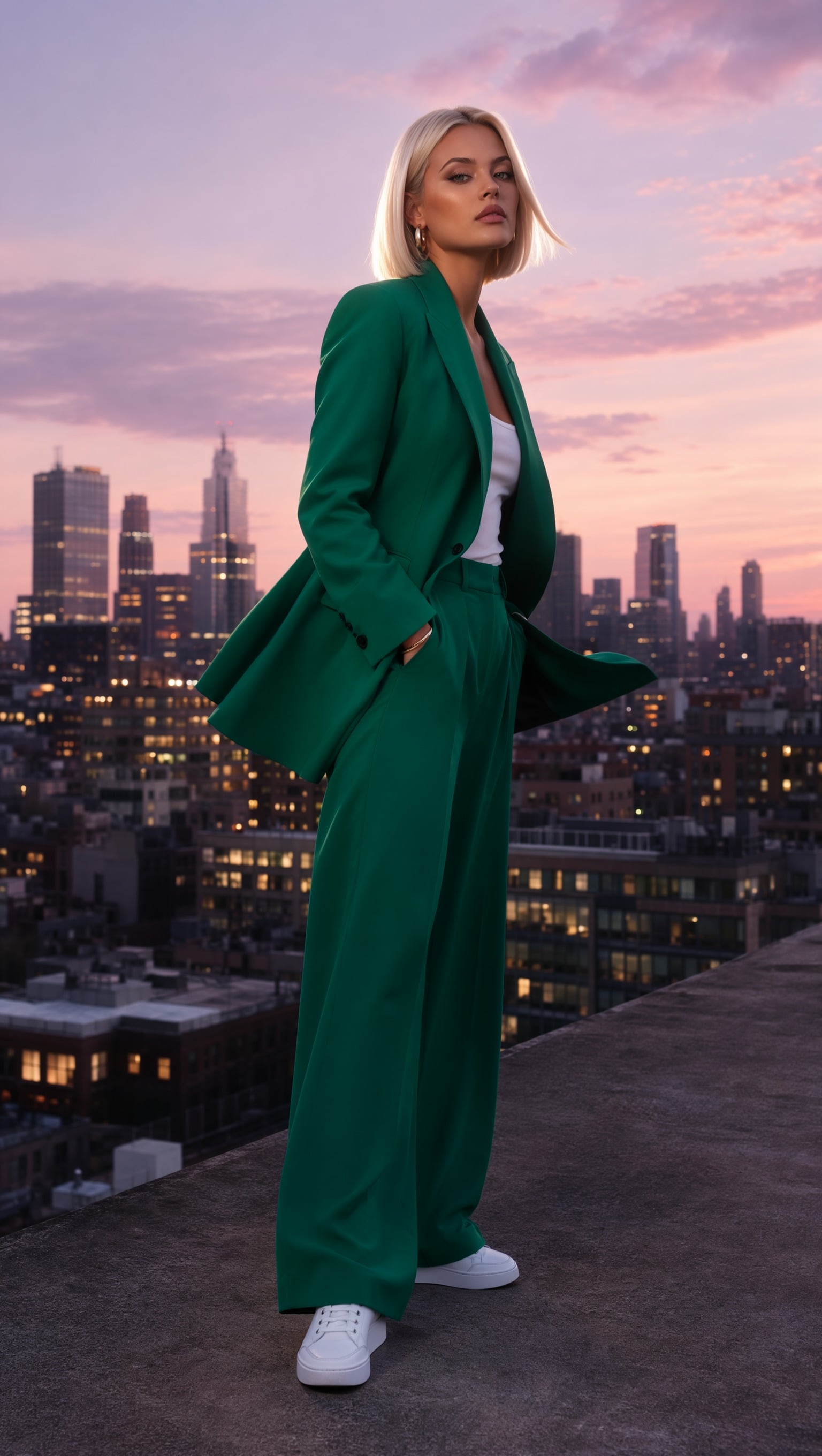
2K · 9:16 · 1.5 credits · seed 858378609
A full-length fashion photo of a striking woman with a sleek blonde bob standing on a city rooftop at dusk. She wears a tailored emerald green suit with wide trousers and white sneakers, hands in her pockets, looking over her shoulder at the camera. Behind her the skyline glows with the first office lights against a pink and violet sky. A light breeze moves her jacket. Shot from a low angle on a 35mm lens, soft rim light on her hair from the setting sun, clean modern magazine style, true-to-life fabric texture.
Describe the outfit piece by piece. Add the camera angle and one rim light. You get a full-length pose with clean fabric and a skyline that glows behind her.
Start with who or what is in the picture. Then say where it is. Then say where the light comes from. Then name the lens. End with the colors. Every prompt on this page follows that order.
Write "soft morning light falls across her face from the left" and not "soft light, morning, left". The model reads the full sentence and places the light where you said.
Name the side, the height and the quality. "Hard highlight on the gold cap" or "rim light on her hair" beats "good lighting".
Use a number like 35mm, 50mm, 85mm or 100mm macro. Longer lenses blur the background more. Shorter lenses show more of the scene.
For a wide scene, give the foreground, the middle and the distance one sentence each. Every layer then gets its own detail.
Say "three jasmine flowers", "six wooden stools" or "two bowls". Numbers keep a busy scene tidy.
Long prompts work best as short sentences. Change one sentence at a time, then run again to see what moved. Reuse the seed to keep the rest steady.
A 1K image is 0.5 credits, so it is a cheap way to test a prompt. When the picture is right, run the same prompt and seed at 2K for 1.5 credits.
Subject: who or what, with two or three plain details such as hair, clothes or shape.
Setting: where it happens and what is behind it.
Light: where it comes from and how it feels, such as soft morning light from the left or one hard highlight.
Lens: a focal length, and sometimes an angle, such as 85mm at f/1.8 or a low angle on a 35mm.
Palette: the two or three colors you want to see, plus a closing word for the style, such as editorial, filmic or storybook.
You can train a LoRA on MOSS-Image with the MOSS-Image LoRA trainer, then pick it in the tool. Use up to 3 LoRAs at once.
Each LoRA has a strength from 0 to 2. It starts at 1. Lower it if the style is too strong. Include the LoRA trigger word in your prompt so the style shows up.
Keep writing the five parts. The LoRA brings the look, and your prompt still places the subject, the light and the lens.
Choose MOSS-Image when you want to write a long, detailed prompt, want a cheap 1K test at 0.5 credits, or want your own trained LoRAs on a model that runs up to 2K.
Choose Seedream 5.5 when you want to edit photos with up to 10 reference images or work from references. It starts at 0.5 credits at 1K and is 1 credit at 2K from a prompt.
Choose MiniMax H3 Image when you want 4K. It makes 2K images at 1.5 credits and 4K at 4 credits, takes up to 8 reference images and also supports up to 3 LoRAs.
Choose Krea 2 Image when you want a quick, stylish look at 0.5 credits with Krea Turbo. Krea Medium is 1 credit and Krea Large is 2. It takes up to 10 reference images and up to 3 LoRAs. It makes one image per run.
| Setting | Values | Notes |
|---|---|---|
| Resolution | 1K (default), 2K | 1K is about 1 megapixel and 0.5 credits an image. 2K is about 4 megapixels and 1.5 credits an image. |
| Aspect ratio | 1:1 (default), 4:3, 3:4, 3:2, 2:3, 16:9, 9:16 | At 2K, 16:9 is 2720 by 1536 and 1:1 is 2048 by 2048. At 1K, 16:9 is 1360 by 768 and 1:1 is 1024 by 1024. |
| Images per run | 1 to 4 | Credits are per image, so 4 images at 2K cost 6 credits. |
| Prompt length | Up to 8000 characters | English or Chinese. Five or six sentences is a good start. |
| LoRAs | Up to 3 | Pick your own trained LoRAs in the tool. Strength 0 to 2, starting at 1. |
| Seed | A number from 0 to 2147483647 | Available through the API. Reuse a seed to get the same image back from the same prompt. |
| Negative prompt | Up to 2000 characters | Available through the API. Lists what to keep out of the image. |
| Output format | JPEG (default), PNG, WebP | Choose it through the API. The tool page saves JPEG. |
| Price | 0.5 credits at 1K, 1.5 credits at 2K | Per image. Multiply by the number of images in the run. |
Five or six sentences is a great start. The tool accepts up to 8000 characters, but you do not need that much. Cover the subject, setting, light, lens and palette.
It is 0.5 credits per image at 1K and 1.5 credits per image at 2K. A run of 4 images at 1K is 2 credits.
Two sizes, 1K and 2K, in seven shapes from square to 16:9 and 9:16. The widest 2K image is 2720 by 1536.
Yes. Train one with the MOSS-Image LoRA trainer, then pick it in the tool. You can use up to 3 at once, each with a strength from 0 to 2.
Yes. MOSS-Image reads both English and Chinese prompts.
MOSS-Image makes new images from your prompt. To edit photos with reference images, use Seedream 5.5, which takes up to 10, or MiniMax H3 Image, which takes up to 8.
Use the same prompt and the same seed. Seed is available through the API.