Image Cost
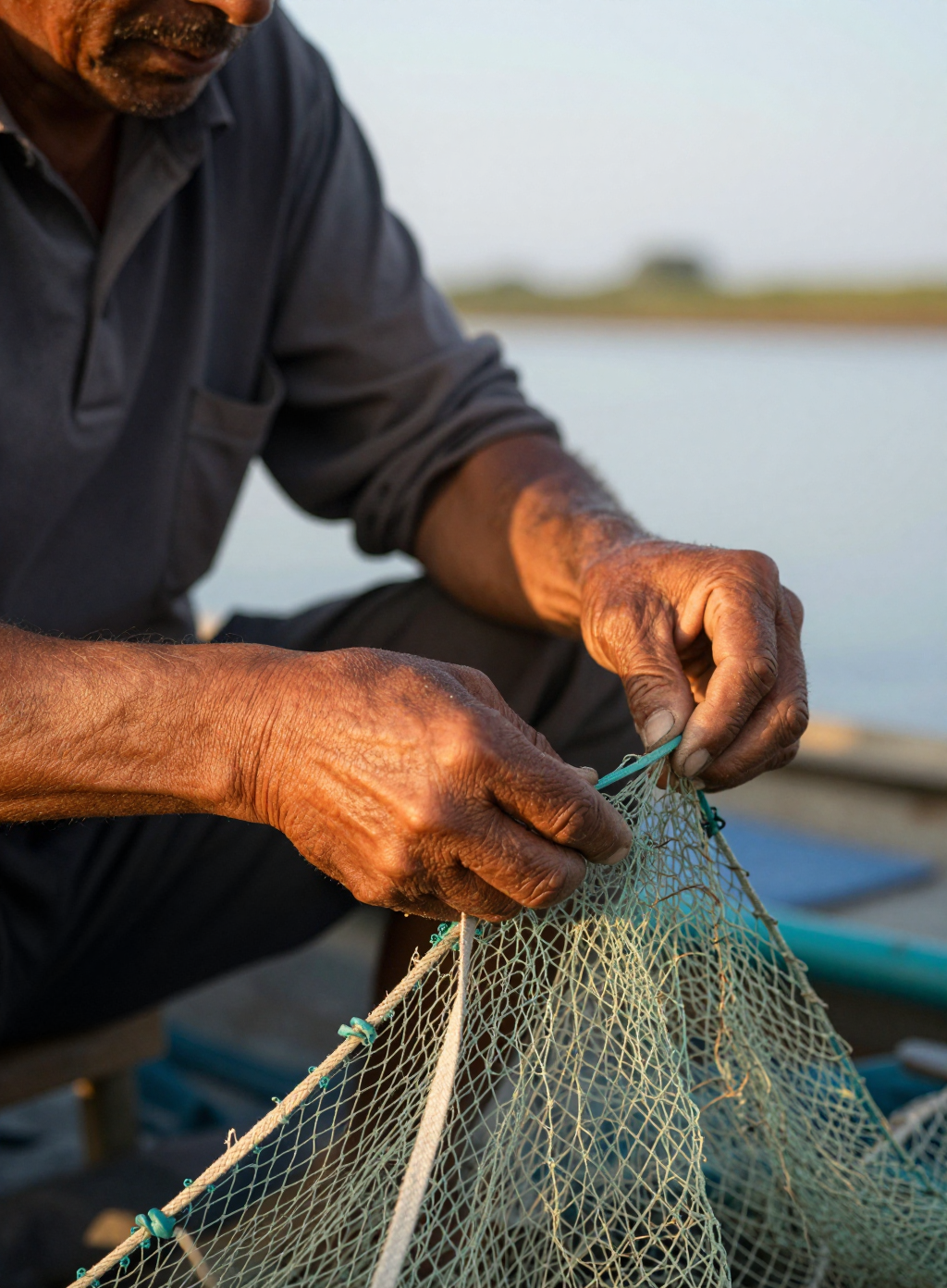
Generated on PixelDojo with Z-Image Turbo. Produced by PixelDojo's generation pipeline.
The cheapest image model on the PixelDojo API is Flux 2 Klein 4B at 0.1 credits per image, which works out to about $0.006 at our list price of $0.0625 a credit. The next rung up is Z-Image Turbo at 0.5 credits, roughly $0.03 an image, and it is the one we would actually recommend, because in our August 26, 2026 portrait test it produced the most convincing skin and hand texture of the three models we ran. That list price is what Lite ($10 a month for 160 credits) and the $5 to $100 credit packs charge, and the $250 pack comes to about 5.69 cents a credit. Bigger plans lower it: Pro is $25 for 500 credits, 5 cents each, and Pro Max is $50 for 1,100, about 4.55 cents each, so every dollar figure here only gets smaller when you upgrade.
What three cents an image looks like
Every example below was produced on PixelDojo. Hover to see the prompt.
Portrait of a middle-aged fisherman mending a net at golden hour, weathered hands in focus, shallow depth of field, natural skin texture, documentary photography style
z-image-turbo
Every credit figure here was read off the live catalog on August 26, 2026, and the dollar conversions come from the published plan prices. The portrait comparison is our own run of one prompt through three models on the same day.
Why Choose Pixel Dojo for Image Cost
Professional-quality results with cutting-edge AI technology
A credit costs less on the bigger plans
Lite is $10 for 160 credits, which is $0.0625 a credit, the same list price the $5 to $100 credit packs charge, and the $250 pack is about $0.0569. Pro is $25 for 500, or $0.05 a credit, and Pro Max is $50 for 1,100, about $0.0455. Every per-image dollar figure on this page uses the list price, so on Pro or Pro Max the same image costs less.
Cheapest is not the same as best value
Flux 2 Klein 4B at 0.1 credits is the floor of the catalog. Z-Image Turbo at 0.5 credits is five times that and still under three cents an image, and it was the model that rendered skin and hands most convincingly in our three-way portrait test. Five times almost nothing is still almost nothing.
Cheap models are also the fast ones
Our Z-Image Turbo portrait came back in about 20 seconds for 0.5 credits, while the 2.5 credit Seedream 5 run on the same prompt took 117 seconds. Paying more bought a richer full scene, not a quicker answer, so the cheap rung is usually the right place to iterate.
One subscription, not a compute bill
Credits cover images, video, audio and upscaling out of the same balance, so the monthly number is a plan choice rather than a forecast. There is no separate per-model account to open and no minimum spend to hit before the cheap tier is available.
How It Works
Decide what the image is for
A thumbnail you will regenerate forty times and a hero image you will ship once do not belong on the same rung of the ladder. Price the job, not the model.
Iterate on the bottom two rungs
Run the prompt on Flux 2 Klein 4B at 0.1 credits or Z-Image Turbo at 0.5 until the composition is settled. At those prices a hundred attempts costs between 60 cents and $3.
Re-run the settled prompt once, higher up
Only the final prompt goes to a 2.5 or 4.5 credit model, and only if the cheap output is genuinely short of what you need. In our portrait test it often was not.
Divide your plan by the model you settled on
500 credits on Pro is 5,000 images at 0.1 credits, 1,000 at 0.5, 500 at 1, 200 at 2.5, or 111 at 4.5. That division is the only capacity math there is.
The Pixel Dojo Advantage
This table is the credit ladder, cheapest first, with each rung converted to dollars at the $0.0625 list price per credit and to images per month on the $25 Pro plan's 500 credits. Read from the top and stop at the first rung that is good enough for the job in front of you.
| Others | Pixel Dojo |
|---|---|
| Per-image API pricing where even the entry tier lands in the cents | Flux 2 Klein 4B, 0.1 credits per image, about $0.006, roughly 5,000 images a month on the $25 plan |
| A fast draft tier you pay extra for as a separate product | Z-Image Turbo, 0.5 credits, about $0.03, roughly 1,000 images a month, and about 20 seconds in our run |
| A standard tier priced per megapixel, so cost moves with resolution | Flux, Seedream 4.5, Qwen Image 2.0 and Kling Image, all 1 credit, about $0.06, roughly 500 images a month |
| A premium tier billed at a multiple of standard, with its own quota | Seedream 5, 2.5 credits, about $0.16, roughly 200 images a month, from the same balance |
| A flagship model on a separate account with a separate invoice | Nano Banana Pro, 4.5 credits, about $0.28, roughly 111 images a month, same key as the 0.1 credit model |
| Usage rights that follow each upstream model license | Full commercial rights and no watermark on every rung, including the cheapest one |
| Spend that is only knowable after the month ends | One subscription at $10, $25 or $50, from $0.0625 a credit on Lite down to about $0.0455 on Pro Max |
Loved by creators on PixelDojo
Real feedback from people using PixelDojo, pulled from our in-product surveys.
Very easy to use, and they have fast wan 2.2 video generation with custom loras available.
The overall quality of the site and it's amazing variety of tools. The continued updates of the UI. The unbelievable level of tech support.
THIS IS SO DOPE !
I have already recommended it to friends
All the tools, plus the guidance
Excellent tools. Ease of use. Well thought out interface. Wide variety of AI tools and features which are up to date with more added each month
Explore more AI tools on PixelDojo
Popular AI Models
AI Tools
Compare & Switch
- Best AI Image Generators
- Best AI Video Generators
- Midjourney Alternatives
- Civitai Alternatives
- Runway Alternatives
- Leonardo Alternatives
- Pika Alternatives
- Luma Alternatives
- Magnific Alternatives
- Veo Alternatives
- Flux Alternatives
- Freepik Alternatives
- Seedance Alternatives
- Seedream Alternatives
- Pixverse Alternatives
- GPT Image Alternatives
- Synthesia Alternatives
- Playground Alternatives
- NightCafe Alternatives
- Canva AI Alternatives
- ElevenLabs Alternatives
- ComfyUI Alternatives
- Fal Alternatives
- Replicate Alternatives
Common Questions
Everything you need to know about Image Cost
What is the actual cheapest image model with an API here?
Flux 2 Klein 4B at 0.1 credits per image, which is about $0.006 at the $0.0625 list price per credit, and less on the bigger plans. The $25 Pro plan's 500 credits cover 5,000 of them a month. Nothing else in the catalog on August 26, 2026 was priced below it.
Is the cheapest model good enough to ship?
Sometimes, and the way to find out is to run it. The more interesting result from our August 26, 2026 test was one rung up: Z-Image Turbo at 0.5 credits produced the most convincing skin and hand texture of the three portrait models we ran, at a fifth of the price and a fifth of the wait of the 2.5 credit option.
How do credits convert to dollars?
It depends on how you buy them. Lite is $10 a month for 160 credits, $0.0625 each, and credit packs from $5 to $100 are $0.0625 too, with the $250 pack at about $0.0569. Pro is $25 for 500 credits, $0.05 each, Pro Max is $50 for 1,100, about $0.0455 each, and the prepaid terms go lower still: 6 months of Pro for $135 works out to $0.045 a credit and a year of Pro Max for $570 to about $0.0432, with the credits granted one month at a time. At the $0.0625 list price, 0.1 credits is about $0.006, 0.5 credits is about $0.03, 1 credit is about $0.06, 2.5 credits is about $0.16, and 4.5 credits is about $0.28.
Do I pay per image or per month?
Per month, and the credits meter volume inside it. There is no per-call invoice and no metered compute bill arriving later, which is the practical difference from pay-per-use image endpoints: your ceiling is chosen up front rather than discovered at the end of the month.
Are cheap generations watermarked or limited in rights?
No. Outputs carry full commercial rights and no watermark on every plan, including the 0.1 credit model. The price ladder changes model quality and speed, not what you are allowed to do with the result.
What do the expensive models actually buy?
Scene construction, mostly. Our 2.5 credit run built the richest full environment around the subject and followed a specific framing instruction most literally, and the 1.5 credit run composed the cleanest overall image. If your prompt is a tight crop on one subject, that premium may not show up in the output at all.