Frameo alternative
Frameo alternative: a short story built shot by shot
Frameo puts generation, editing and assembly on one canvas. Pixel Dojo gives you the same model families shot by shot with a price on each step, and Film Studio when you want the script, cast and edit handled for you.
Frameo is an AI video production platform from Dashverse, with a chat driven canvas and models like Seedance 2.5, Kling 3.0 and Veo 3.1. We made a two scene story the manual way to show what each step does and what it costs.
30 credits ($1.88) per 5 s clip at 720p with audio. Included in every plan, from $10/month.
Already a member? Sign in
By Brian Lovett · Updated
More from the same toolbox
Every image and clip below was made on Pixel Dojo with the prompt shown.
Auto captions burned into the first clip for 5 credits, word for word.
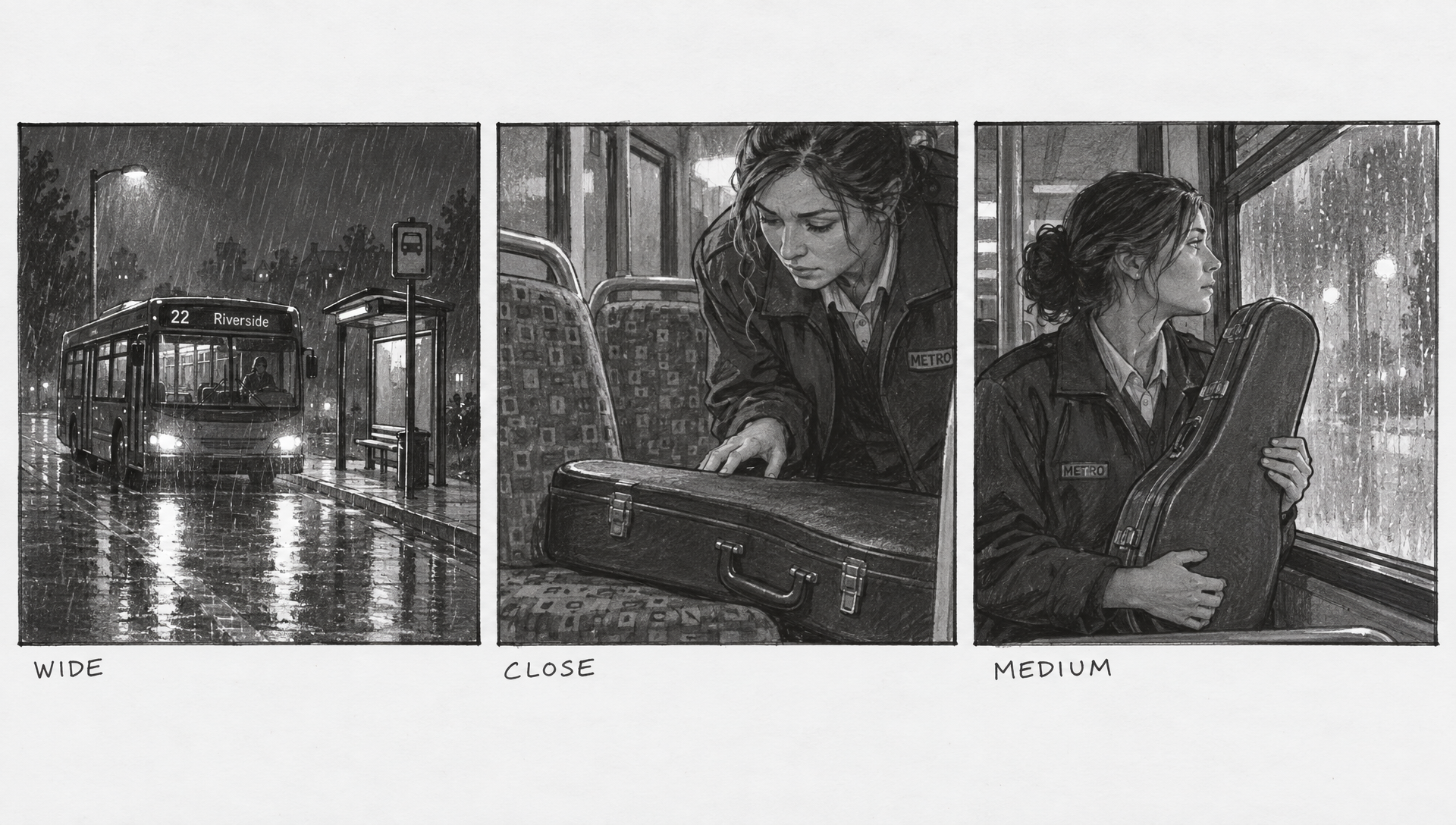
A storyboard sheet on GPT Image 2.5 for 2 credits, with the panel labels spelled right.
A clean film storyboard sheet with three wide panels in a row, drawn in pencil and grey marker: panel 1, a night bus pulls up at an empty stop in the rain; panel 2, the driver finds a violin case on a seat; panel 3, she holds it up to the window and looks out. Short handwritten notes under each panel: WIDE, CLOSE, MEDIUM.
A vertical drama beat with dialogue on Veo 3.1 Lite for 6 credits.
Vertical drama shot: on a rooftop at blue hour a woman in her thirties in a denim jacket turns to the man beside her and says quietly, "I already said yes to the job in Lisbon." He looks away at the city lights. Wind, distant traffic, her voice.
A storybook 3D short on WAN 3.0 for 10 credits, with rain and a music box.
Animated short in a soft 3D storybook style: a paper boat with a tiny lantern sails down a rain filled street gutter at night, past glowing shop windows, bobbing over a small waterfall into a puddle that reflects the moon. Sound: rain, trickling water and a gentle music box melody.
The walkthrough: four steps, two scenes
Step 1: the keyframe
A cinematic still on GPT Image 2.5 sets the look: a night bus driver at the end of the line with a forgotten violin case.
Step 2: the first scene
Kling 3.0 animates that still as its start frame and gives her a spoken line, with rain and engine sound.
Step 3: the next keyframe
Nano Banana 2.1 takes the first still as an identity reference and stages the next morning: she hands the case back to its owner.
Step 4: the second scene
Seedance 2.5 animates the handover. Then auto captions burn her line into the first clip for social.
Every step, with what it made
Each tile below is one step of the chain, run on its own model, and shows its settings and credits.
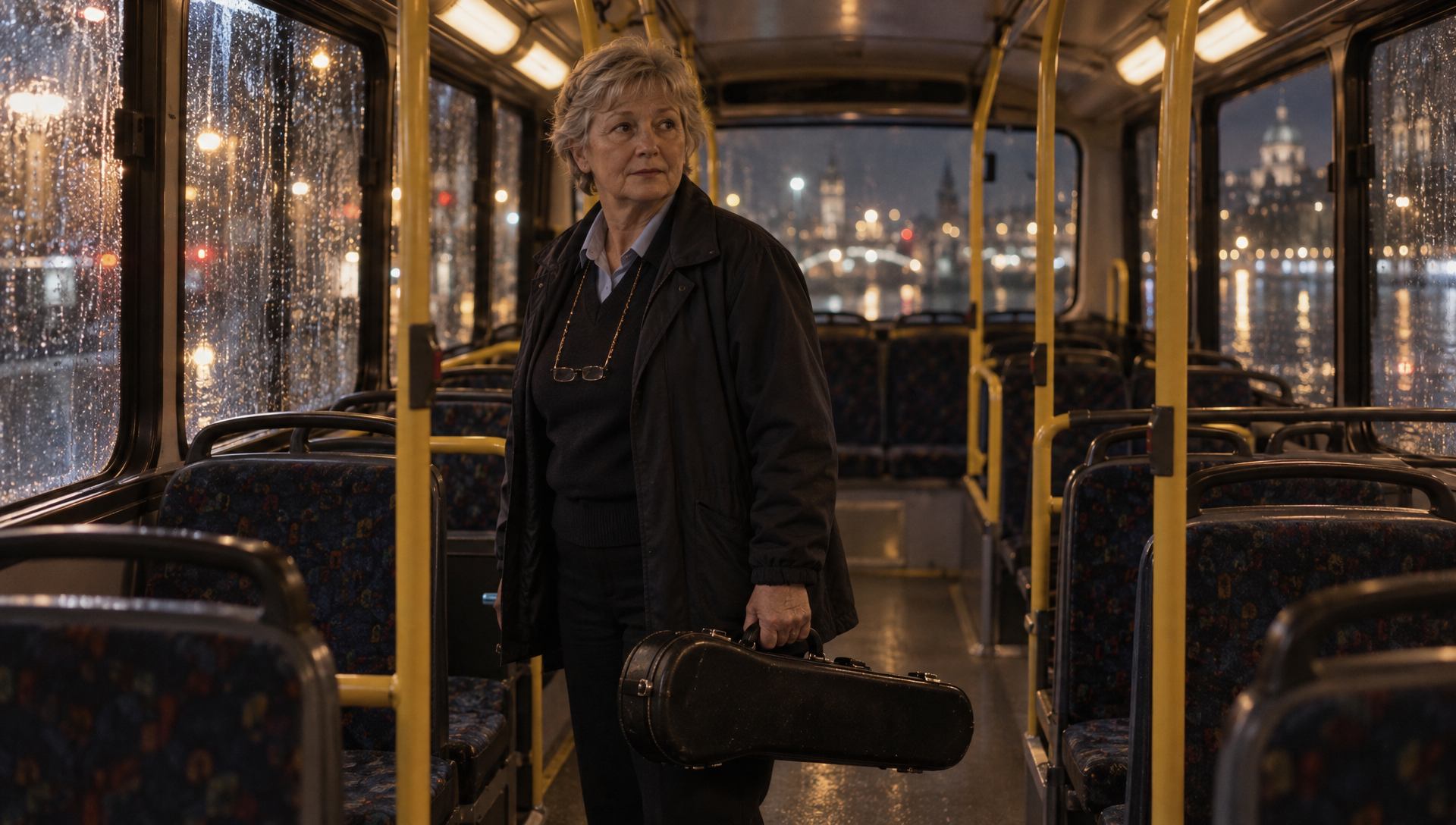
Cinematic film still, medium shot: a night bus driver in her fifties with short grey hair and reading glasses on a chain stands in the empty aisle of a plain unbranded city bus at the end of the line, holding a forgotten black violin case, warm interior lights, rain streaked windows with blurred lights of a fictional city, no logos, no signs, no text anywhere, 35mm film look.
She lifts the violin case a little, looks toward the camera and says, "Somebody is missing their music tonight." Rain runs down the windows, the bus engine idles. Sound: rain on glass, a low engine hum and her voice.
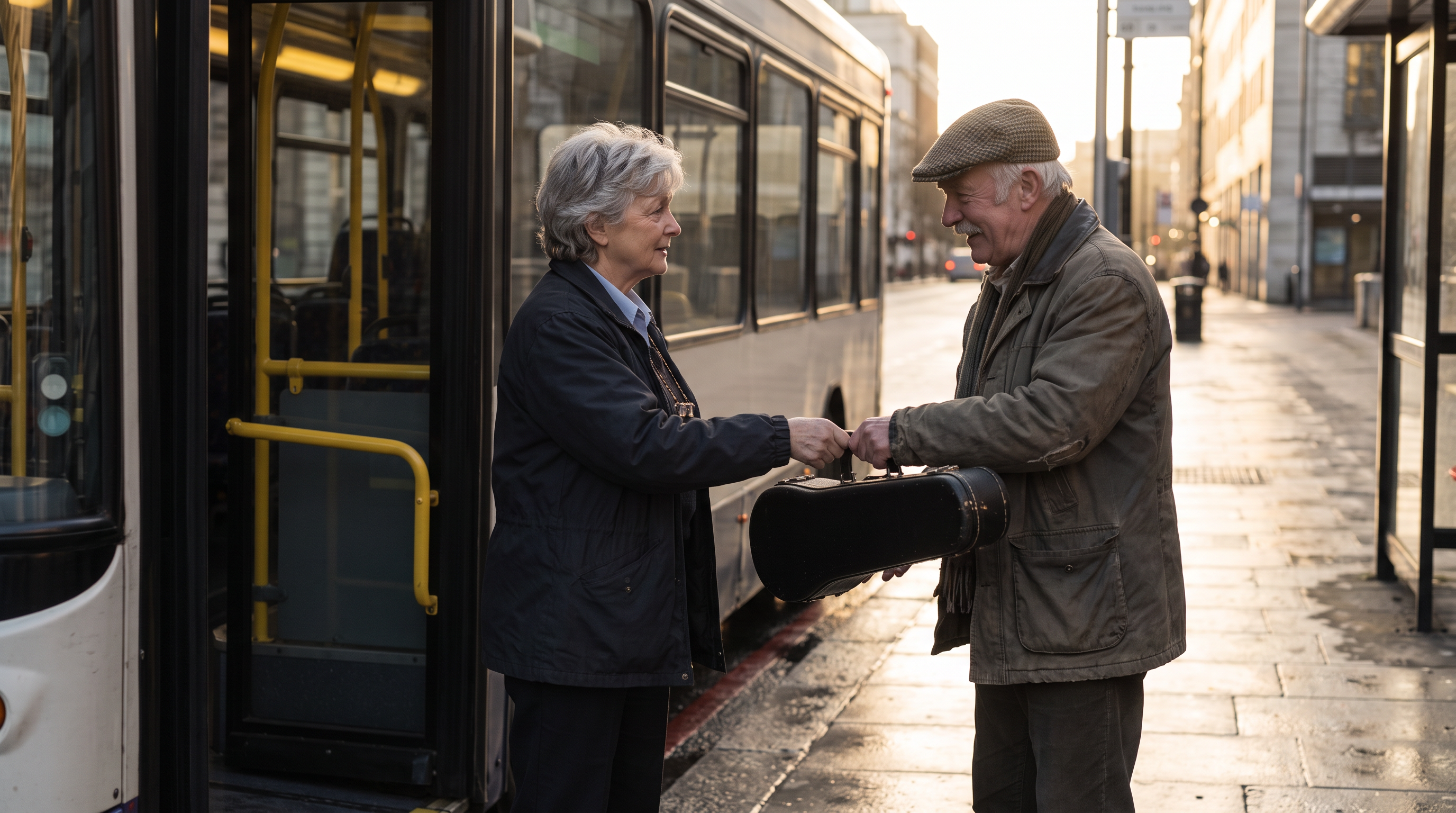
Use the reference image as the identity reference: keep the same woman, her short grey hair, reading glasses on a chain and dark uniform jacket. The next morning she stands at a sunny bus stop beside the parked plain unbranded bus, handing the black violin case to a man in his sixties with a white moustache and a tweed flat cap who smiles with relief, warm morning light, wet pavement drying, no logos, no text, cinematic film still.
He takes the violin case in both hands, laughs with relief and says, "Thank you. I thought it was gone for good." She smiles and nods as morning sun glints on the wet pavement. Sound: street ambience, a bus engine idling, his voice.
- Starting each scene from an approved still kept the framing exactly as planned, so the motion step only had to add acting.
- The driver's grey hair, glasses chain and dark jacket carried from night to morning through one reference image.
- Kling 3.0 delivered her line clearly enough that auto captions transcribed it word for word.
- The stills cost 2 and 1.5 credits; the clips 27.5 and 30. Cheap stills are where to iterate before you pay for motion.
Frameo vs Pixel Dojo
Frameo facts come from its home and pricing pages, read October 15, 2026. Frameo's pricing page lists no dollar amounts in its page text, so we compare terms, not prices.
| Question | Frameo | Pixel Dojo |
|---|---|---|
| How is it priced? | Credit based rather than per seat, with one shared credit pool and unlimited members | Lite $10 a month for 160 credits, Pro $25 for 500 credits, Pro Max $50 for 1,100 credits |
| Which models? | Seedance 2.5, Kling 3.0 Turbo, Veo 3.1 Fast, MiniMax H3, GPT Image 2, Nano Banana 2, Seedream 5.0 Pro and more | Seedance 2.5, Kling 3.0, Veo 3.1, WAN 3.0, MiniMax H3, GPT Image 2.5, Nano Banana 2.1, Seedream 5 and more |
| Commercial use | Full commercial rights | Commercial use on every plan |
| Workspace | One chat native canvas for generation, editing and assembly | One tool per step, Canvas to chain tools, Film Studio for whole films, and Sensei to plan and run a project |
| For developers | Enterprise plans with SSO and custom integrations | A public API with docs generated from each model's spec, a hosted MCP server and API credit packs from $5 |
When Frameo is the better pick
If a team works together on one board, with many people reviewing frames and sharing one credit pool, Frameo's canvas and unlimited members are built for that. Its Studio plans also include an Infinity Pass for unlimited standard image generation on flagship models.
If you work alone or in a small team, want to see the price of every step, or want an agent like Sensei to plan, price and review the shots for you, we think Pixel Dojo is the simpler choice.
What our two scene story cost
Plans are Lite $10 a month for 160 credits, Pro $25 for 500 credits, Pro Max $50 for 1,100 credits. Every plan includes every model and commercial use.
Step by step: the first still 2 credits, the Kling 3.0 clip 27.5, the second still 1.5, the Seedance 2.5 clip 30, and the captions 5.
Under our refund policy, a first purchase can be refunded within 7 days, in full if under 20% of the credits are used and pro-rated after that.
Frameo questions
What is a good Frameo alternative?
Pixel Dojo runs the same model families, Seedance 2.5, Kling 3.0, Veo 3.1 and Nano Banana, one step at a time with a price on each, plus Film Studio and Sensei for whole projects.
Who makes Frameo?
Frameo is made by Dashverse, which lists a Wilmington, Delaware address and also makes DashReels.
How does Frameo pricing work?
Frameo says pricing is credit based rather than per seat, with one credit pool shared by unlimited members, full commercial rights and custom enterprise plans.
How do I keep a character the same across scenes?
Use the first approved still as a reference for the next one, as we did with the bus driver, or save the character in Character Studio and call it by @name.
Can I add captions to an AI clip?
Yes. Auto captions transcribe the speech and burn the words into the video. Our first clip was captioned for 5 credits.
Video Effects New
No prompt? Try a one-click effect
283 ready-made effects, from AI Hug and Earth Zoom In to product spins and listing walkthroughs. Upload a photo and press Generate. No prompt to write.



Try Pixel Dojo as your Frameo alternative
Write a prompt above or start from any example on this page. One subscription covers every model on Pixel Dojo.
Start with Seedance 2.5Sources
Facts about Frameo come from these public pages, checked on Oct 15, 2026. Prices and plans change; check the source before you buy.