Comic Strip Workflow AI Generator
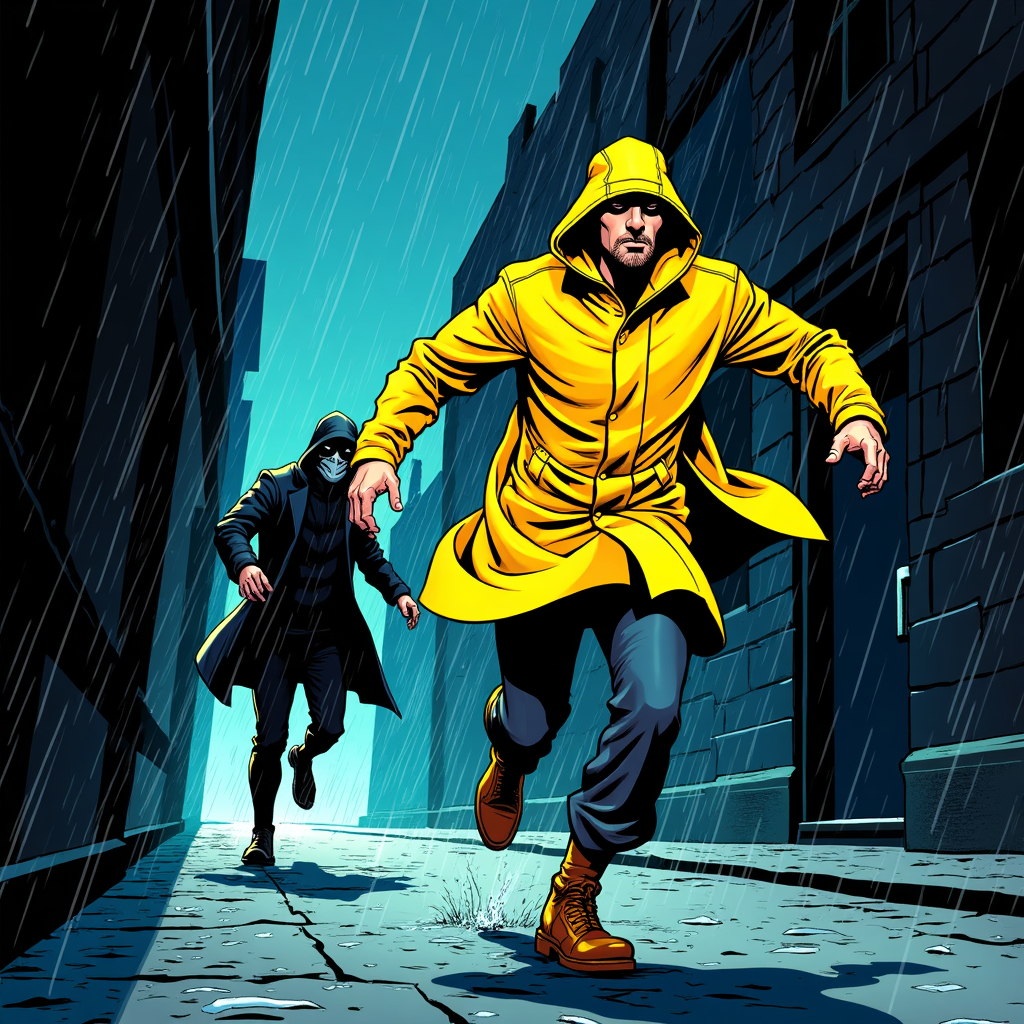
Generated on PixelDojo with flux. Produced by PixelDojo's generation pipeline.
You can turn a script into a comic strip with AI: convert each scene into a panel description, generate the artwork with an image model, then lock the character's look before you edit in later panels. We ran the panel generation step on August 26, 2026, turning one script beat into a finished comic panel for 1 credit in about 15 seconds. This page walks through the three step workflow using the exact prompt and the real cost for the step we ran.
The panel from step one, first result kept
Every example below was produced on PixelDojo. Hover to see the prompt.
Comic book panel illustration of a courier in a yellow raincoat sprinting through a rain soaked alley at night, a masked figure chasing close behind, bold black ink outlines, flat cel shaded colors, dynamic diagonal panel composition, halftone dot shading, dramatic action linework
flux
One script beat, one comic panel, August 26, 2026: 1 credit on Flux, about 15 seconds, kept on the first result.
Why Choose Pixel Dojo for Comic Strip Workflow
Professional-quality results with cutting-edge AI technology
1 credit for the panel
Flux priced the comic panel at 1 credit, the flat rate the catalog lists for the model, no matter how many characters are in frame.
About 15 seconds, measured
Timed from the prompt to the finished file on August 26, 2026, with no retries needed to get a usable first panel.
One workspace for the whole strip
Canvas chains generation, character locking and editing in the same session, so a multi panel strip does not mean juggling files across separate tools.
How It Works
Three steps, one script, panels that stay on model:
Write the scene as a panel description
Skip screenplay slug lines like INT. or EXT. and describe what the panel actually shows: the character, the action and the art style. Our script beat was a courier fleeing through a rainy alley, so the prompt named a courier in a yellow raincoat sprinting from a masked figure, bold black ink outlines and flat cel shaded colors. We ran it on Flux for 1 credit and it came back in about 15 seconds as a 1024 by 1024 panel with two clean figures, brick alley walls and visible rain streaks. The dot halftone shading we asked for did not show up. The shading came out as smooth cel gradients instead.
Lock the character before the next panel
A comic strip falls apart if the hero's face or outfit drifts from panel to panel. Generate one clean reference shot of the character, then send it into the Consistent Characters tool, which holds identity across up to four variants for 1.25 credits per call. Every later panel starts from that same locked reference instead of a fresh, unrelated roll.
Edit each panel into the finished strip
With the character locked, run each remaining beat through the Image Editor at 1 credit per edit on the Flux Edit model: change the pose, swap the background or add a caption box on the existing panel. Chaining generation, character locking and editing inside one Canvas session keeps every panel of the strip in a single workspace instead of downloading and re-uploading between tools.
Loved by creators on PixelDojo
Real feedback from people using PixelDojo, pulled from our in-product surveys.
Lots of different tools. It's easy to purchase more credits.
Amazing performance!
Excellent website for creating all types of media
Very eay to use, works well to train SDXL loras.
The amazing tools
Top notch quality and strong prompt adherence.
Explore more AI tools on PixelDojo
Popular AI Models
AI Tools
Compare & Switch
- Best AI Image Generators
- Best AI Video Generators
- Midjourney Alternatives
- Civitai Alternatives
- Runway Alternatives
- Leonardo Alternatives
- Pika Alternatives
- Luma Alternatives
- Magnific Alternatives
- Veo Alternatives
- Flux Alternatives
- Freepik Alternatives
- Seedance Alternatives
- Seedream Alternatives
- Pixverse Alternatives
- GPT Image Alternatives
- Synthesia Alternatives
- Playground Alternatives
- NightCafe Alternatives
- Canva AI Alternatives
- ElevenLabs Alternatives
- ComfyUI Alternatives
- Fal Alternatives
- Replicate Alternatives
Common Questions
Everything you need to know about Comic Strip Workflow
What does an AI comic panel cost?
1 credit for the base panel on Flux, the model we used. Locking the character for later panels with Consistent Characters is 1.25 credits per call, and editing an existing panel through the Image Editor is 1 credit per edit.
How fast is one panel?
About 15 seconds in our August 26, 2026 run, measured from the prompt to the finished 1024 by 1024 file.
How do I keep the same character across every panel?
Generate one reference shot of the character, then run it through the Consistent Characters tool. It holds face, hair and outfit across up to four variants for 1.25 credits per call, so later panels start from a locked reference instead of a fresh roll.
Can I write panel descriptions straight from a script?
Yes. Drop the screenplay slug lines like INT. or EXT. and describe what the panel shows: the character, the action and the art style. Our prompt for a chase scene named the outfit, the setting and the ink and color style, and the panel matched it on the first try.
Can I add dialogue and captions after the panel is generated?
Yes, through the Image Editor. Send the finished panel with an instruction to add a caption box or speech balloon in a stated spot, at 1 credit per edit.
How do I automate a whole script into a strip?
Flux, Consistent Characters and the Image Editor are each available at POST /api/v1/models/{apiId}/run with the same API key, so a script parser can call one panel per scene automatically.